Want to save this recipe?
Latvian Cottage Cheese Cookies (Biezpiena Cepumi)
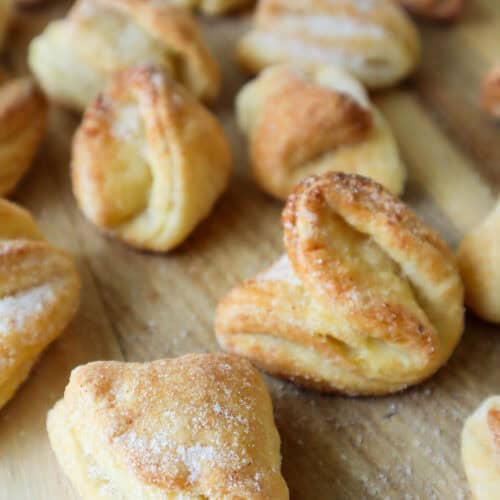
Latvian cottage cheese cookies, aka biezpiena cepumi or zosu kājiņas (goose feet), are crisp, buttery, flaky, and rolled in sugar before baking so the outside caramelises into a sparkly crust. It’s a simple, pretty cookie that’s quick and easy to make.
Equipment
- 1 Fine mesh sieve for draining the cottage cheese
- 1 Spatula or wooden spoon
- 1 Cookie cutter or drinking glass
- 1 Hand mixer or stick mixer
- Baking paper
Ingredients
- 1 cup cottage cheese (225 grams), drained
- 13 tbsp butter 170 grams, softened
- 2 1/3 cups plain all-purpose flour 270 grams, plus extra if needed for rolling
- 1 teaspoon baking powder
- 1 teaspoon vanilla extract optional, but I love it
- 1 lemon zested (optional)
- 1/2 cups white sugar for coating - you might not need this much
Instructions
- Drain the cottage cheese: Tip the cottage cheese into a fine sieve set over a bowl and leave it for at least 30 minutes. This really is the most important step.
- Make the dough: Beat the softened butter and drained cottage cheese together until they’re roughly combined.
- Add the dry ingredients: Sift in the flour and baking powder and add the vanilla extract, if using, and lemon zest if you’re using it, then mix until a shaggy dough forms. Turn it out onto a lightly floured surface and knead briefly until it just stops sticking to your hands. Stop as soon as it comes together, so you don’t overwork it.
- Chill the dough: Shape the dough into a ball, cover the bowl with a tea towel or cling wrap, and put it in the fridge for 1 hour. Please don’t skip this step. The butter needs to firm back up and the gluten needs time to relax. The dough will be difficult to roll out if you don’t chill it first.
- Roll and cut out circles: On a lightly floured surface, roll the chilled dough out to about 3–4mm (⅛ inch) thick. Cut into circles using a round cutter or a drinking glass. A standard glass works really well.
- Sugar coat the cookies and fold: Pour white sugar into a shallow bowl. Working one circle at a time, press both sides of the dough circle firmly into the sugar, then fold in half into a half-moon shape. Press both sides of the half-moon into the sugar, then fold in half again into a small wedge. You might not use all the sugar and this is fine. Note: Many traditional recipes call for pressing the base of each folded cookie with a fork to create the goose foot shape. I actually skip this step, because I think they look prettier and taste lighter without it. If you want the traditional look, press firmly with a fork after the final fold.
- Place on cookie sheet lined with parchment paper. You can sprinkle a little extra sugar over the tops if it doesn’t look like enough stuck during the folding.
- Bake: Bake at 200°C (400°F) for 20–25 minutes until golden brown. They should feel firm when you press them lightly. Let them cool completely on the tray before you move them. They crisp up a lot as they cool. Once they’ve cooled completely, sprinkle just a tiny bit of white sugar over the tops. It catches the light and gives them a lovely sparkle. You really only need a very light dusting.
Notes
- Roll the dough relatively thin. 3–4mm is about right. If the dough is too thick the cookies bake up dense and heavy rather than light and flaky, which is not what you want here.
- Keep the dough cold while you work. If it starts to warm up and get sticky, just pop it back in the fridge for ten minutes. Cold dough is so much easier to handle and the layers stay distinct during baking.
- Press the sugar in firmly. When you’re dipping the dough circles in sugar, really press them down rather than just giving them a light dip. The sugar needs good contact to caramelize properly in the oven, and it also helps the layers stick together.
- They’re best on the day you make them, but if they’ve softened by the next day you can pop them in a low oven (about 150°C (300°F)) for a few minutes to crisp them back up. Just keep an eye on them because a minute too long and they’ll dry out and get brown and not taste as nice.
- These keep in an airtight container at room temperature for up to 4 days. They’re best on day one, but a few minutes in a low oven at 150°C (300°F) will crisp them back up a bit.
- Make-ahead tip: you can shape the cookies and freeze them on a lined tray until solid, then transfer them to a freezer bag. Bake them straight from frozen at 200°C (400°F), just add 3–5 minutes to the baking time.
Nutrition
Calories: 75kcalCarbohydrates: 8gProtein: 1gFat: 4gSaturated Fat: 2gPolyunsaturated Fat: 0.2gMonounsaturated Fat: 1gTrans Fat: 0.1gCholesterol: 11mgSodium: 171mgPotassium: 18mgFiber: 0.3gSugar: 0.2gVitamin A: 122IUVitamin C: 1mgCalcium: 13mgIron: 0.4mg
Tried this recipe?Let us know how it was!