
Latvian Cottage Cheese Cookies (Biezpiena Cepumi)

This post may contain affiliate links. Read my disclosure policy.
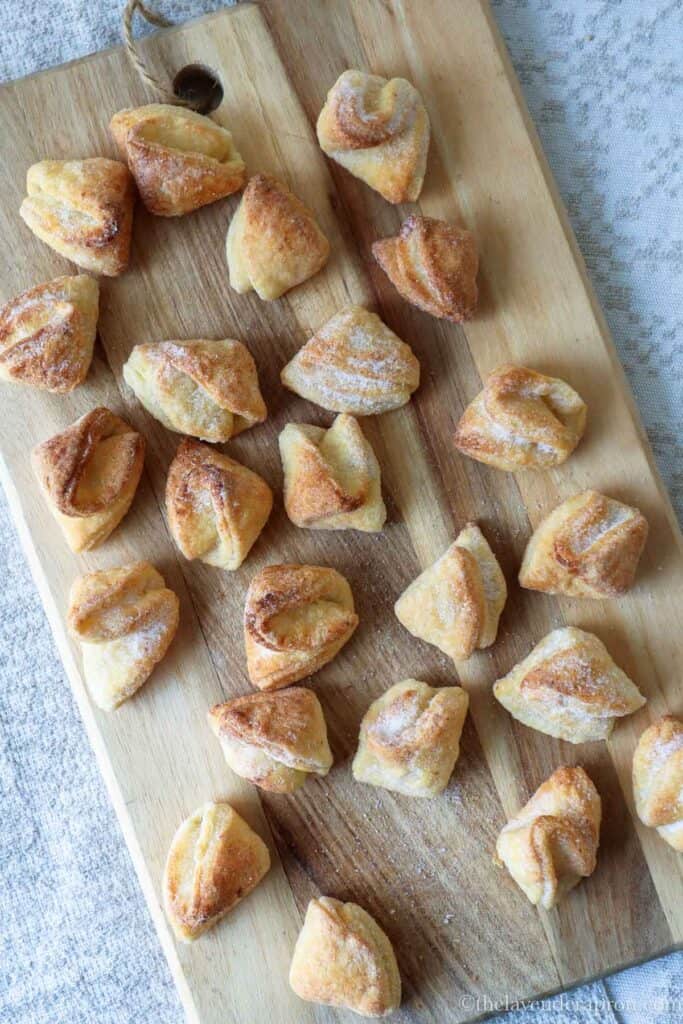
Latvian cottage cheese cookies, aka biezpiena cepumi or zosu kājiņas (goose feet cookies), are crisp, buttery, flaky, and rolled in sugar before baking so the outside caramelizes into a sparkly crust. It’s a simple, pretty cookie that’s quick and easy to make.

Want to save this recipe?
The dough has no sugar in it at all. The sweetness comes entirely from the sugar coating, so you can control how sweet you make them. My French husband says the flavor reminds him of Petit Lu biscuits. They are definitely very “more-ish” 🙂
Latvian Cottage Cheese Cookies Quick Look
Prep: 20 min | Chill: 1 hour | Bake: 20–25 min | Total: About 2 hours | Makes: around 40 cookies
Key ingredients: cottage cheese, butter, flour, vanilla extract, lemon zest (optional)
What makes them: flaky layered dough with sugar pressed into every fold, no sugar in the dough itself
Best for: afternoon tea, parties, finger food, after-school snacks
One thing before you start: drain your cottage cheese if it’s wet for at least 30 minutes
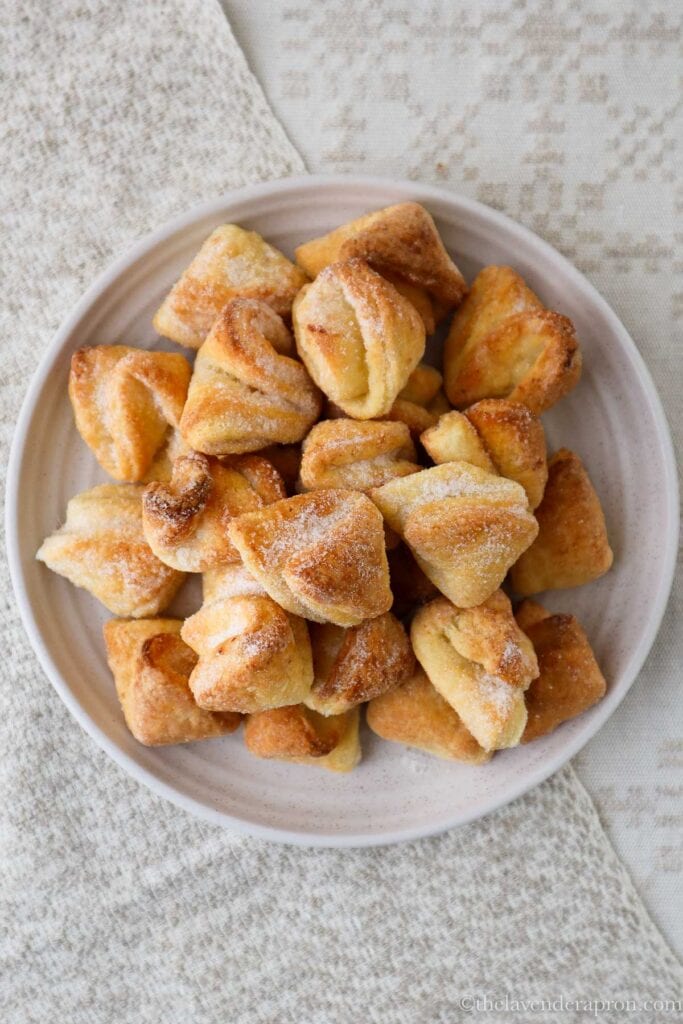
Table of contents
- Latvian Cottage Cheese Cookies Quick Look
- What are Biezpiena Cepumi?
- Ingredients and Ingredient Notes
- Equipment
- How to Make Latvian Cottage Cheese Cookies
- Tips for the Best Biezpiena Cepumi
- What to Serve With Latvian Cottage Cheese Cookies
- Troubleshooting
- Storage and Make Ahead
- FAQ
- What to Make Next
- Latvian Cottage Cheese Cookies Recipe Card
What are Biezpiena Cepumi?
Biezpiena cepumi just means cottage cheese cookies in Latvian. It’s the general name for any Latvian cookie made with this style of dough. Zosu kājiņas (goose feet) is the name for this specific folded version, and zoss ķepiņas is another Latvian spelling of the same thing. I know this is a bit confusing, but they’re all the same cookie.

I found this recipe in my vecmāmiņa’s (Latvian grandmother’s) recipe tin. (If you’re curious about my Latvian background and the years I spent in France, you can read more on my About page). Her version was plain, just cottage cheese, butter, flour without any vanilla or lemon. I’ve added both to give the dough a bit more flavour, and I finish with a sprinkle of white sugar after baking for that light sparkle on top.
And you might think this is just a sugar cookie, but it is actually quite different. There is no sugar in the actual cookie dough. But each dough circle gets dipped in sugar, folded in half, dipped again, then folded into a small wedge. Four layers of dough with sugar pressed between each one. It bakes up flaky and crisp with a caramelised crust, and they look very pretty and dainty. The fork marks pressed into the folded wedge are what give the cookie its name. Looked at from above, the folded shape with its splayed fork lines really does look like a little webbed footprint, which is why Latvians call them “zosu kājiņas”.
These cookies are quick and easy to make and are perfect for afternoon teas, afternoon snacks, finger foods and the like.

Ingredients and Ingredient Notes
Full quantities are in the recipe card below.
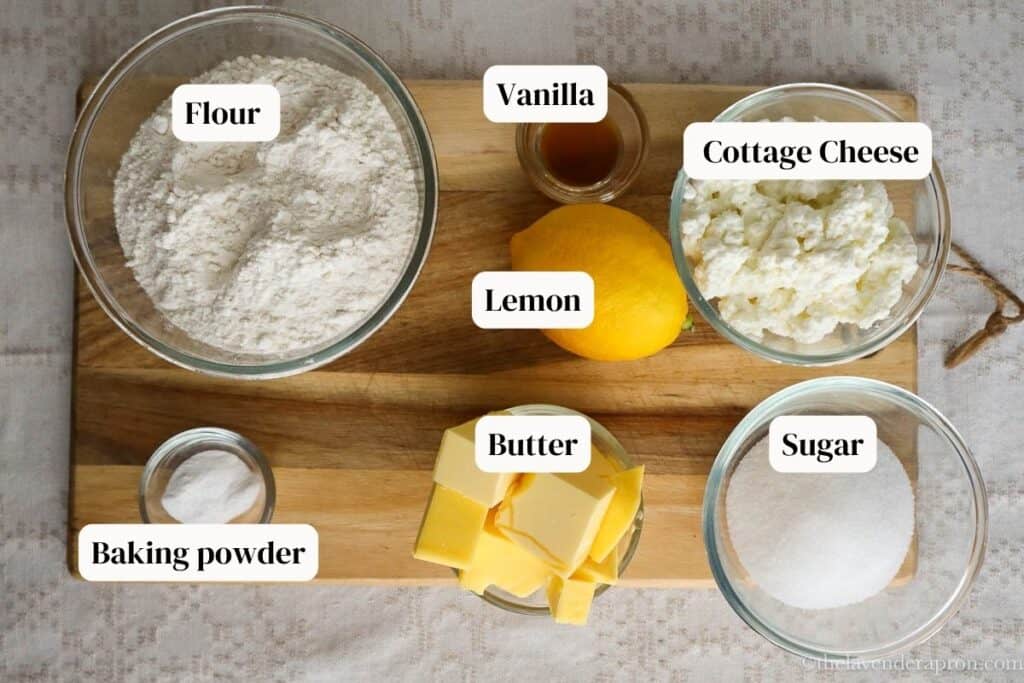
Cottage cheese – full fat and you really do need to drain this before using it. American and Australian supermarket cottage cheese is considerably wetter and sweeter than traditional Latvian biezpiens, which is drier and tangier. Quark is actually my favourite substitute here. It doesn’t need draining and it’s closer to the original texture and tang than most cottage cheese. Farmer’s cheese works well too, especially if you’re in the US where it’s easy to find.
Butter – softened to room temperature but still cool to the touch. If it looks shiny and very soft, it’s too warm and needs ten minutes back in the fridge or your dough will be greasy.
Flour – plain all-purpose flour. Start with the amount in the recipe, but know that you might need a tablespoon or two more depending on how wet your cottage cheese was. And you need a bit for the rolling out.
Baking powder – gives the cookies a bit of a lift to keep the layers light.
Lemon zest – optional, but I really like it. One lemon gives a subtle background tang, two lemons and you’ll taste the lemon clearly. Leave it out entirely if you prefer a plain, traditional Latvian cottage cheese cookie.
Vanilla extract – Optional, but I just love vanilla!
White sugar for coating – just regular granulated white sugar. You can also use powdered sugar if you like.
Equipment
- Strainer/sieve– to strain the cottage cheese
- Mixing bowl – you only need one for this recipe!
- Hand mixer or immersion blender
- Rolling pin – to roll out the cookie dough
- Cookie cutter or large glass – to cut out the circle shapes
- Cookie sheet – to make the cookies
How to Make Latvian Cottage Cheese Cookies
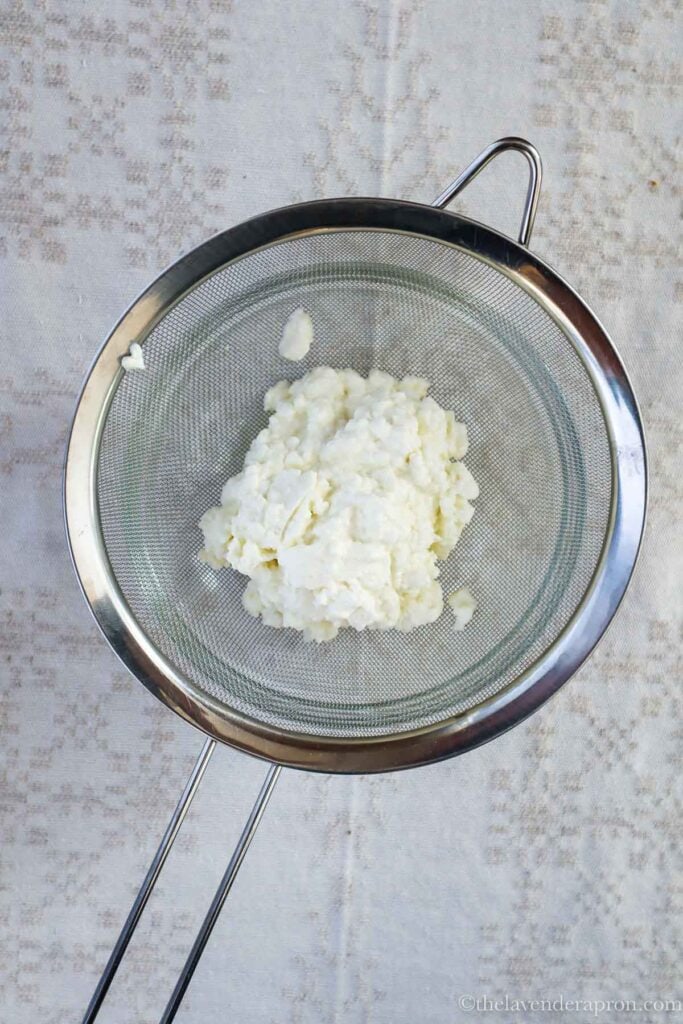
1. Drain the cottage cheese: Tip the cottage cheese into a fine sieve set over a mixing bowl and leave it for at least 30 minutes. This really is the most important step.
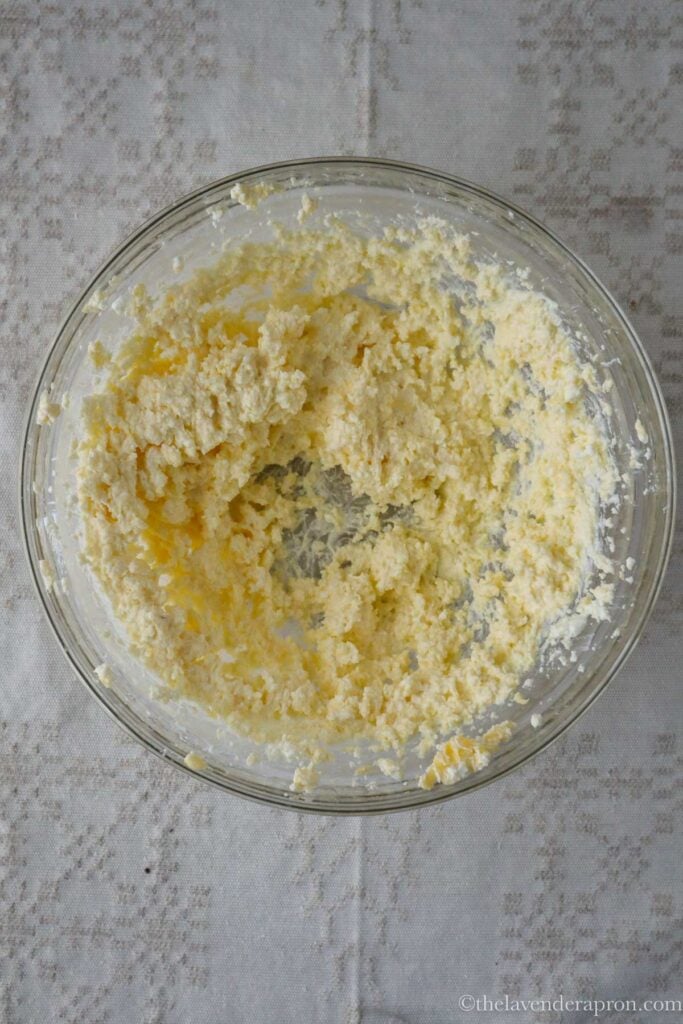
2. Make the dough: Beat the softened butter and drained cottage cheese together with a stick blender or hand-held mixer until they’re roughly combined.
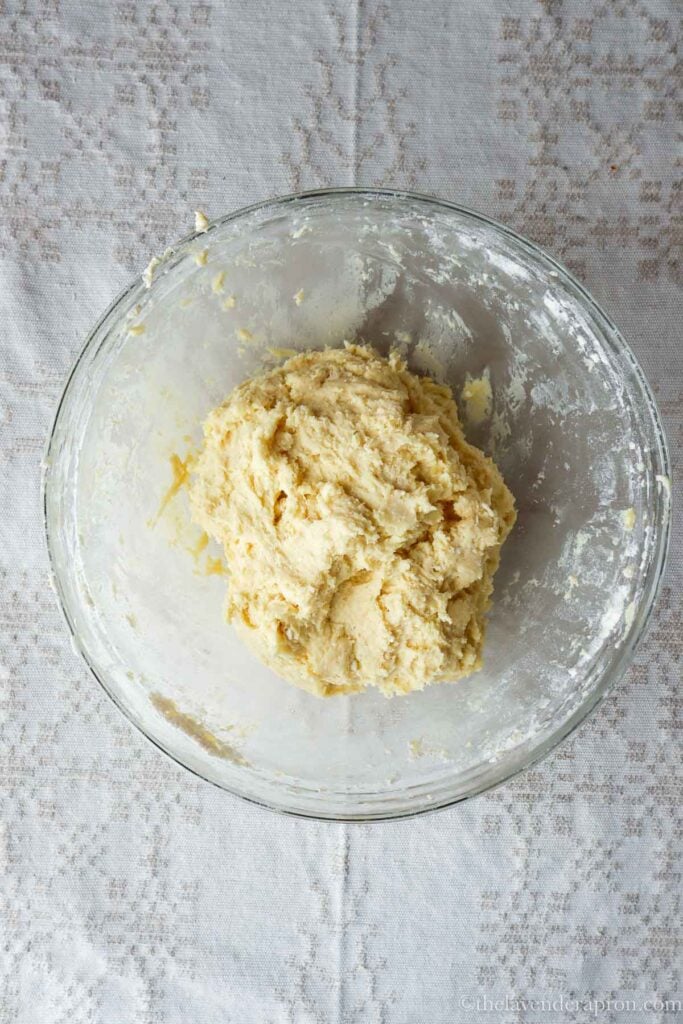
3. Add the dry ingredients: Sift in the flour and baking powder and add the vanilla extract, and lemon zest if you’re using it, then mix until a shaggy dough forms. Turn it out onto a lightly floured surface and knead briefly until it just stops sticking to your hands. Stop as soon as it comes together, so you don’t overwork it.
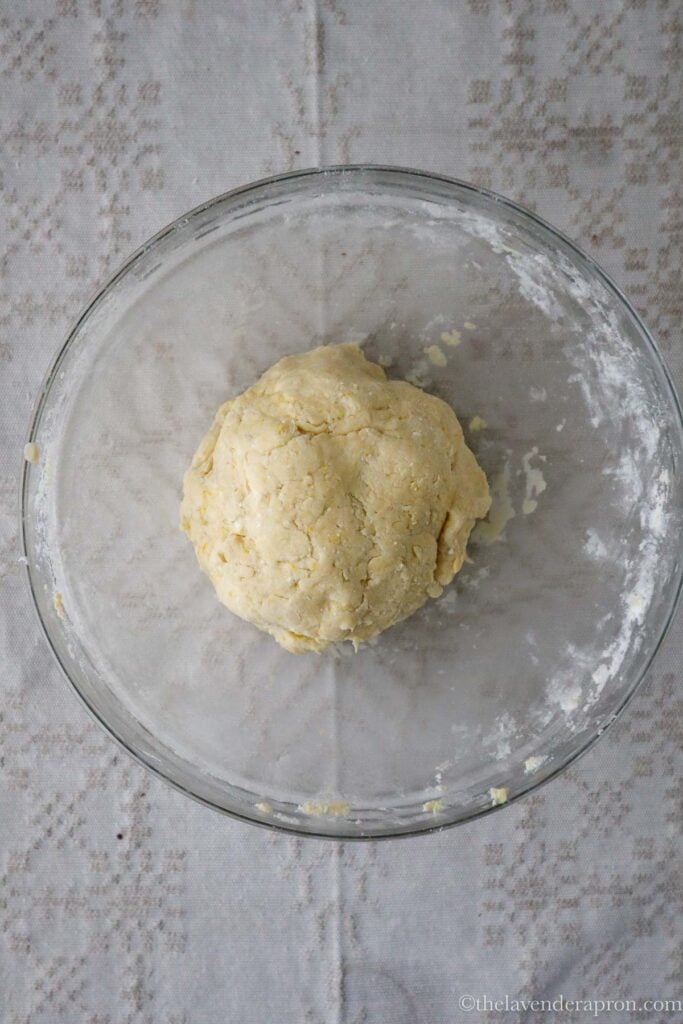
4. Chill the dough: Shape the dough into a ball, cover the bowl with a tea towel or cling wrap, and put it in the fridge for 1 hour. Please don’t skip this step. The butter needs to firm back up and the gluten needs time to relax. The dough will be difficult to roll out if you don’t chill it first.
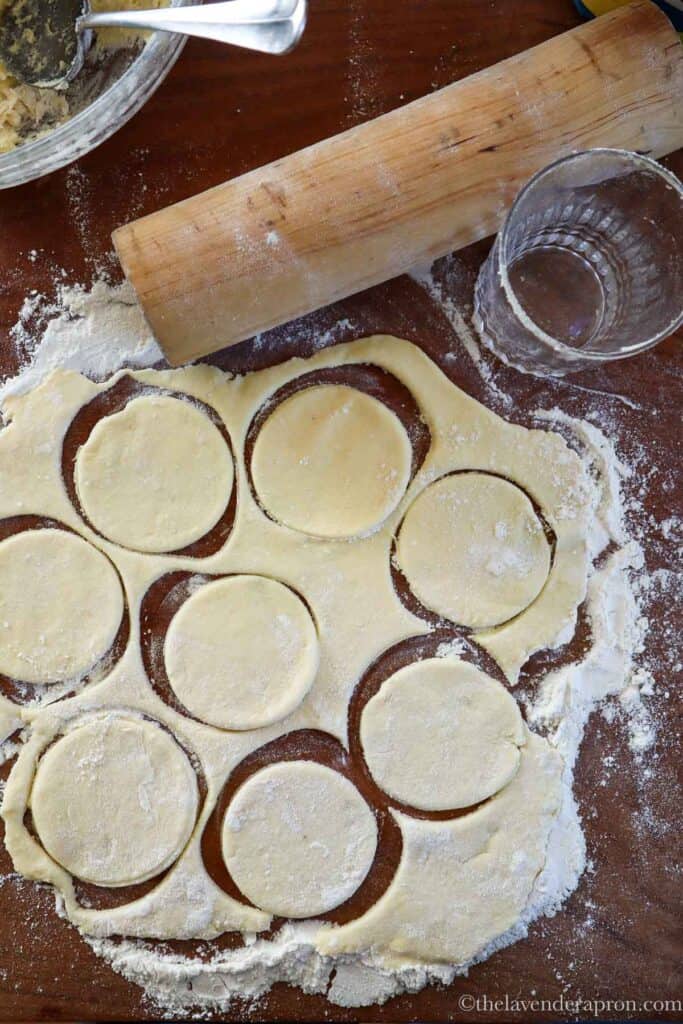
5. Roll and cut out circles: On a lightly floured surface, roll the chilled dough out to about 3–4mm (⅛ inch) thick with a rolling pin. Cut into circles using a round cookie cutter or a drinking glass. A standard glass works really well.
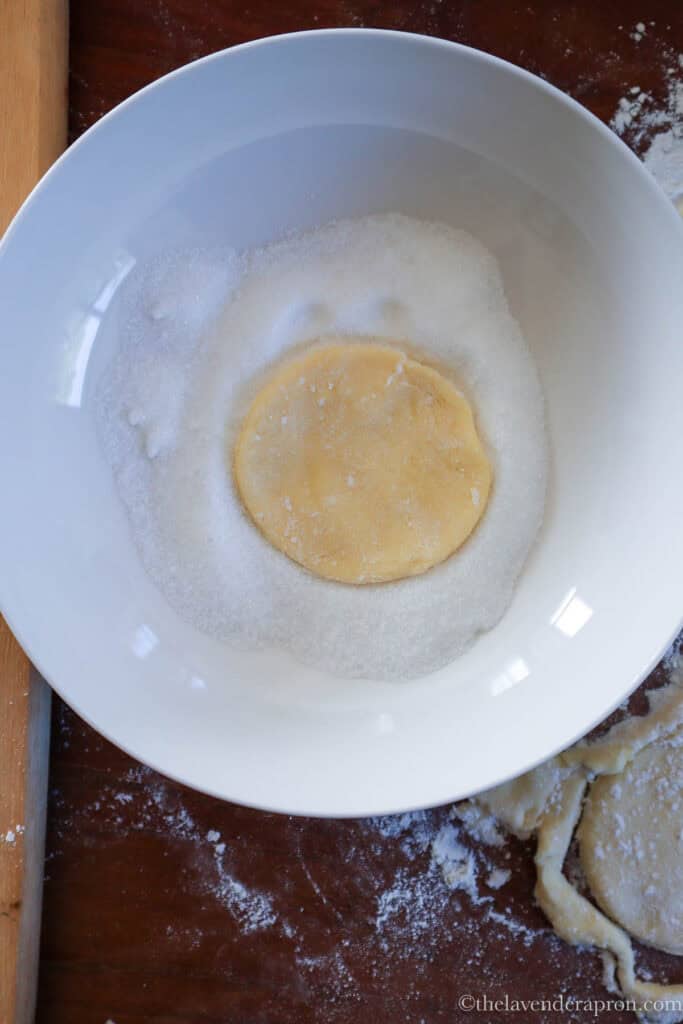
6. Sugar coat the cookies and fold: Pour white sugar into a shallow bowl. Working one circle at a time, press both sides of the dough circle firmly into the sugar, then fold in half into a half-moon shape. Press both sides of the half-moon into the sugar, then fold in half again into a small wedge. I usually don’t use up all the sugar, it depends on how sugary you like them. Note: many traditional recipes call for pressing the base of each folded cookie with a fork to create the goose foot shape. I actually skip this step, because I think they look prettier and taste lighter without it. If you want the traditional look, press firmly with a fork after the final fold.
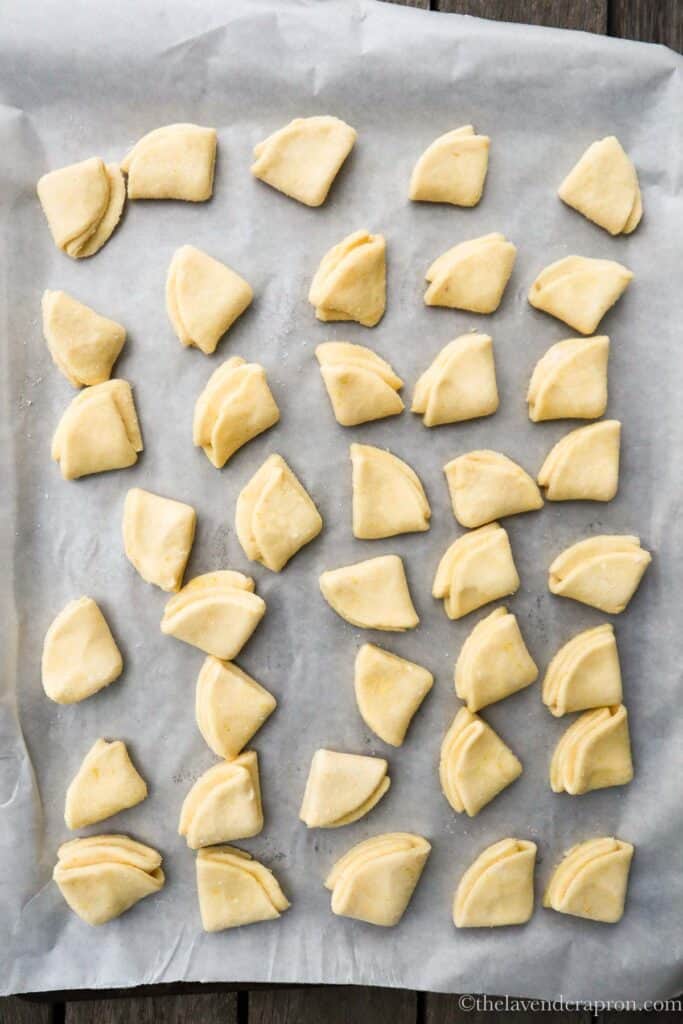
7. Place on cookie sheet lined with parchment paper. You can sprinkle a little extra sugar over the tops if it doesn’t look like enough stuck during the folding.
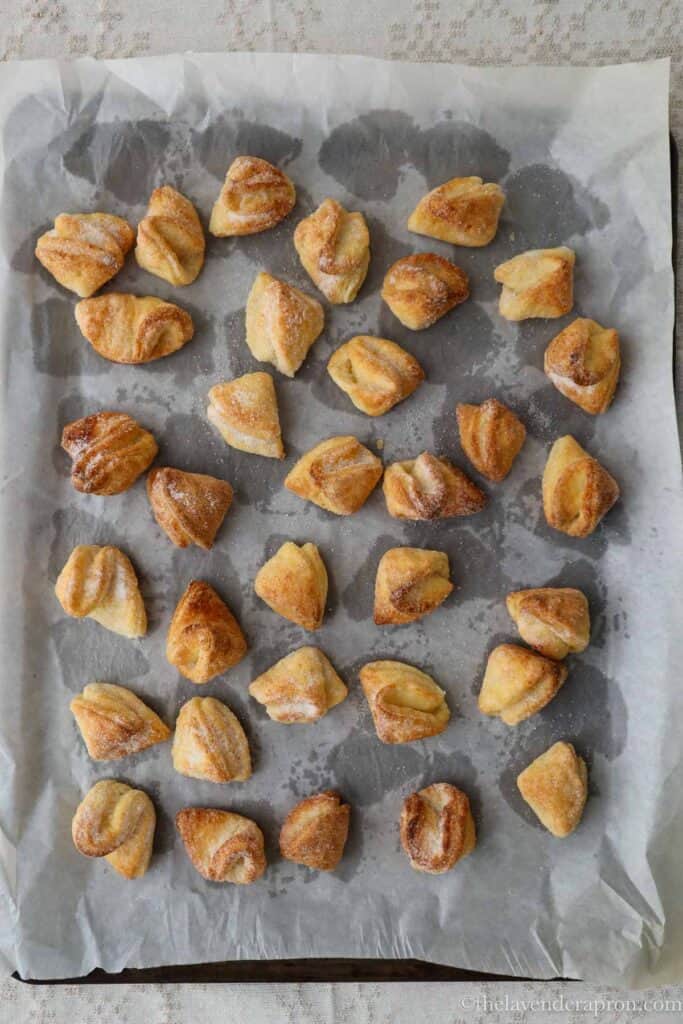
8. Bake: Bake at 200°C (400°F) for 20–25 minutes until golden brown. They should feel firm when you press them lightly. Let them cool completely on the tray before you move them. They crisp up a lot as they cool. Once they’ve cooled completely, sprinkle just a tiny bit of white sugar over the tops. It catches the light and gives them a lovely sparkle. You really only need a very light dusting.
Tips for the Best Biezpiena Cepumi
- Roll the dough relatively thin. 3–4mm is about right. If the dough is too thick the cookies bake up dense and heavy rather than light and flaky, which is not what you want here.
- Keep the dough cold while you work. If it starts to warm up and get sticky, just pop it back in the fridge for ten minutes. Cold dough is so much easier to handle and the layers stay distinct during baking.
- Press the sugar in firmly. When you’re dipping the dough circles in sugar, really press them down rather than just giving them a light dip. The sugar needs good contact to caramelise properly in the oven, and it also helps the layers stick together.
- They’re best on the day you make them, but if they’ve softened by the next day you can pop them in a low oven (about 150°C (300°F)) for a few minutes to crisp them back up. Just keep an eye on them because a minute too long and they’ll dry out and get brown and not taste as nice.

What to Serve With Latvian Cottage Cheese Cookies
These are great with a cup of tea or coffee, but they are also really easy to bring along for work, tea parties, church luncheons etc.
If you are going for a Baltic dessert theme, you can serve them alongside my Latvian cottage cheese cake (biezpienmaize) and some fresh berries. The crisp cookies add a nice texture next to something soft and creamy. My Latvian apple cake (abolmaize, recipe coming soon) makes another really natural companion at a Baltic table. And I realise that this is not a dessert dish, but if you are interested in traditional Latvian meals, you should try this savoury Latvian kotletes recipe.
If you are looking for some more pretty dessert ideas, you can try my blueberry and strawberry pie and my Belgian chocolate cake 🙂.
Troubleshooting
- My dough is too sticky to roll.
Probably the cottage cheese was not drained enough. Just add flour a tablespoon at a time, put the dough back in the fridge for 15 minutes, and try again. You can also just put a bit more flour on your counter when you roll out the dough and see if that helps. - My cookies are dense and heavy.
Usually this means the dough was rolled too thick, or a bit too much extra flour got added. These should be quite delicate and flaky, so try rolling a bit thinner next time and be conservative with any extra flour you add. - The cookies are soft after baking.
Leave them on the tray! They crisp up a lot as they cool. Give them at least 20 minutes before you decide something went wrong. If they’re still soft after that, the dough was probably a bit too wet. - The shape is losing definition in the oven.
The dough was too warm when you shaped the cookies. Keep it cold throughout, and if your kitchen is on the warmer side, pop the shaped cookies in the fridge for 10 minutes before they go in the oven.
Storage and Make Ahead
- These keep in an airtight container at room temperature for up to 4 days. They’re best on day one, but a few minutes in a low oven at 150°C (300°F) will crisp them back up a bit.
- Make-ahead: freeze the shaped unbaked cookies on a tray until solid, then transfer to a bag and bake from frozen. Just add a few extra minutes to the baking time.
- I don’t recommend freezing already baked cookies.
FAQ
That’s traditional. The sweetness comes from the coating rather than the dough itself, which keeps these from being too sweet and means you can actually taste the butter, vanilla and lemon. Most European baking has less sugar, so you can really taste all the ingredients, not just the sugar.
No. Many traditional Latvian recipes leave it out entirely and the cookies are still lovely. I add it because I like the extra tang it gives, but it’s completely optional.
Yes. One whole egg makes the dough easier to handle and gives a slightly softer, chewier result. I leave it out because I prefer these crisp, but I know some Latvian recipes include an egg.
Yes, just mix a teaspoon of cinnamon into your coating sugar before you start.
No, you need the fat content from the cottage cheese.
The fork marks traditionally pressed into the folded dough resemble a small webbed footprint, which is where the name zosu kājiņas comes from in Latvian. I actually skip the fork press myself since I think the cookies turn out crisper and prettier without it, but it’s easy to add if you want the traditional look.
Made this Latvian Cottage Cheese Cookies Recipe? Leave a rating below. It helps other home cooks find it. Every recipe on this blog is made and tested in my own kitchen. You can read more about how I develop and test recipes here. 🙂
What to Make Next
Latvian Cottage Cheese Cake (Biezpienmaize) – one of my favorite Latvian desserts.
Blueberry Cottage Cheese Muffins – a really good way to use up any leftover cottage cheese from making these.
Oatmeal Chocolate Chip Cookies Without Brown Sugar – if you don’t have any brown sugar on hand, these are delicious and not overly sugary, just perfect.
French Yogurt Cake – a classic French afternoon tea or dessert cake.
Latvian Cottage Cheese Cookies Recipe Card
Want to save this recipe?
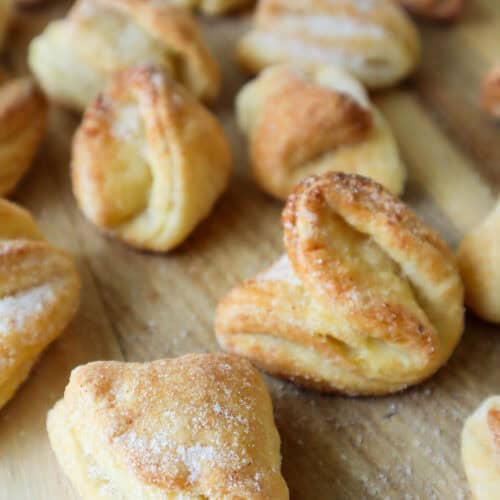
Latvian Cottage Cheese Cookies (Biezpiena Cepumi)
Equipment
- 1 Fine mesh sieve for draining the cottage cheese
- 1 Spatula or wooden spoon
- 1 Cookie cutter or drinking glass
- 1 Hand mixer or stick mixer
- Baking paper
Ingredients
- 1 cup cottage cheese (225 grams), drained
- 13 tbsp butter 170 grams, softened
- 2 1/3 cups plain all-purpose flour 270 grams, plus extra if needed for rolling
- 1 teaspoon baking powder
- 1 teaspoon vanilla extract optional, but I love it
- 1 lemon zested (optional)
- 1/2 cups white sugar for coating – you might not need this much
Instructions
- Drain the cottage cheese: Tip the cottage cheese into a fine sieve set over a bowl and leave it for at least 30 minutes. This really is the most important step.
- Make the dough: Beat the softened butter and drained cottage cheese together until they’re roughly combined.
- Add the dry ingredients: Sift in the flour and baking powder and add the vanilla extract, if using, and lemon zest if you’re using it, then mix until a shaggy dough forms. Turn it out onto a lightly floured surface and knead briefly until it just stops sticking to your hands. Stop as soon as it comes together, so you don’t overwork it.
- Chill the dough: Shape the dough into a ball, cover the bowl with a tea towel or cling wrap, and put it in the fridge for 1 hour. Please don’t skip this step. The butter needs to firm back up and the gluten needs time to relax. The dough will be difficult to roll out if you don’t chill it first.
- Roll and cut out circles: On a lightly floured surface, roll the chilled dough out to about 3–4mm (⅛ inch) thick. Cut into circles using a round cutter or a drinking glass. A standard glass works really well.
- Sugar coat the cookies and fold: Pour white sugar into a shallow bowl. Working one circle at a time, press both sides of the dough circle firmly into the sugar, then fold in half into a half-moon shape. Press both sides of the half-moon into the sugar, then fold in half again into a small wedge. You might not use all the sugar and this is fine. Note: Many traditional recipes call for pressing the base of each folded cookie with a fork to create the goose foot shape. I actually skip this step, because I think they look prettier and taste lighter without it. If you want the traditional look, press firmly with a fork after the final fold.
- Place on cookie sheet lined with parchment paper. You can sprinkle a little extra sugar over the tops if it doesn’t look like enough stuck during the folding.
- Bake: Bake at 200°C (400°F) for 20–25 minutes until golden brown. They should feel firm when you press them lightly. Let them cool completely on the tray before you move them. They crisp up a lot as they cool. Once they’ve cooled completely, sprinkle just a tiny bit of white sugar over the tops. It catches the light and gives them a lovely sparkle. You really only need a very light dusting.
Notes
- Roll the dough relatively thin. 3–4mm is about right. If the dough is too thick the cookies bake up dense and heavy rather than light and flaky, which is not what you want here.
- Keep the dough cold while you work. If it starts to warm up and get sticky, just pop it back in the fridge for ten minutes. Cold dough is so much easier to handle and the layers stay distinct during baking.
- Press the sugar in firmly. When you’re dipping the dough circles in sugar, really press them down rather than just giving them a light dip. The sugar needs good contact to caramelize properly in the oven, and it also helps the layers stick together.
- They’re best on the day you make them, but if they’ve softened by the next day you can pop them in a low oven (about 150°C (300°F)) for a few minutes to crisp them back up. Just keep an eye on them because a minute too long and they’ll dry out and get brown and not taste as nice.
- These keep in an airtight container at room temperature for up to 4 days. They’re best on day one, but a few minutes in a low oven at 150°C (300°F) will crisp them back up a bit.
- Make-ahead tip: you can shape the cookies and freeze them on a lined tray until solid, then transfer them to a freezer bag. Bake them straight from frozen at 200°C (400°F), just add 3–5 minutes to the baking time.




They are delicious!! Must try recipe!
Thanks Kay! The recipe is really easy 🙂
The cookies look really good. I am trying to find more things to make the doesn’t have a lot of sugar. I just saved to try these. Thanks for being so detailed. I know I will have to come back and read again as I make. I can’t wait to try!
I hope you like them! They are always a hit when I bring them along!
These look absolutely delicious! I love learning about traditional recipes from different cultures, and the story behind these Latvian cookies made them even more special. The flaky layers and caramelized sugar coating sound amazing with a cup of coffee or tea.
Thanks Lisa. These cottage cheese cookies are super easy to make and have a lovely flavor.