
Piparkūkas: Traditional Latvian Gingerbread Cookies

This post may contain affiliate links. Read my disclosure policy.
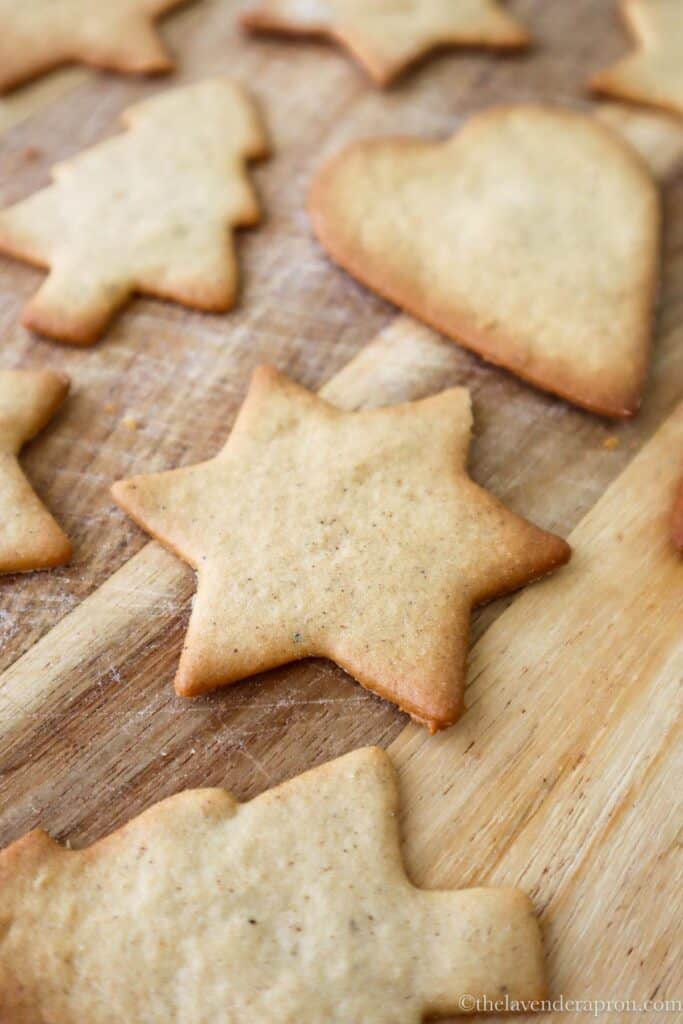
These piparkūkas are my recreation of my grandmother’s Latvian gingerbread cookies. They are very thin and crisp, made with malt extract, dark brown sugar, honey, warm spices and a little lard.
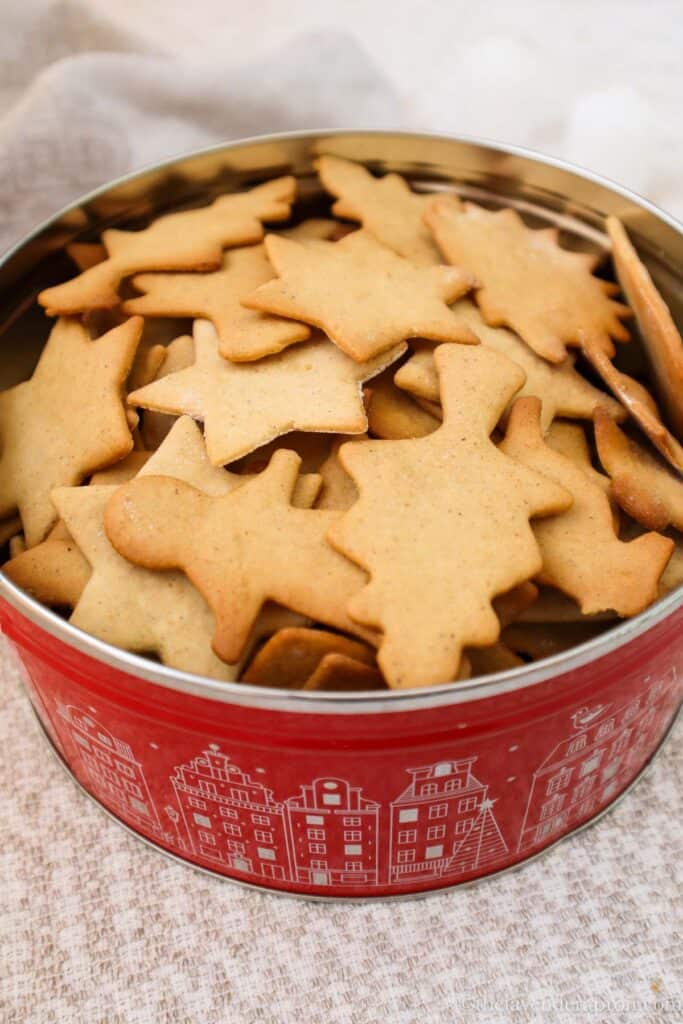
They’re perfect for Christmas celebrations, cookie tins, cookie exchanges, Advent baking or hanging on the tree.
They’re not as sweet as American gingerbread, and they have lots of lovely spices, not just ginger. If you can’t find malt extract, you can use golden syrup (or light corn syrup) and molasses instead. Make them with or without the ginger and pepper, add orange zest or change the spices to suit your family.
The dough takes about 30 minutes to make, rests in the fridge overnight and makes about 200 thin cookies. If you’ve never made these before, don’t worry, I walk you through each step of this Latvian piparkukas recipe.
Piparkūkas Recipe At A Glance
Prep: 30 min | Rest: overnight (ideally 3 days) | Roll and bake: 2 to 3 hours for the full batch (5 to 6 min per tray) | Makes: about 200 cookies
- Main ingredients: malt extract, dark brown sugar, honey, lard, butter and an eight-spice blend led by cinnamon.
- Flavor and texture: warm spice, a faint honey note, thin and crisp with a clean snap.
- Latvian cuisine: my grandmother’s recipe, rebuilt from memory, for Latvia’s favorite Christmas cookie.
- Variations: plain white sugar instead of brown, or golden syrup and molasses instead of malt extract.
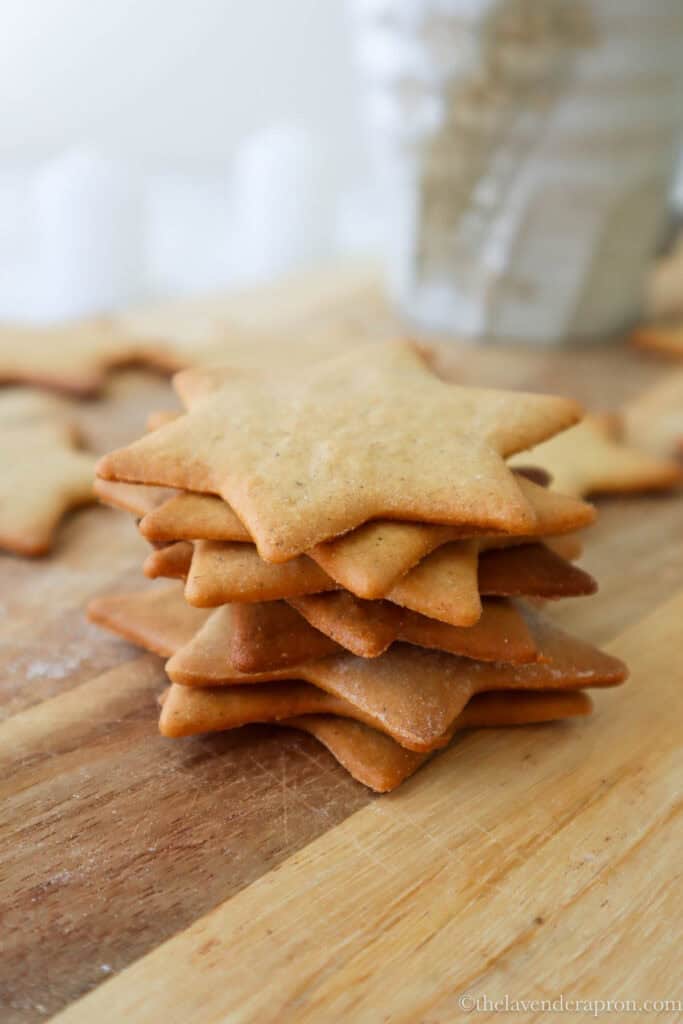
My Grandmother’s Latvian Gingerbread Cookies
My vecmāmiņa, Vera, who was from Liepāja, baked piparkūkas every Christmas. They were the best Latvian gingerbread cookies I have ever tasted: very thin, crisp, gently spiced and not too sweet, and she used lard and pepper! I watched her make them many times, but alas! So far I haven’t been able to find her piparkukas recipe in the stacks of cards and notes I have from her.
I grew up with Latvian cooking, from kotletes to biezpienmaizītes (sweet cottage cheese buns), and most of those recipes come from my mother’s or my vecmāmiņa’s (grandmother’s) recipe tin and notes. You’ll find more of my family’s recipes in my Baltic recipes.
But this piparkūkas recipe is missing, and the ones I found online were never quite like hers, so I tested batch after batch until they were.
“Piparkūkas” means “pepper cakes” (you’ll also see them called Latvian pepper cookies, Latvian ginger cookies or, in the UK, Latvian gingerbread biscuits), and some recipes have a bit of pepper in them, like mine, but they do NOT taste like pepper.
You’ll often see it written piparkukas, without the accent online, but really you need it. The accent on the “u” turns it into the “oo” sound, like in “pool”, so you pronounce it like “piparkookas”.
Ingredients for Piparkūkas
You’ll find the full ingredient list and quantities in the recipe card below.
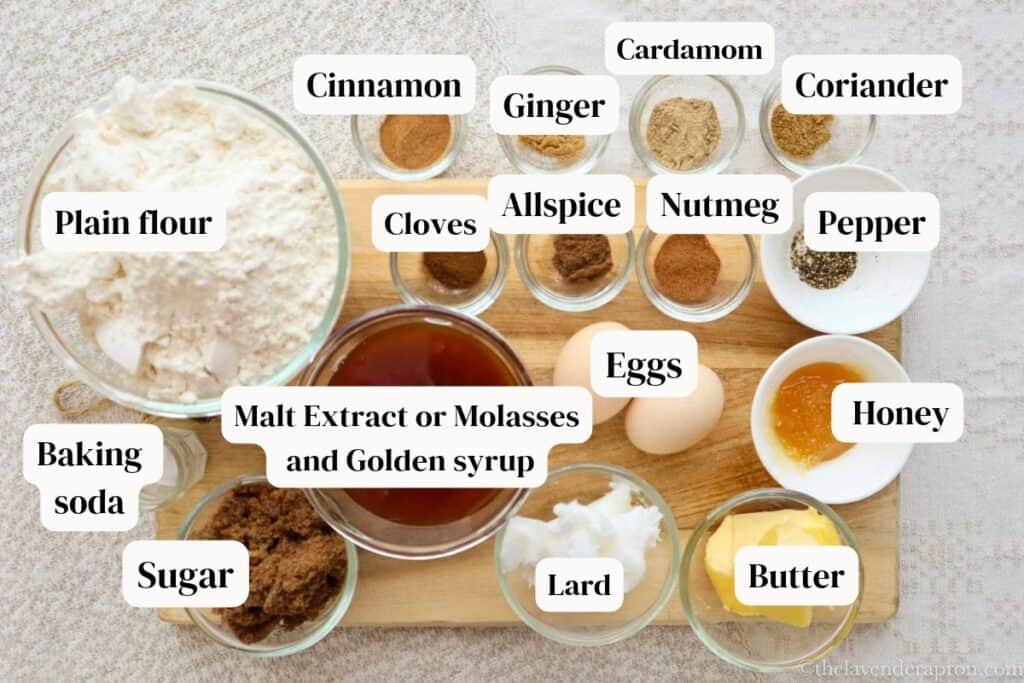
- Malt extract (see Other Ways to Make Them if you don’t have any). This is extract of malted barley, the Latvian “iesala ekstrakts”, and it’s what gives these their toasty depth and color. Many Latvian recipes use it, including the old family recipes I based mine on. Other Latvian recipes use dark sugar syrup (tumšais sīrups) or caramelized sugar instead, and English-language recipes usually swap in molasses, golden syrup or corn syrup. Use a liquid, unhopped malt extract. Brew shops often sell several shades, so choose light or amber, not dark. Hopped brewing extract tastes bitter, and dry malt powder or diastatic malt (the bread improver) won’t work here. Once opened, keep the jar in the fridge and use it within about 3 months.
- Honey. I use honey from our own bees. Any honey works, liquid or creamed. A darker, stronger honey can add more flavor.
- Dark brown sugar. I tested this recipe with superfine, light brown and dark brown sugar. Dark brown is my favorite and light brown is my second choice. The cookies look similar, but the flavor and color get a little deeper the darker the sugar. It’s not a game changer, though, and superfine or granulated sugar will work and give you a slightly crisper cookie.
- Lard. Lard is pure fat, while butter is about 16% water, so lard gives a shorter, crisper snap. Many older Latvian recipes use lard and butter together, and a 1930s recipe for hard piparkūkas uses equal amounts of each.
- Baking soda. Only ½ teaspoon. Old Latvian cookbooks warned that even a little too much gives a soapy taste and a dark, rusty color, and that it should always be dissolved first, which is why it goes in with a teaspoon of water.
- Spices. I use ordinary ground spices from the supermarket, and they work well. Just make sure they are fresh, as the same recipe can taste noticeably milder with an older jar. Many Latvian bakers grind their own and say the aroma is completely different, so it’s worth trying if you have a spice grinder. To make them spicier or milder, see “Adjusting the spice level” below. If you use a ready-made gingerbread spice mix, use about 7 teaspoons, and taste first. Some brands are very peppery.
Where to Find Malt Extract
- Australia: Saunders’ Malt Extract from the supermarket, or Coopers Liquid Malt Light or Amber from home-brew shops. Coopers gives a lighter color; Saunders is a little darker and maltier.
- UK: Meridian Barley Malt Extract, sold at Holland & Barrett in 370 g jars. One jar covers a batch.
- USA: Eden Barley Malt Syrup from Whole Foods and larger supermarkets, or Brewer’s Best or Briess liquid malt extract from home-brew shops.
How to Make Latvian Gingerbread Cookies
Making the Dough
It’s easier if you have all your ingredients all nice and measured out and ready to go. Once you start heating the sugars and fats, you will have to work fairly quickly and keep a close eye on the dough.
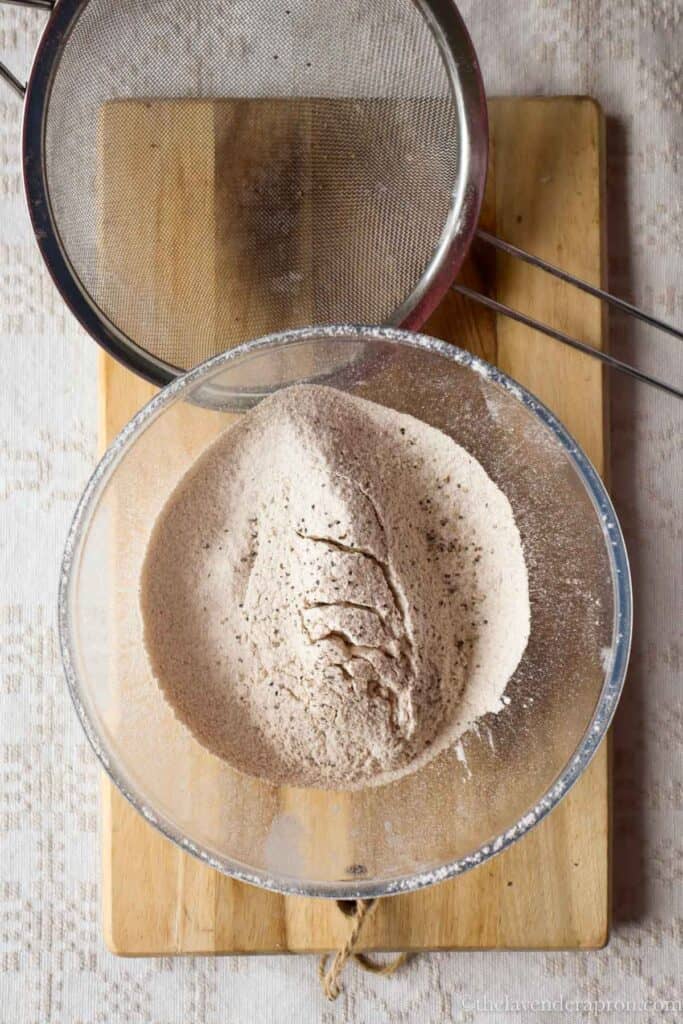
1. Sift dry ingredients. Use only half of the flour and sift it together with the spices in a large bowl. Sift the other half of the flour and leave it in another small bowl.
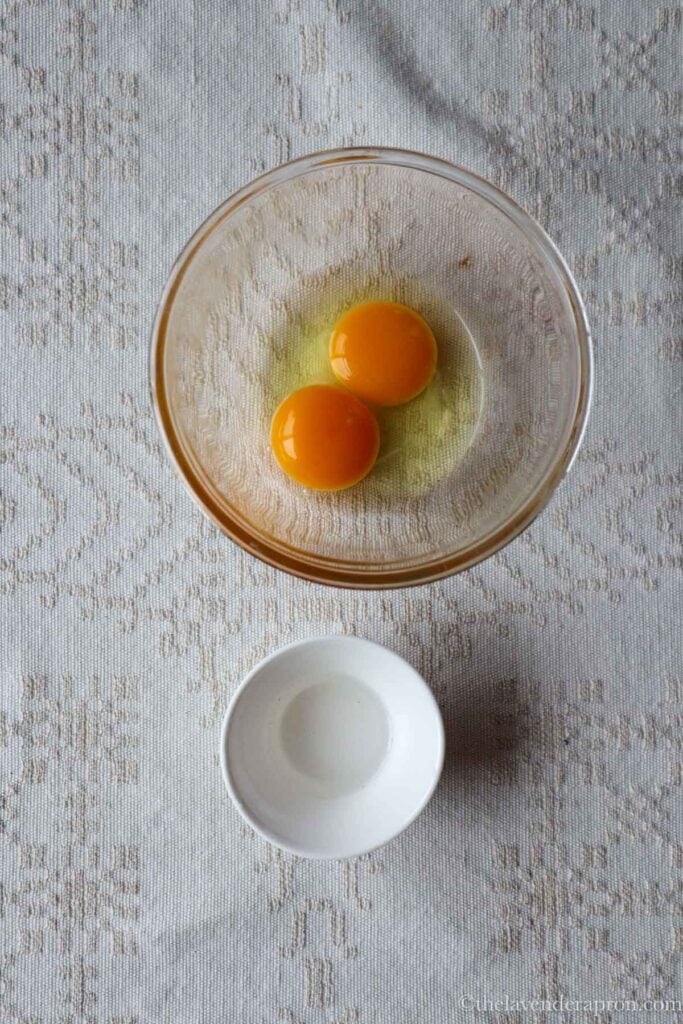
2. Get the eggs ready and dissolve the baking soda in a little bit of water.
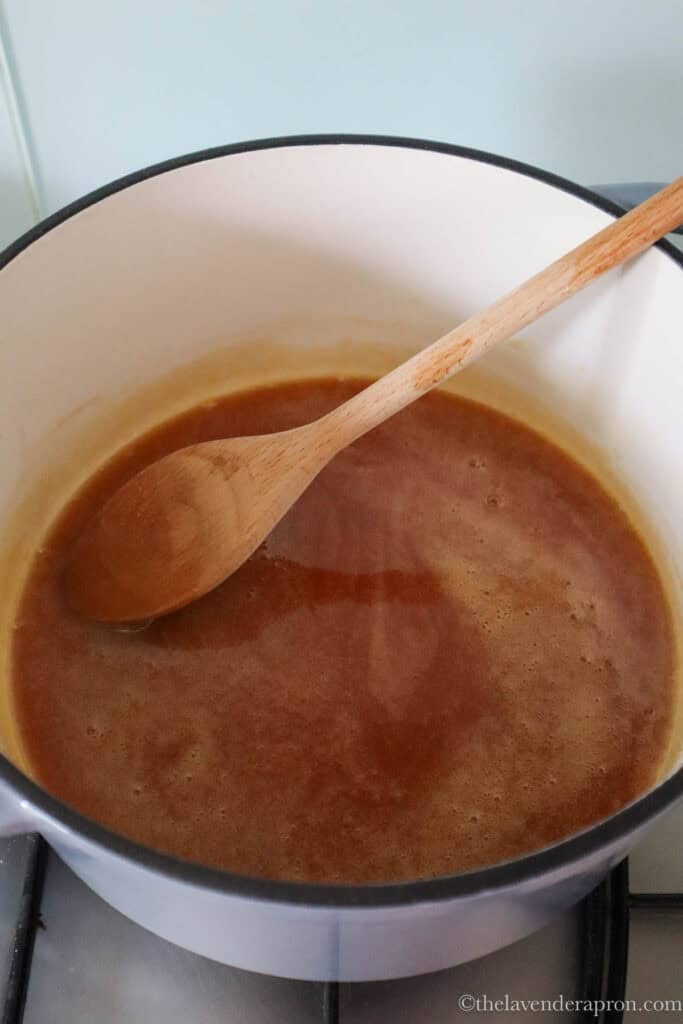
3. Dissolve the sugar slowly. Put the malt extract, honey, dark brown sugar and 1 tbsp water in a large, heavy-based pan and stir over low heat for 3 to 5 minutes, or a little longer with brown sugar, until there are no grains left. It shouldn’t bubble at this stage. I use my Dutch oven: the thick base heats gently and evenly, which makes it much easier to stop the syrup before it boils.
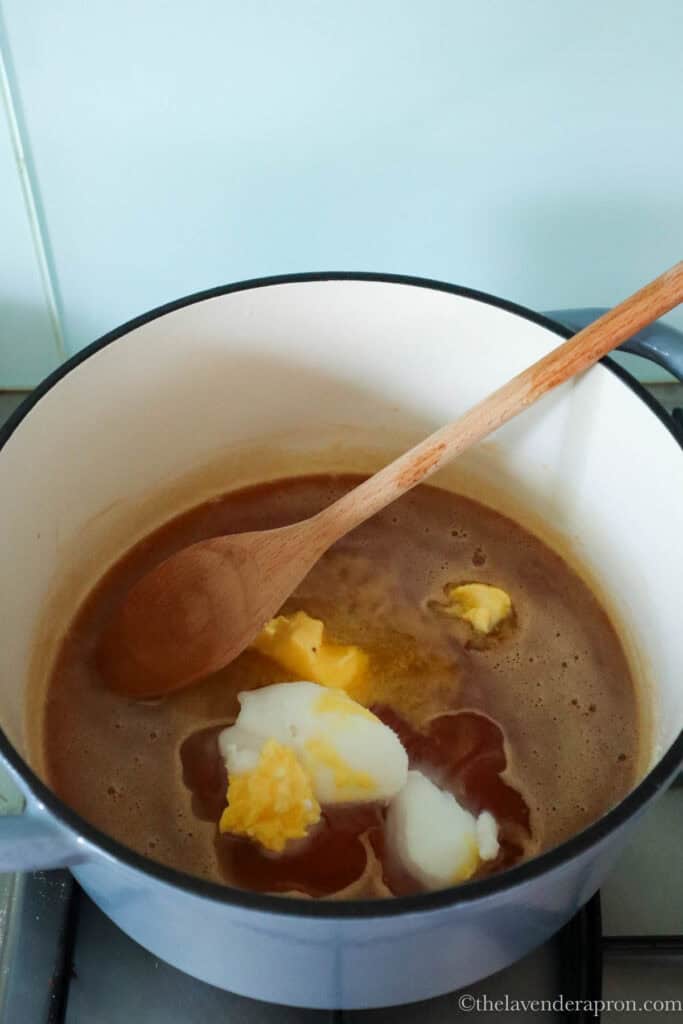
4. Melt the fat. Stir in the lard and butter until melted.
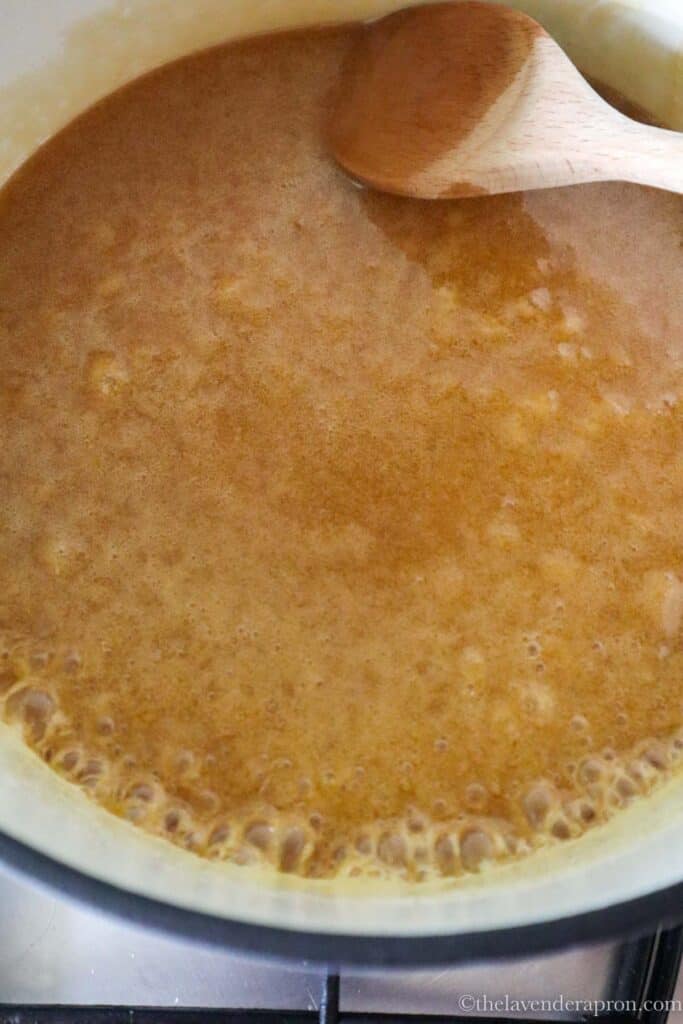
5. Bring to almost boil. Turn the heat up a little and stop at first bubbles. The moment small bubbles appear at the edge, take the pan off the heat. If it boils too much, the mixture forms little hard lumps (I think the sugar seizes) and you’ll need to start again.
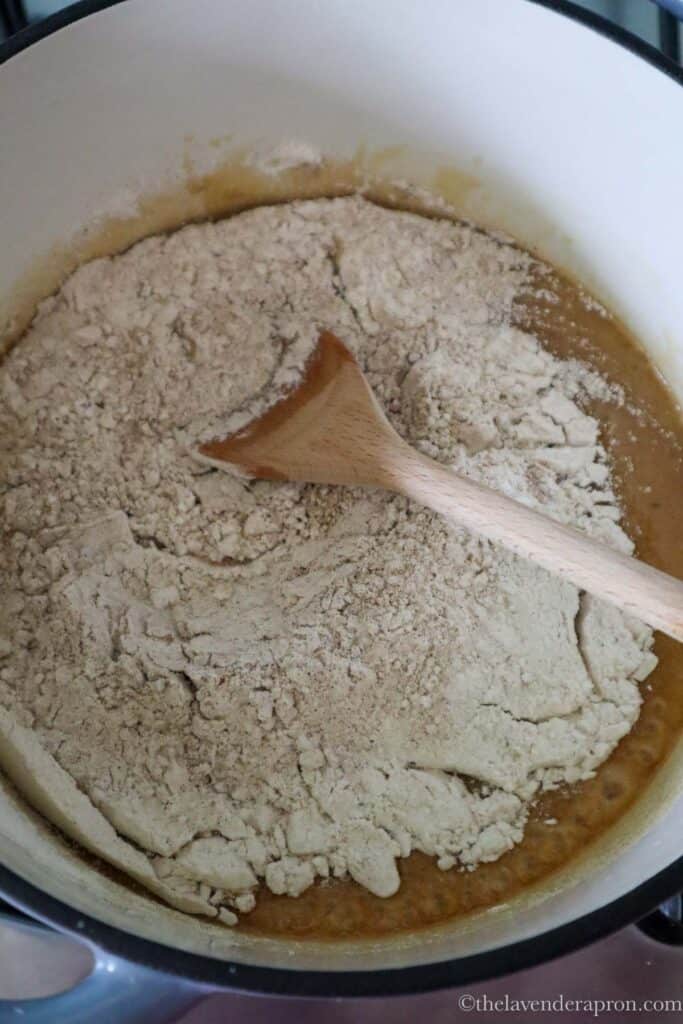
6. Scald the spiced flour. Straight away, tip in the first 2 cups (250 grams) of flour mixed with the spices, and beat with a wooden spoon until the dough comes away from the sides of the pan. Scalding the flour gives a smooth, pliable dough that rolls very thin.
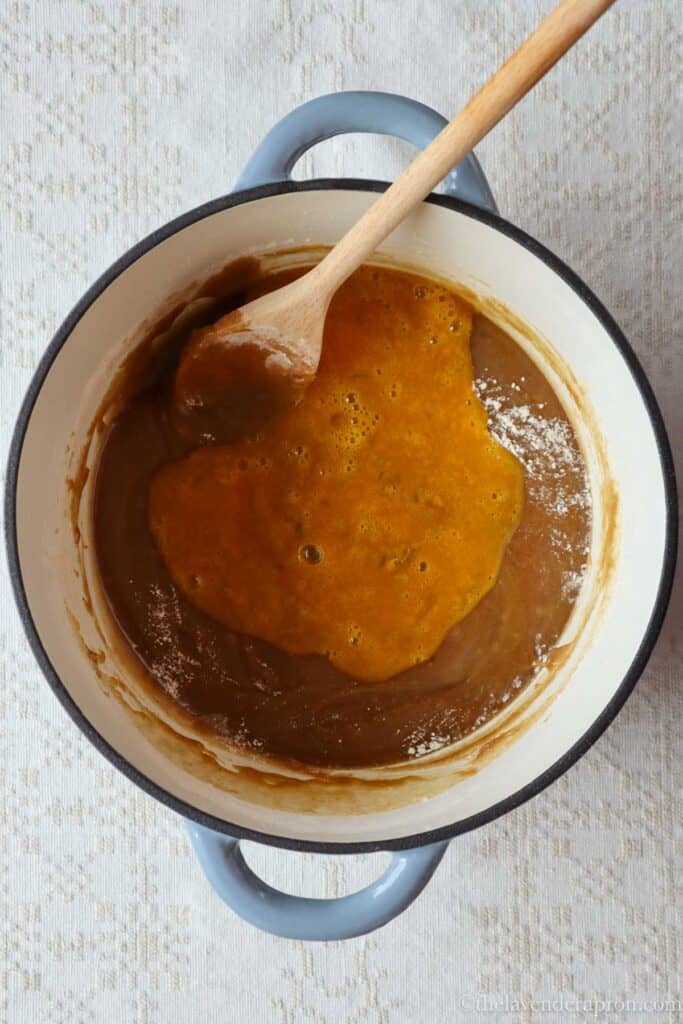
7. Cool, then add the egg. Let the dough cool to 95 to 105°F (35 to 40°C). Basically, it needs to be warm but not hot, so the egg doesn’t start to cook. Beat in the egg, the yolk and the baking soda dissolved with the salt in 1 tsp water.
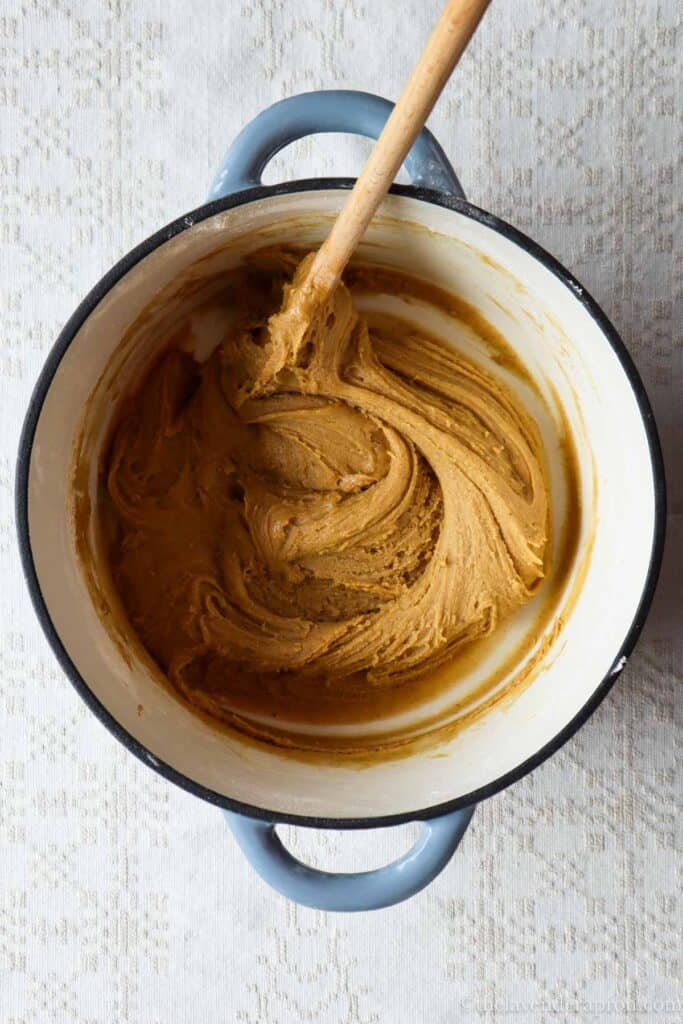
8. Add the remaining flour. Stir in the remaining flour with a wooden spoon until you get a uniform texture. Don’t freak out that it’s soft and sticky! Totally normal. It firms up as it rests, so do NOT add extra flour now. The dough will come together as it cools.
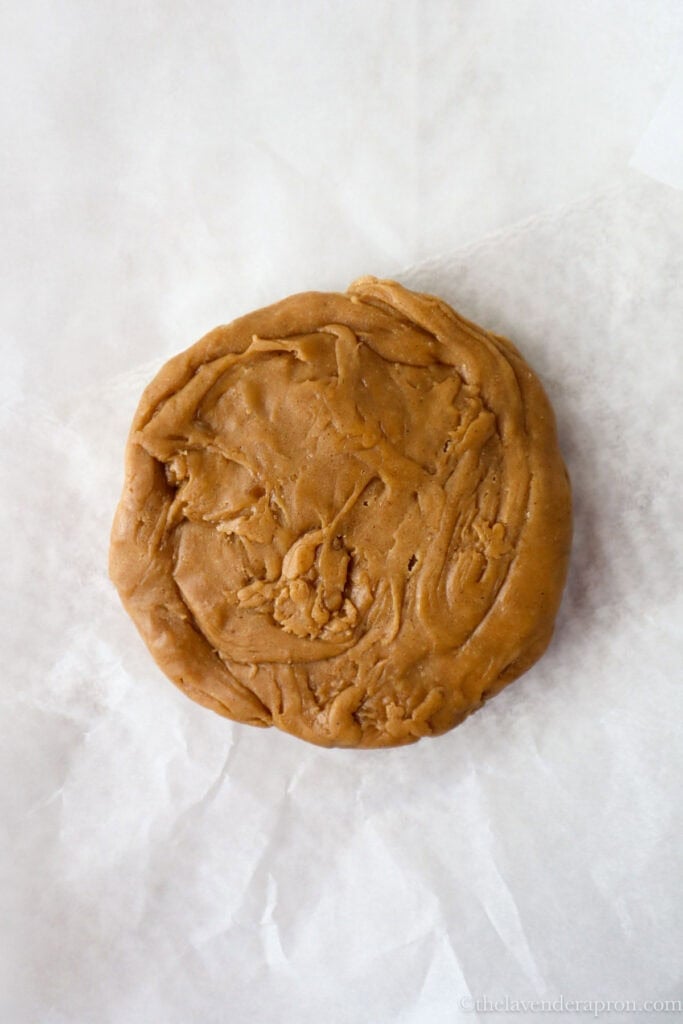
9. Wrap and rest. Press the dough into one or two flat disks about 1 inch (2.5 cm) thick and wrap tightly. Cool for up to an hour, then refrigerate overnight, or for three days for the fullest flavor.
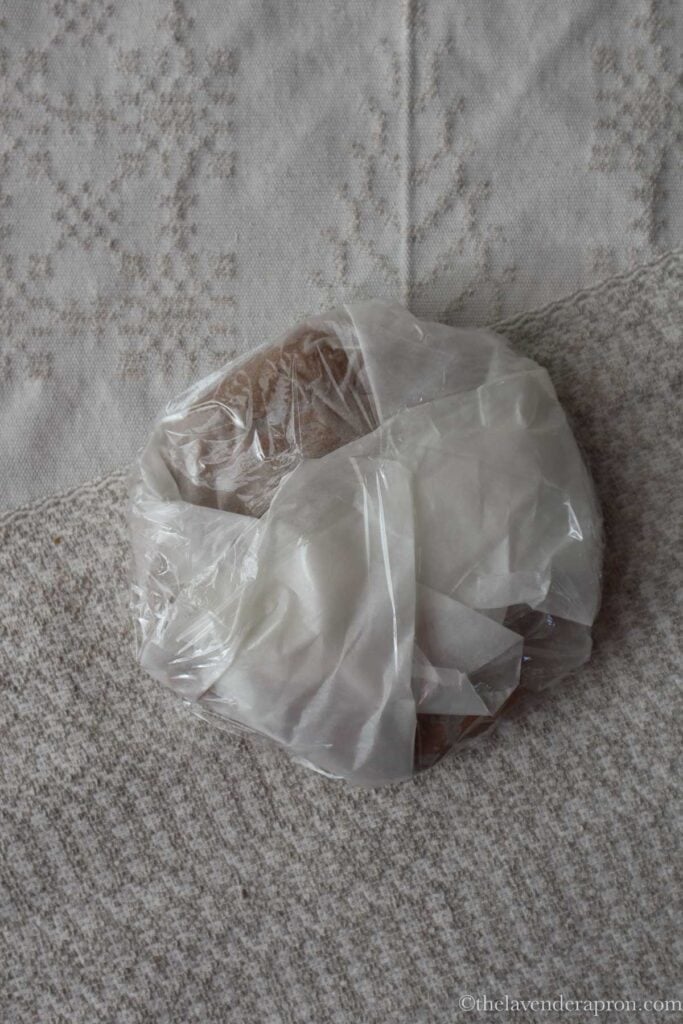
I like to wrap first in parchment paper and then in plastic wrap.
Baking the Cookies
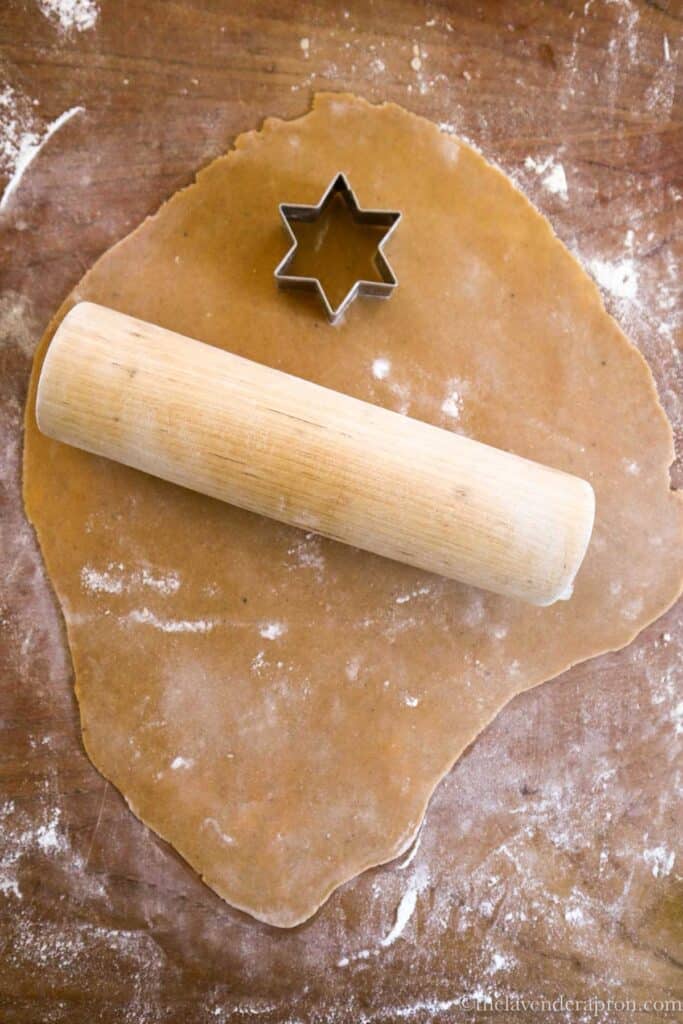
10. Roll very thin. Take the dough out of the fridge 30 minutes before rolling. Working with a small piece at a time and using some extra flour for dusting, roll as thin as you can, about 1/16 in (1 to 2 mm). The thinner you roll, the crisper they snap. You can use a flat knife to lift the cut-out cookies off the floured surface onto the baking tray.
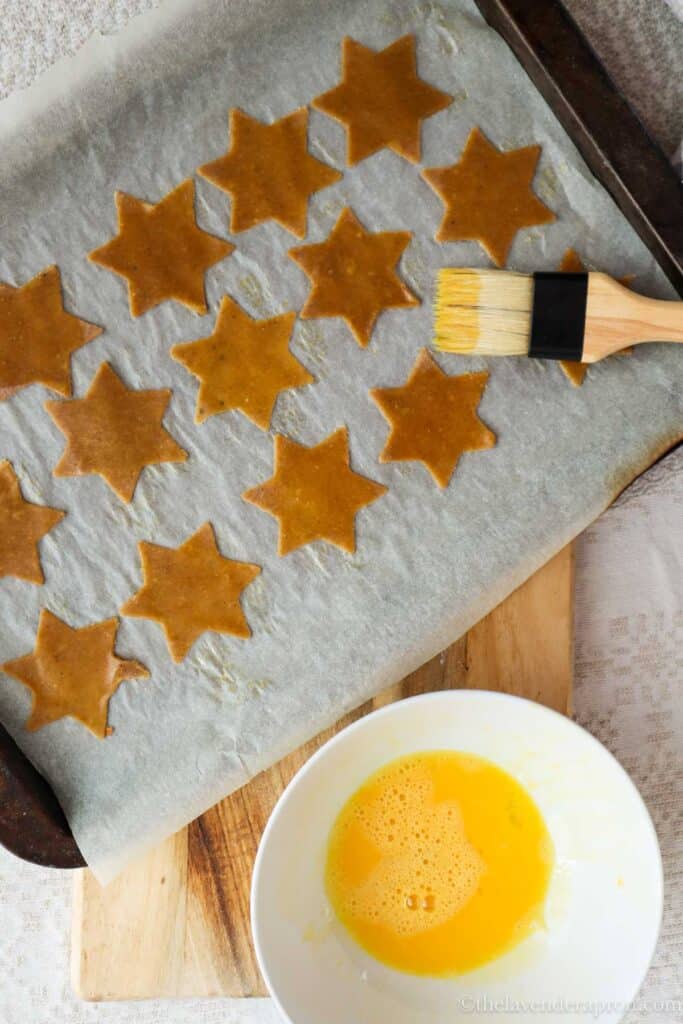
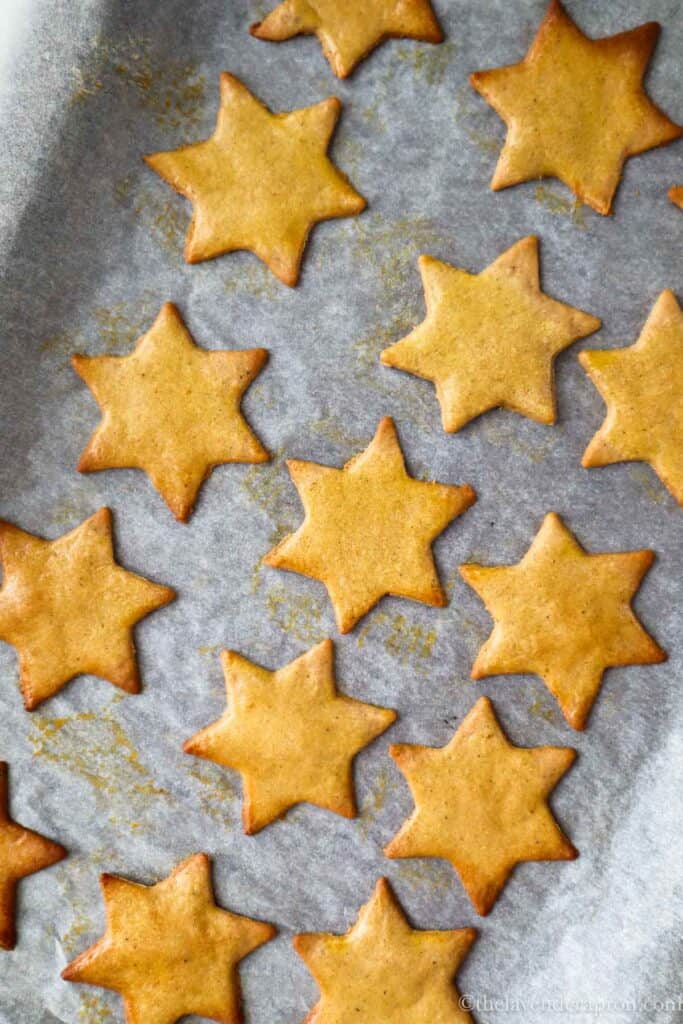
11. Bake. Place them on a baking sheet lined with parchment paper and brush with beaten egg if you’d like a shine. Bake at 390°F (200°C), 350°F (180°C) convection or gas mark 6, for about 5 to 6 minutes, until golden brown and the edges just begin to darken. Bake one test sheet first to learn your oven. They crisp up as they cool, then go straight into an airtight container.
How to Ice Piparkūkas (Optional)
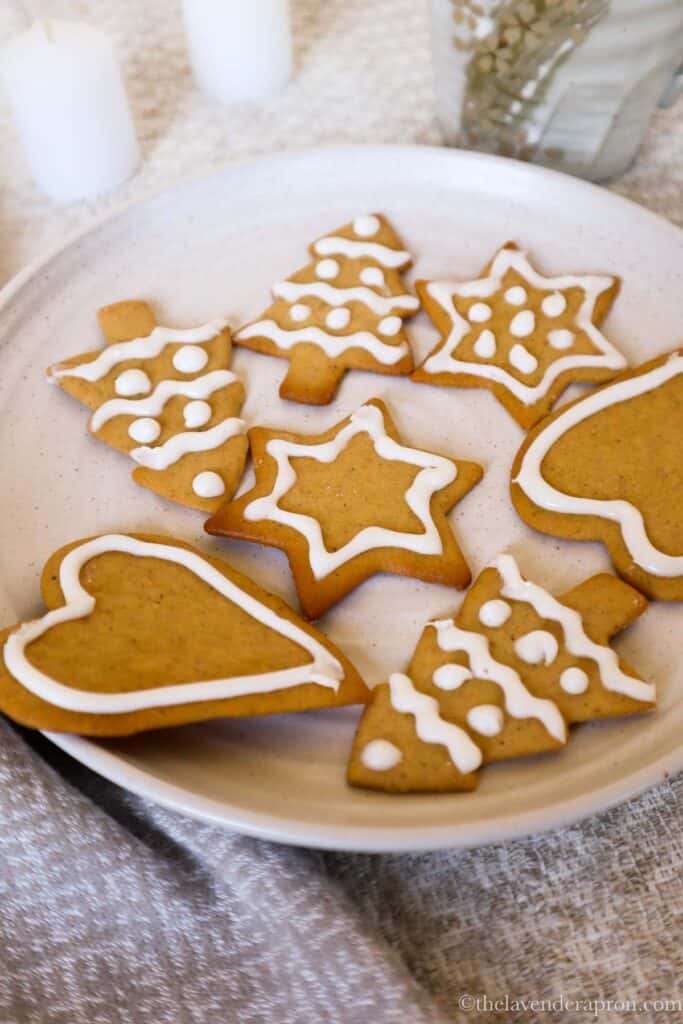
Most of my piparkūkas stay plain, the way I remember them, but if you’d like to decorate them, this simple egg white icing mixture is a popular Latvian recipe.
- In a clean, dry bowl, whisk 1 egg white until foamy.
- Gradually beat in 1⅔ to 2 cups (200 – 250 grams) of sifted powdered sugar, then ½ tsp lemon juice, until the glaze is snow-white, thick and glossy, like thick sour cream. That takes about 3 to 5 minutes with a mixer.
- If it’s too runny, add a little more powdered sugar. If it’s too thick, add a few drops of lemon juice or water.
- Pipe it with either a piping kit or just put some in a zip-lock bag and cut off a tiny corner piece. Or you can brush it onto completely cooled cookies, add sprinkles while it’s wet, and let it dry for about 2 hours, until hard.
The icing dries quickly, so keep the bowl covered while you work. It uses raw egg white, so for young children, anyone pregnant or older adults, use pasteurized egg white or meringue powder, or the egg-free icing in the recipe card notes.
Or, you can do what I do most of the time, which is just go to the supermarket and buy some icing sold in a bottle that you can easily squirt on.
Tips for the Best Piparkūkas
- Weigh your flour. Cups vary a lot, and a little too much flour is a common reason piparkūkas turn out hard. A kitchen scale makes this recipe way, way more reliable.
- Prepare all your ingredients in advance. Once you start making the dough, you need to keep a close eye on it and not be distracted trying to find and measure out your next ingredient.
- Watch the oven carefully. Thin cookies go from “done” to overbaked very quickly.
- Keep the rest of the dough wrapped. Work with one small piece at a time so the rest doesn’t dry out.
- Dip your cookie cutters in flour. If the dough sticks to your cookie cutters, dip them in a little flour between cuts and tap off the extra.
- Cut big shapes straight on the parchment paper. For small, very thin cookies, I roll on a lightly floured counter, because parchment tends to crease when you roll the dough really thin. But for larger, slightly thicker shapes, like hearts for hanging, roll and cut them directly on the parchment, peel away the scraps, and slide the whole sheet onto the baking tray, so they don’t stretch when you lift them.
- Judge the spice the next day. The flavor settles and deepens once the cookies have cooled completely, so taste one the next day before changing the spices. Also, taste a couple in a row. One cookie may not taste particularly spicy, but you may change your mind after eating a few.
Troubleshooting
- The dough feels gritty. The sugar didn’t fully dissolve before the fat went in. Next time, stir a little longer over low heat. Note: A slightly gritty dough often smooths out during the rest.
- The dough is too sticky to handle. That’s normal while it’s warm. Wrap it and chill it. If it’s still too soft to roll after resting, work in a little extra flour as you roll out the cookies.
- The cookies puffed or bubbled. Roll them thinner, or reduce the baking soda to ¼ tsp next time. A little bubbling is normal.
- They’re hard instead of crisp. They were probably rolled too thick, baked too long or had extra flour worked in. Next time, roll them thinner and take them out as soon as the edges color.
- They went soft in the container. The container wasn’t airtight, or they went in before they were completely cool. Re-crisp them on a baking sheet at 300°F (150°C) for 2 to 3 minutes and let them cool again.
- The mixture formed little hard lumps. It boiled. Once that happens it won’t come back, so start again, and take the pan off the heat at the very first bubbles next time.
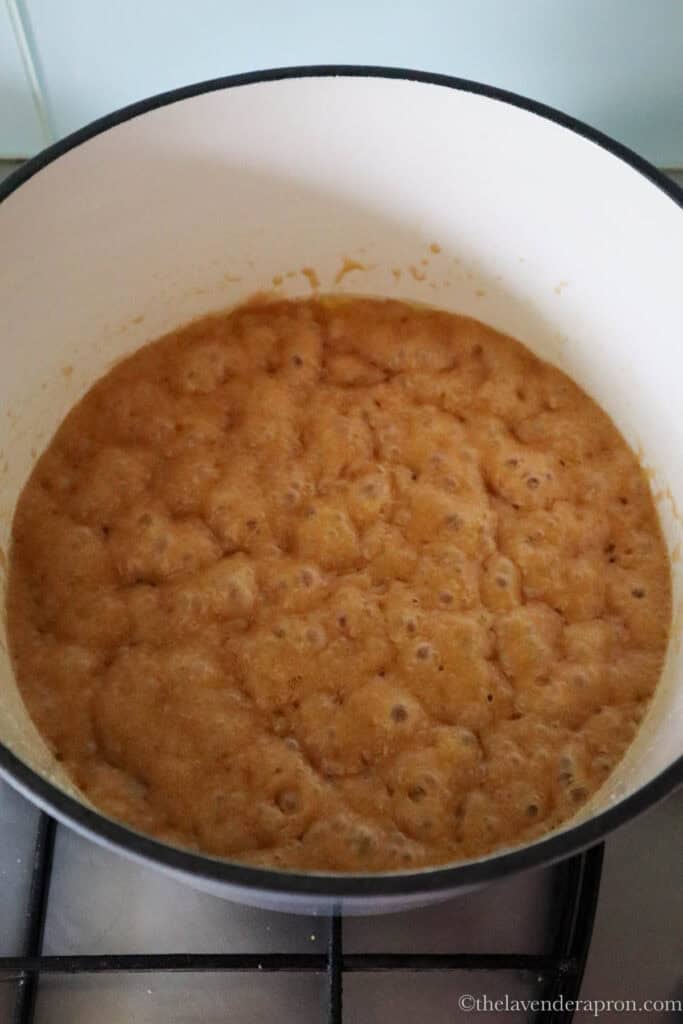
Be patient! Don’t be tempted to boil the mixture to dissolve the sugar faster.
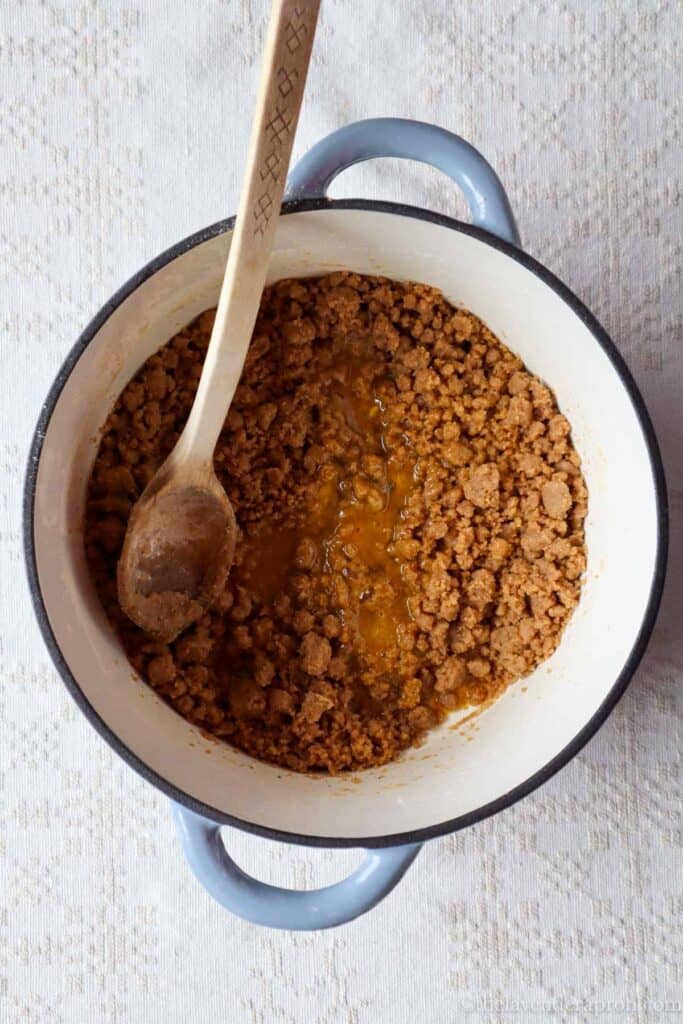
Otherwise when it cools you get this lumpy, hard little pebble-like mixture!
Other Ways to Make Them
After many test batches, I baked five versions – four of them side by side. Each one has its strengths.
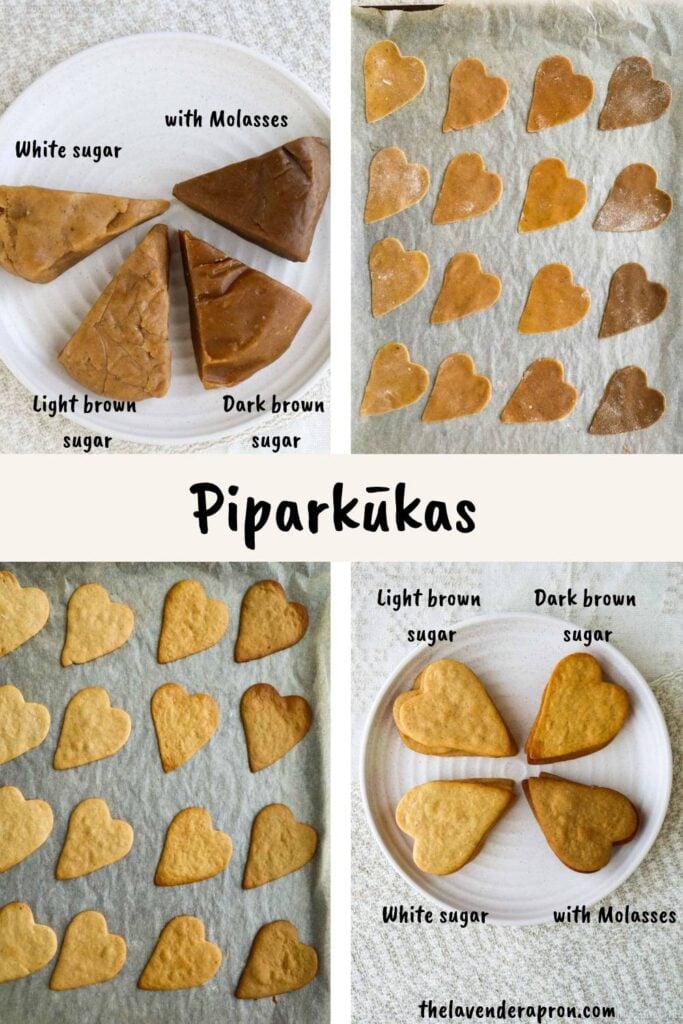
#1 Dark brown sugar, malt extract and half butter/half lard
This is my favorite and the closest to my grandmother’s, and the recipe in the recipe card.
#2 and #3 White sugar or light brown sugar
White sugar cookies are the crispiest of the versions I tested and are very good, but they lack a little of the depth of flavor and color that brown sugar gives. They look almost identical to using light brown sugar. Also, superfine sugar dissolves a little faster.
Light brown sugar gives you a little more caramel flavor, but not as much as the dark brown sugar. See recipe card notes for recipe adjustments if you use white sugar.
#4 Golden syrup and molasses piparkūkas
If you don’t have any malt extract, don’t despair! You can use golden syrup (UK and Australia) or light corn syrup (USA) mixed with molasses.
- Replace the ⅔ cup (200 g) malt extract with ⅓ cup + 1 tbsp (130 g) golden or light corn syrup and 3½ tbsp (70 g) regular molasses, not blackstrap. In the UK, black treacle is the closest match.
- Use a scant ½ cup (100 g) brown sugar instead of ½ cup + 1 tbsp (120 g), because golden syrup is sweeter than malt.
Taste difference: The molasses changes things the most. It gives these Latvian gingerbread cookies the nice dark brown color everyone loves, and you can definitely taste it, so it’s really a question of whether you like molasses. My grandmother’s didn’t taste of molasses, and hers are still my favorite.
But these taste like classic piparkūkas I’ve had at Latvian parties. In my opinion, they taste a tiny bit more like American gingerbread (although they’re still very much piparkukas) and are slightly less crisp than the malt versions. If I had no malt extract, I’d happily bake these.
#5 – Butter only – no lard piparkūkas
I also tested my favorite #1 dark brown sugar version with only butter. You definitely taste the butter in this cookie if you only use butter. I thought I would prefer the only butter version, since I am such a butter fan, but honestly, the lard version won.
Although they’re quite similar, the lard version is slightly crispier and less hard. But if I don’t have any lard at home, this butter-only version is very good.
Adjusting the Spice Level
These are medium-spiced cookies, and my recipe goes easy on the ginger. My grandmother Vera’s had just a hint of it, and you can leave it out altogether, as some Latvian recipes do. She did use black pepper. I remember that, because it’s just such a strange thing to put in a cookie. Some people leave the pepper out and some use white pepper, but she used black, so I do too. And I like to see the little black specks in the cookie.
You can turn the spice up or down to suit your family. Many Latvians I know like their piparkukas quite spicy, so if that’s you, increase the spices from the start. And if you like the taste of traditional American gingerbread, add more ginger.
Other Swaps and Additions
- Orange zest: Add the finely grated zest of ½ orange with the spices. Dried orange peel turns up in old Latvian spice blends.
- Top the cut-out cookies with sliced almonds or poppy seeds.
How to Store Latvian Piparkūkas
- Dough: Keeps up to 3 days in the fridge, tightly wrapped, or up to 3 months in the freezer. Thaw frozen dough in the fridge overnight before rolling. Many Latvian families traditionally keep the dough for weeks, and a 1930s Latvian cookbook even says it kept for up to two months somewhere cool and dry. Today I follow modern food safety guidance and freeze anything I won’t bake within 3 days.
- Bake in batches: This recipe makes a lot of cookies. Rolling and baking the whole batch takes me 2 to 3 hours, depending on how focused I am, so like many Latvian families, you can bake a few trays at a time over several weekends in December. Or find your favorite podcast for a whole afternoon of baking 🙂
FAQ
Are there similar cookies in other countries?
Yes, all around the Baltic Sea, and most of them are called “pepper cakes” too: piparkoogid in Estonia, piparkakut in Finland, pepparkakor in Sweden and pepperkaker in Norway.
They’re close cousins, mostly thin and crisp, but each country has its own twist. Swedish ones usually use light syrup, Estonian ones are often made with dark syrup or molasses, and Latvian piparkūkas often use dark syrup or malt extract, which gives them a deeper, toastier flavor.
Lithuania is the odd one out: its best-known Christmas cookies are kūčiukai, small crunchy biscuits eaten with poppy seed milk on Christmas Eve.
Piparkūkas are usually rolled much thinner, so they bake up crisp and snap cleanly, where American gingerbread is usually thicker and softer. Latvian gingerbread cookies are also less sweet, and the spice is a blend rather than a single flavor: cinnamon, cardamom, cloves, allspice, coriander, nutmeg and a little pepper all play a part, and ginger stays in the background instead of leading (and some recipes even leave it out completely). And many traditional recipes, like mine, use lard and butter together, which gives that delicate crunch.
Yes, it halves easily. Half a batch still makes plenty for a gift tin or two.
Yes! And rolling and cutting (and decorating) are the best parts. The hot syrup stage is a job for an adult.
Roll the dough a little thicker and bake them for a shorter time, just until the edges set. They’ll stay soft in the middle.
Golden syrup (or light corn syrup) and molasses. See Other Ways to Make Them for the amounts and how the cookies turn out. Do NOT use Marmite or Vegemite. They’re yeast extracts, not malt, and they’re salty. They taste like stock cubes!
What to Serve with Piparkūkas
We like piparkūkas with tea or coffee in the afternoon. At Latvian gatherings before Christmas, you may see them on a table with a plate of cottage cheese cake bars, a Latvian favorite all year round.
At home, I serve them with a plate of biezpiena cepumi, my Latvian cottage cheese cookies, which are best the day they’re baked or the day after.
For a festive cookie plate, add my oatmeal cranberry white chocolate cookies with orange zest and cardamom. If you’re baking a showpiece for the holidays, my chocolate chestnut yule log is our family’s French Christmas dinner dessert.
Made these? Leave a star rating and a comment below. I’d love to hear how they turn out and any suggestions you might have 🙂
Piparkūkas Recipe Card
Piparkūkas (Latvian Gingerbread Cookies)
Equipment
- 1 Dutch Oven or large heavy-based pan. The thick base heats gently and makes it easier to stop the syrup before it boils.
- 1 Kitchen Scale to measure the flour, malt and sugar.
- 1 Sturdy wooden spoon for beating the flour into the hot syrup
- 1 Sieve for sifting flour and spices
- 1 Kitchen thermometer (Optional) to check temperature of dough.
- Parchment paper to wrap the dough
- Plastic wrap to wrap the dough (first in parchment paper)
- Small cookie cutters about 2 to 2½ in (5 to 6 cm)
- 1 Pastry brush for egg wash
- Cookie tins or airtight container, for storing
Ingredients
- 2 cups all-purpose (plain) flour for the spices
- 2 tsp ground cinnamon
- ¾ tsp ground ginger optional
- 1½ tsp ground cardamom
- ½ tsp ground coriander
- ¾ tsp ground cloves
- ¾ tsp ground allspice
- ½ tsp ground nutmeg
- ¼ tsp freshly ground black pepper
- 2/3 cup unhopped liquid malt extract light or amber
- 3 tbsp honey
- 9 tbsp dark brown sugar packed (or light brown or superfine sugar)
- 1 tbsp water
- 5½ tbsp lard
- 5 tbsp butter
- ½ tsp baking soda
- 1 pinch sea salt
- 1 tsp water
- 1 egg + 1 egg yolk lightly beaten
- 2 cups all-purpose (plain) flour added after the egg
- 1/2 cup all-purpose (plain) flour for rolling out the dough
- 1 egg beaten, for glazing (optional)
For the icing (optional)
- 1 egg white
- 2 cups powdered sugar sifted
- ½ tsp lemon juice
Instructions
- Mix the spices into the first 2 cups (250 grams) of flour.
- In a large, heavy-based pan or Dutch oven, stir the malt extract, honey, dark brown sugar and 1 tbsp water over low heat for 3 to 5 minutes, or a little longer, until no grains remain. Do not let it bubble.
- Add the lard and butter and stir until melted.
- Raise the heat slightly and stir. Remove from the heat as soon as small bubbles appear at the edge. Do not let it boil.
- Immediately beat in the spiced flour with a wooden spoon until the dough leaves the sides of the pan.
- Cool to 95 to 105°F (35 to 40°C).
- Dissolve the baking soda and salt in 1 tsp water. Beat in the egg, yolk and soda mixture.
- Stir in the remaining 2 cups (250 grams) of flour until even. The dough will be soft and sticky. Do not add extra flour.
- Shape into flat disks, wrap, cool for up to 1 hour, then refrigerate overnight, or up to 3 days for the fullest flavor.
- Take the dough out of the fridge 30 minutes before rolling. Roll small pieces to 1/16 in (1 to 2 mm) thick on a lightly floured surface.
- Cut out shapes, place on baking sheets lined with parchment paper, and brush with beaten egg if you like.
- Bake at 390°F (200°C), 350°F (180°C) convection or gas mark 6 for about 5 to 6 minutes, until the edges just begin to darken.
- Cool on the baking sheet, then store in an airtight container.
To Ice (Optional)
- Whisk the egg white until foamy, then gradually beat in the powdered sugar and lemon juice until thick, white and glossy, like thick sour cream.
- Pipe or brush onto completely cooled cookies, and let dry for about 2 hours, until hard.
Notes
- Ginger: Optional. Use up to 1 tsp, or leave it out. There is some debate about whether Latvian gingerbread cookies should have ginger in them (some recipes don’t), but my grandmother’s did.
- Orange zest: Add the finely grated zest of ½ orange with the spices. Orange zest is sometimes included in older recipes.
- Dark brown sugar: You can substitute ½ cup + 2 tbsp (120 g) superfine or granulated sugar, or ½ cup + 1 tbsp, packed (120 g) light brown sugar.
- Golden syrup and molasses version: Replace the malt extract with ⅓ cup + 1 tbsp (130 g) golden syrup and 3½ tbsp (70 g) molasses, and cut back the sugar to a scant ½ cup (100 g) light or dark brown sugar.
- No lard: Use about 2/3 cup (155 g) butter in total.
- If the cookies puff: Use ¼ tsp baking soda next time.
- Storage: Dough keeps up to 3 days in the fridge or 3 months frozen (thaw overnight in the fridge). Baked cookies keep several weeks in an airtight container, so they make lovely gifts.
- Egg-free icing: Stir 1 cup (120 g) powdered sugar with 1½ tbsp milk or lemon juice. It doesn’t dry as hard.
- Icing safety: The glaze uses raw egg white. For young children, anyone pregnant or older adults, use pasteurized egg white or meringue powder. Or try the egg-free icing above.
Nutrition
A Little Piparkūkas History
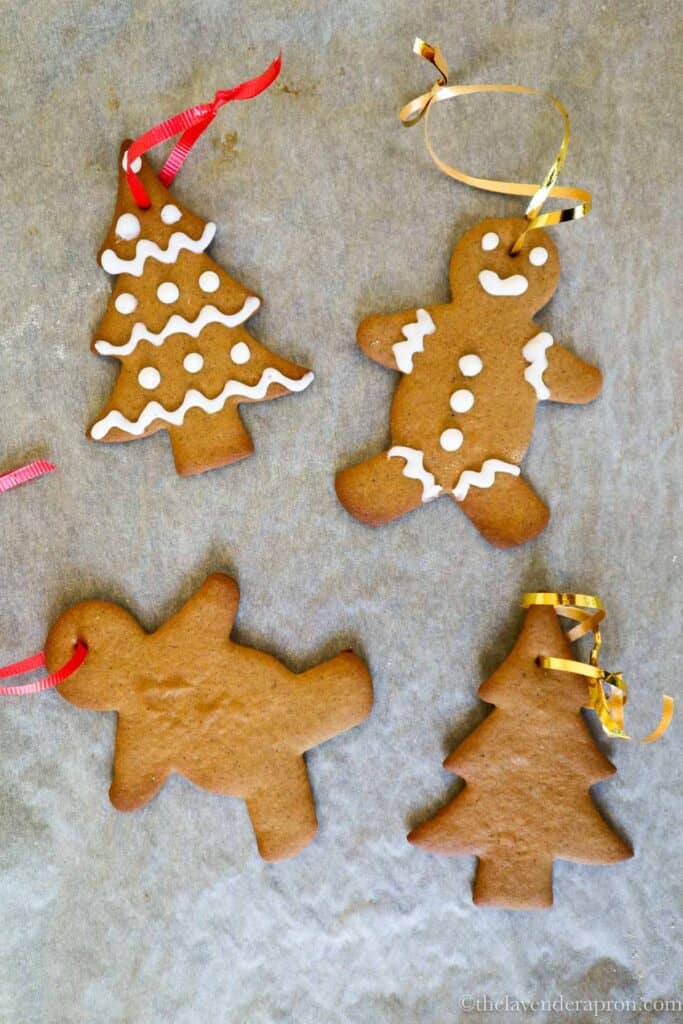
In Latvian culture, piparkūkas are a very important part of the Christmas tradition. Many Latvian families make their dough around the first Sunday of Advent, so it’s ready for weeks of baking before Christmas and the spices keep developing as it rests. In Latvian communities abroad, churches still hold piparkūku talkas, baking bees where volunteers roll and bake hundreds of pounds of cookies for their Christmas bazaars.
My mother remembers the Christmas tree in Latvia lit with real candles and hung with piparkūkas, and sometimes oranges too, though she’s not sure whether those were on the tree or just nearby. Riga even claims the first decorated Christmas tree, back in 1510, though Tallinn insists it got there first, in 1441. And on 9 December 2011, just in time for Christmas, Latvia issued a 1 lats coin with a piparkūka heart on it.
In the late 1800s and early 1900s, the most famous piparkūkas of all were the honey piparkūkas from the Zīslaks bakery in Jelgava. People remembered them being loved across the Baltics and as far away as Tsarist Russia. The recipes have changed since then, too: a 1930s Latvian recipe for hard piparkūkas, which the Jelgava History and Art Museum thinks may be close to the old Jelgava ones, uses less than half the sweetener of mine, with coriander and bitter orange peel rather than cinnamon leading the spice.
Many older Latvian recipes also caramelized part of the sugar first, an old trick for darker piparkūkas. I haven’t tried it myself, but if you’d like to, this Latvian recipe from Jauns.lv browns the sugar before adding malt extract and honey (your browser’s translate button will help).
Other Piparkūkas Recipes Worth Trying
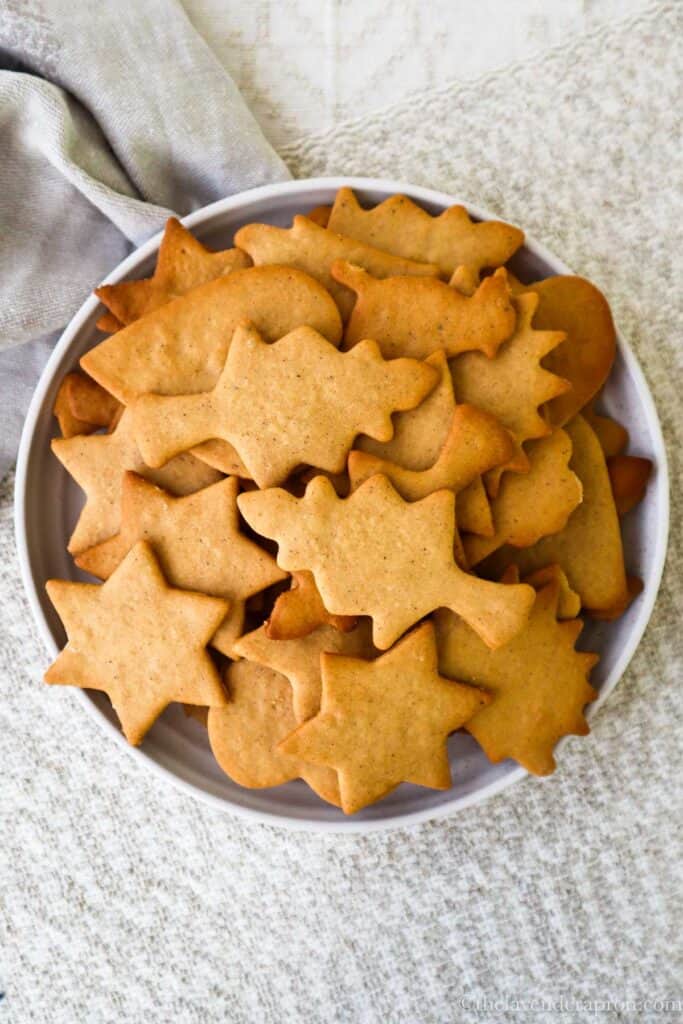
I could find about thirty Latvian piparkukas recipes out there, in family blogs, Latvian public broadcasting, a 1930s cookbook and diaspora cookbooks from America and Canada, and many of them are quite similar. I read through most of them and studied a handful in real detail to rebuild my grandmother’s. These are the ones I thought were the most interesting. The first seven are in Latvian, but you can use your browser’s translate button 😉
- Tradicionālā piparkūku mīkla mājās (Kurzemes Vārds, on Liepajniekiem.lv). Traditional piparkūkas dough at home. My grandmother Vera was from Liepāja, so I especially loved finding this collection from its regional newspaper. Readers shared their family recipes: a classic honey dough darkened with baking soda, a burnt-sugar version with star anise, a mother’s malt extract recipe that bakes up brittle and crisp, a simple sugar syrup dough, and a soft piparkūkas recipe. It also has a glaze colored with beet, carrot or berry juice, and handy tips, like using a wine bottle as a rolling pin. This is a good read if you’d like to compare several Latvian family doughs side by side and pick the style you like best.
- Vecmāmiņas Kētes piparkūkas (Pie Galda). Grandmother Kēte’s piparkūkas. Kēte copied this recipe from her own grandmother, who came to Latvia from Germany in the early 1800s, and it traveled with Kēte through her deportation to Siberia and back. Kēte’s are a little sweeter and more honeyed than mine, with gentle, evenly balanced spice and a thin, brittle snap. Be ready for a good kneading session!
- Medus piparkūkas (Našķoties). Honey piparkūkas. A popular Latvian recipe with dozens of reader comments, built on honey, dark brown sugar and sour cream. The same dough makes soft cookies or crisp ones, depending on how thick you roll it. Try this recipe if you prefer soft piparkūkas.
- Mājās gatavota piparkūku mīkla (Lindas Virtuve). Homemade piparkūkas dough. Malt extract and dark muscovado, with the flour scalded the old way. Linda’s are a little sweeter and puffier than mine, made with all butter and no honey or pepper, with the syrup brought to a boil and a spice blend led by cardamom and allspice instead of cinnamon.
- Medus piparkūkas (Latvian Television, Ralfs and Martins). A very engaging, fun video. This is a honey-forward recipe from a Latvian children’s cooking show, made by two young chefs, Ralfs and Martins. The first half of the video is about their bees, and the second half shows them making the piparkūkas. The dough uses honey, molasses (or dark sugar syrup) and cream instead of egg, so these come out softer than mine, and it’s a great one to watch with kids before making your own.
- Gardākā piparkūku recepte (University of Latvia). The tastiest piparkūkas recipe. A short video from the University of Latvia’s Advent calendar, where Professor Signe Bāliņa shares her family’s recipe and grinds a whole cup of her own spice blend: coriander, cardamom, cinnamon, cloves, allspice, a pinch of pepper and orange peel. Watch this video if you’d like to grind your own spice blend.
- Senās piparkūkas (Signe Meirāne, on Mammamuntetiem). Old-style piparkūkas. From pastry chef Signe Meirāne, with dark syrup, butter and no lard. Try this recipe if you like sweeter, caramel-y piparkūkas with a cinnamon-and-ginger spice.
- A Baltic Christmas: Piparkūkas (Femme au foyer). A Latvian-American family recipe in English, based on a Latvian baking book published in the USA in 1965. It uses honey, molasses and a little lard for crispness. You may like this recipe if you grew up with darker, spicier piparkūkas with a real peppery kick (popular in the American Latvian community).
- Gingerbread (LatvianEats). An English-language Latvian food blog with a recipe shared by the Latvian society in Sydney. LatvianEats’ are rolled thicker (5 mm) for a slightly soft cookie, made with golden syrup, all butter and extra eggs, with no honey or pepper, and heavily spiced, with a tablespoon each of cinnamon, cloves, ginger and cardamom.
- Latvian Pepper Cookies Recipe (Baltic Homesteaders, YouTube). An easy, family-friendly video in English. Their dough has no eggs and no ginger, just butter, dark honey and two kinds of sugar, with cinnamon, cloves, cardamom, coriander and a full 2 teaspoons of black pepper. Theirs are less sweet and more buttery than mine, with about four times my pepper.
A Little Note From My Kitchen
I started testing these at a time when life was a bit tricky, and I needed something to keep my hands busy and my mind off things. I liked how my kitchen smelled of cinnamon and cardamom, and I kept thinking of my vecmāmiņa and how she took her time to make them for us all.
Getting them just right brought back such happy memories, and now I get to share them with my own family, and with you.
Piparkūkas vary from family to family, and everyone has their favorite. Does your family make them differently? Tell me in the comments below 🙂
