
Cottage Cheese Cake Recipe (Latvian Biezpienmaize)

This post may contain affiliate links. Read my disclosure policy.
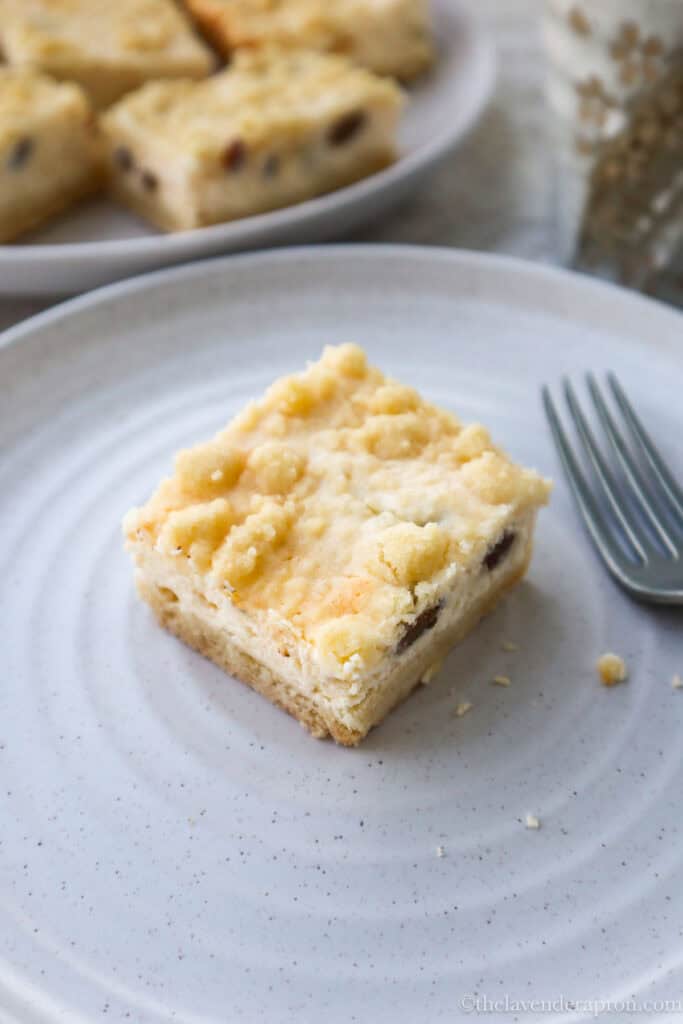
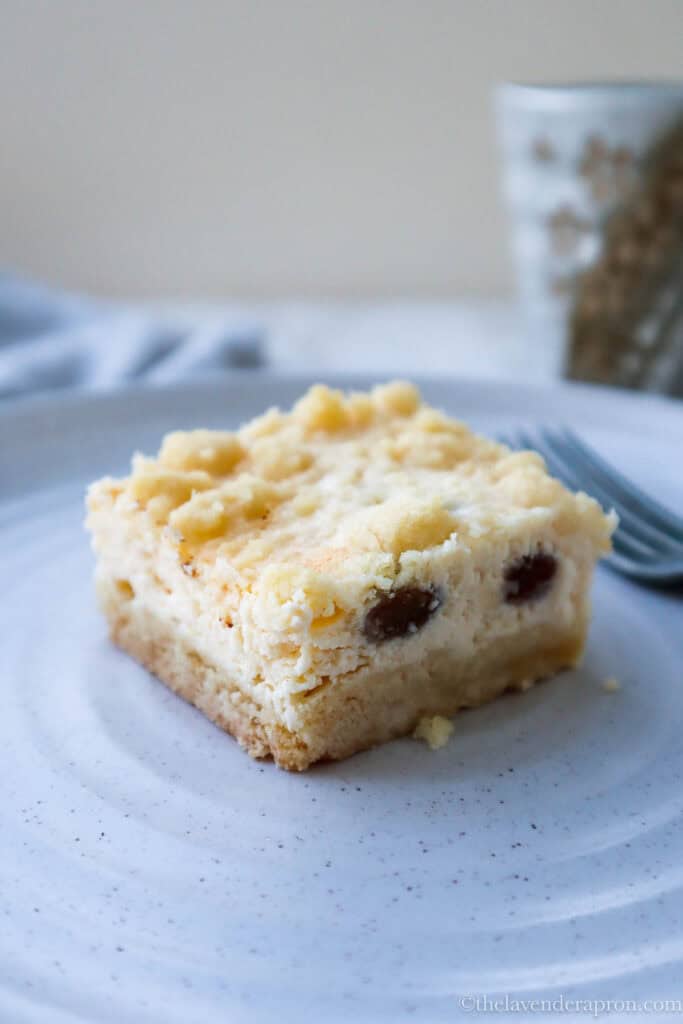
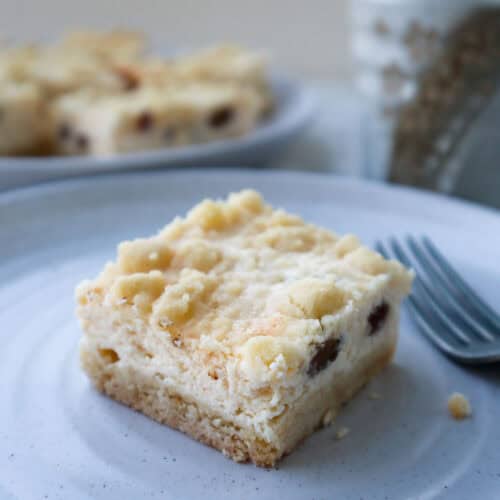
This cottage cheese cake recipe (Latvian biezpienmaize) has a buttery crumb base, a creamy filling of cottage cheese, eggs, and vanilla with just a hint of lemon, and golden crumbs on top. Very different from the rich, dense cheesecake Americans know.
Want to save this recipe?
This is tangier and lighter and you can eat easily a slice or two extra 😉.
This is my grandmother’s version, tested many times. It’s one of the best cottage cheese cake recipes I’ve tasted, and I’ve tasted a lot of them. Pretty much every Latvian social gathering will have biezpienmaize.
An absolute delight with a cup of tea on a drizzly day. I can totally recommend it!
– Brigitte
Cottage Cheese Cake Recipe Quick Look
Prep: 30 min | Bake: 35–50 min | Total: Under 2 hours (plus 4 hours chilling, overnight ideal) | Serves: 18 | Pan: 9 x 13 in (23 x 33 cm)
- Key ingredients: full-fat cottage cheese, eggs, butter, flour, lemon, vanilla
- Why it works: whipped egg whites keep the filling light; the crumb base pressed rather than rolled, no pastry skill needed.
- Drain the cottage cheese first. The filling will not set properly if the cheese is too wet.
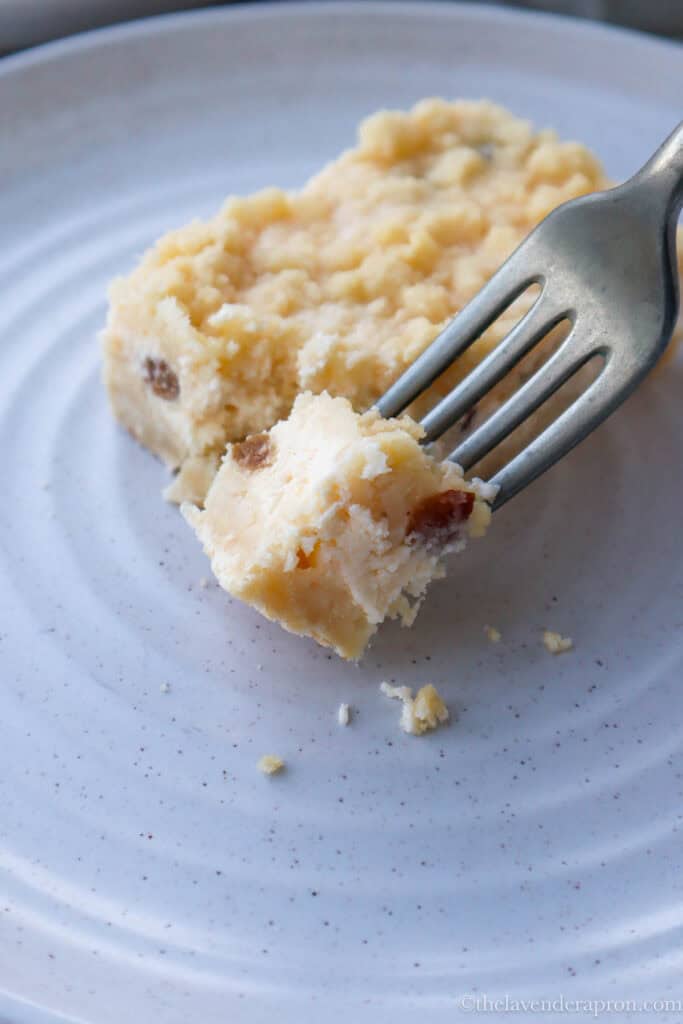
Table of contents
- Cottage Cheese Cake Recipe Quick Look
- A Traditional Latvian Cake
- What is Biezpienmaize?
- What Does Latvian Cottage Cheese Cake Taste Like?
- Ingredients and Ingredient Notes
- Substitutions
- Equipment
- How to Make Latvian Cottage Cheese Cake
- Tips for the Best Cottage Cheese Cake
- Troubleshooting
- Storage and Make-ahead
- What to Serve With Biezpienmaize
- FAQ
- What to Make Next
- Latvian Cottage Cheese Cake Recipe Card
- How Did I Test This Recipe?
A Traditional Latvian Cake
I grew up eating this cake at literally every Latvian gathering. It’s one of the most loved cakes in Latvia, the kind Latvians name when you ask them what their favourite is, and yet outside Latvian circles it’s almost unknown.
Which surprises me, especially now that cottage cheese is having its moment everywhere. There was always cottage cheese in our fridge, and I mean always. 🙂

My grandmother made the raisin version mostly, which is the one I’ve given here. I actually prefer the plain version myself, but most people disagree with me on that, so raisins it is. 😄 (You can leave them out if you like though.)
It’s a proper dessert, real butter in the crumb, and, aside from the very large amount of cottage cheese, there is sour cream and eggs in the filling. But, it’s just not a super sugary dessert. And because it’s made with cottage cheese rather than cream cheese, and whipped egg whites, the texture is noticeably lighter than most cheesecakes.
That same less-sweet European philosophy runs through everything on this blog. You can see it in the Belgian chocolate cake and the French yogurt cake too. European baking tends to use less sugar so you taste the actual ingredients: the dairy, the lemon, the vanilla. Once you get used to it, very sweet desserts start tasting like too much of one thing.
What is Biezpienmaize?
Biezpienmaize translates literally as “cottage cheese bread”. “Biezpiens” means cottage cheese and “maize” means bread.
Biezpiens itself is the traditional Latvian fresh curd cheese, drier and tangier than most supermarket cottage cheese, closer to farmers cheese or quark.
It isn’t a cake in the French sense, but it isn’t bread either.
My vecmāmiņas version here is the rustic sheet cake version, cut into rectangles and eaten with tea or coffee. There is actually a version made with a yeast dough base rather than crumbs (check out the notes in the recipe card), but the crumb version is what I’m showing you today.
Cottage cheese turns up in almost everything Latvian, and I use it a lot. More on how I use it over at the Baltic table.
What Does Latvian Cottage Cheese Cake Taste Like?
Not like American cheesecake. The filling has a fresh dairy tang from the cottage cheese, vanilla running through it, and a hint of lemon. But it doesn’t taste like plain cottage cheese once it’s baked. It’s sweet, but not as intense and the texture is fluffier, with a slightly crisp, buttery crumble on top.
Ingredients and Ingredient Notes
Full quantities are in the recipe card below.
For the crumb base and topping:
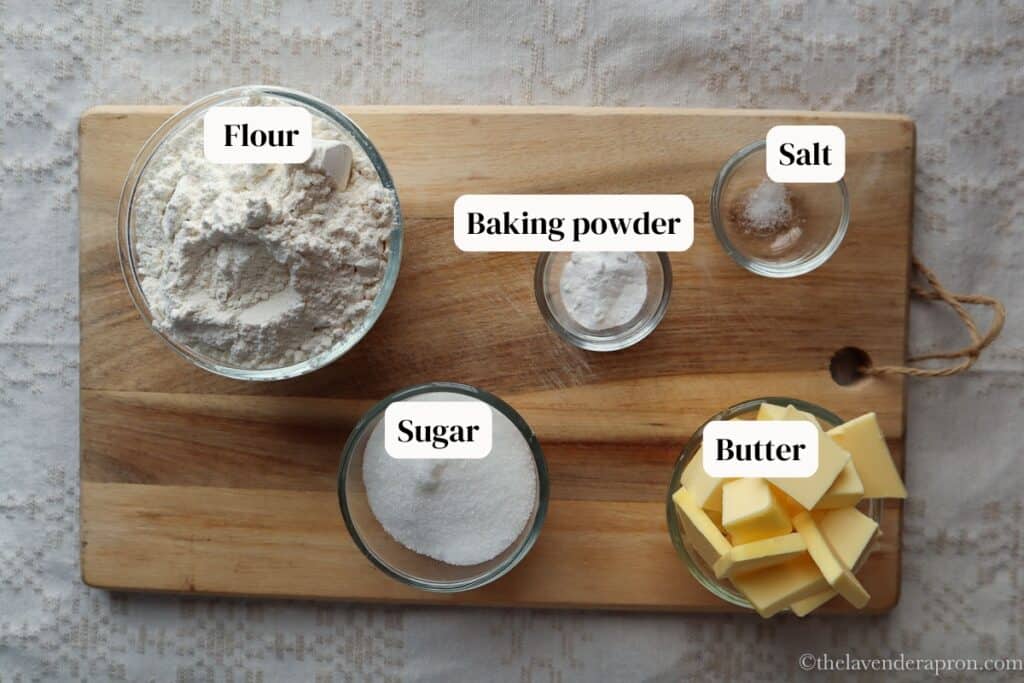
- Plain flour. Nothing fancy needed.
- Unsalted butter, softened but still cool. Take it out of the fridge 20 minutes before you start. Too soft and it clumps into a paste, too cold and it’s tricky to rub in properly.
- Sugar. I use white sugar, but I think you could easily substitute light brown sugar or another dry sugar (not maple syrup or agave nectar though in the base).
- Baking powder. This is what makes the crumb light and slightly crisp rather than dense.
For the filling:
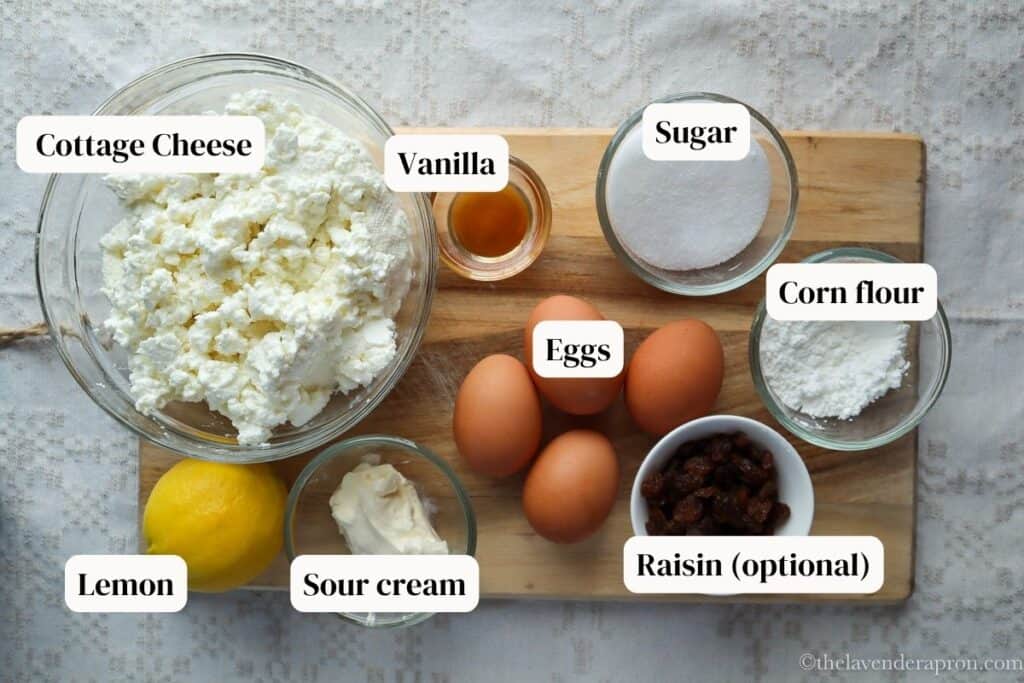
- Cottage cheese (“biezpiens” in Latvian), full-fat, about 1.5 lb / 700 g before draining. After draining, mine weighs anywhere from 550g to 650 g depending on the brand and sometimes even the batch. Yes, really, same brand, different result. Then you have to make the cottage cheese less lumpy. You get the most authentic result by using a sieve and then pushing the cottage cheese through with a spoon. But I usually blend it completely smooth using a blender, food processor or immersion blender. It’s quicker and then I just add the other ingredients to the same bowl. If you end up with leftover cottage cheese, you can use it up with these traditional Latvian cottage cheese cookies, this blueberry cottage cheese muffin recipe, this moist banana cottage cheese recipe or this cottage cheese frosting recipe.
- Eggs, separated.
- Sugar – I use plain white sugar.
- Cornstarch. This is what holds the filling together without making it rubbery. Traditional Latvian recipes often use potato starch instead, same quantity, and that works too. Or they use semolina, but not everyone has semolina in their kitchen, so I used cornstarch in this recipe.
- Sour cream. Full cream. It adds richness and keeps the filling from being too firm.
- Lemon zest. From half to one large lemon. Don’t be shy, it lifts the whole filling without making it taste lemony.
- Vanilla. Vanilla extract. Use the real stuff if you can. It ties everything together and stops the filling tasting one-note.
- Raisins (optional). Soak in hot water for 10 minutes until plump, then drain and dry really well. I mean really well, paper towel or tea towel, squeeze them. Then toss in a little flour before folding in. This keeps them from sinking and stops them making the filling too wet.
Substitutions
- Cottage cheese: Full fat. Do not use low fat. In Latvia, biezpiens is drier than most Western cottage cheese, so draining is essential wherever you are. Outside Latvia, farmers cheese is the closest substitute in terms of flavour. Ricotta has an acceptable texture but loses the characteristic tang. It ends up tasting like a mild Italian cheesecake rather than biezpienmaize. I wouldn’t use it.
- Potato starch or semolina – Both are traditional alternatives to cornstarch, same quantity. Traditional Latvian and Lithuanian recipes often use semolina. It gives the filling a tiny bit more texture and is slightly more authentic. If you have it, use it.
- Sour Cream – Full-fat Greek yogurt is the closest swap, same quantity. Crème fraîche also works and gives a slightly richer result. Mainly just make sure you avoid low-fat versions of anything. They make the filling too wet and it won’t set properly.
- Raisins – Soaked dried apricots (chopped small) work beautifully. Some Latvian bakers use fresh cherries in summer, or blackcurrants for a more tart result.
Equipment
- Fine mesh sieve or strainer – to strain the cottage cheese
- A couple of mixing bowls – to mix the dough and whip up the egg whites
- Silicone spatula – to fold in the egg whites
- Hand mixer or stand mixer – to whip up the egg whites (but you can make this cake without whipping up the egg whites. It will be slightly more dense)
- 9 x 13 baking dish – or you can also use a 10-inch (25 cm) round cake pan.
How to Make Latvian Cottage Cheese Cake
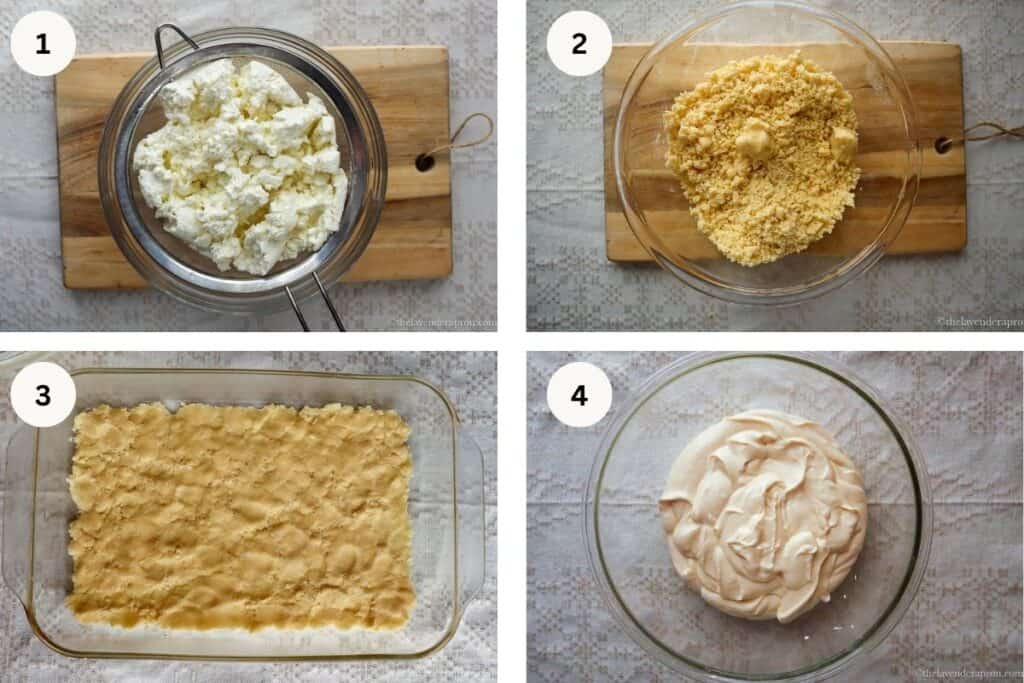
1. Drain the cottage cheese
Put your cottage cheese in a fine mesh sieve over a bowl and leave it to drain for at least an hour, ideally a few hours. The filling will not set properly if the cheese is too wet. After draining, push it through the sieve with a spoon or blend it smooth using a blender, food processor, immersion blender. My cottage cheese usually weighs about 700 g before draining and then down to anywhere between 550 g and 650g after draining, depending on the brand.
2. Make the crumb base
Combine flour, sugar, baking powder, and salt in a large bowl. Add the softened butter and rub it in with your fingertips, pressing and squeezing until you have fine, even crumbs with no large lumps remaining. You can also do this in a food processor. Pulse until the mixture looks like damp sand. The crumbs should hold together (or you can make a small ball) when you press it between your fingers.
3. Put the crumb base in the 9 x 13 in (23 x 33 cm) pan and refrigerate.
I use a Pyrex glass dish and don’t bother lining it or greasing it. If you’re using a metal pan, lining with baking paper makes lifting it out easier.
Put about 2/3 of the crumbs into the base of your baking dish and squish them down as evenly as you can. It does not have to be perfect, just make sure you cover the base. It will not seem very thick, but this is good. You don’t want it too thick. Put the pan in the fridge with the rest of the crumbs.
Refrigerate for at least 30 minutes. (or pop the remaining crumbs in the freezer for 10 minutes or so, if you forgot). This is important for the crumb topping especially. Cold crumbs hold their shape in the oven and crisp up properly. Warm crumbs will dissolve into the filling. It doesn’t taste bad, but you don’t get the crunchy bits…
4. Make the filling base
In a large bowl, combine the smooth cottage cheese with the egg yolks, sugar, cornstarch, sour cream, lemon zest, and vanilla. Stir until well combined.
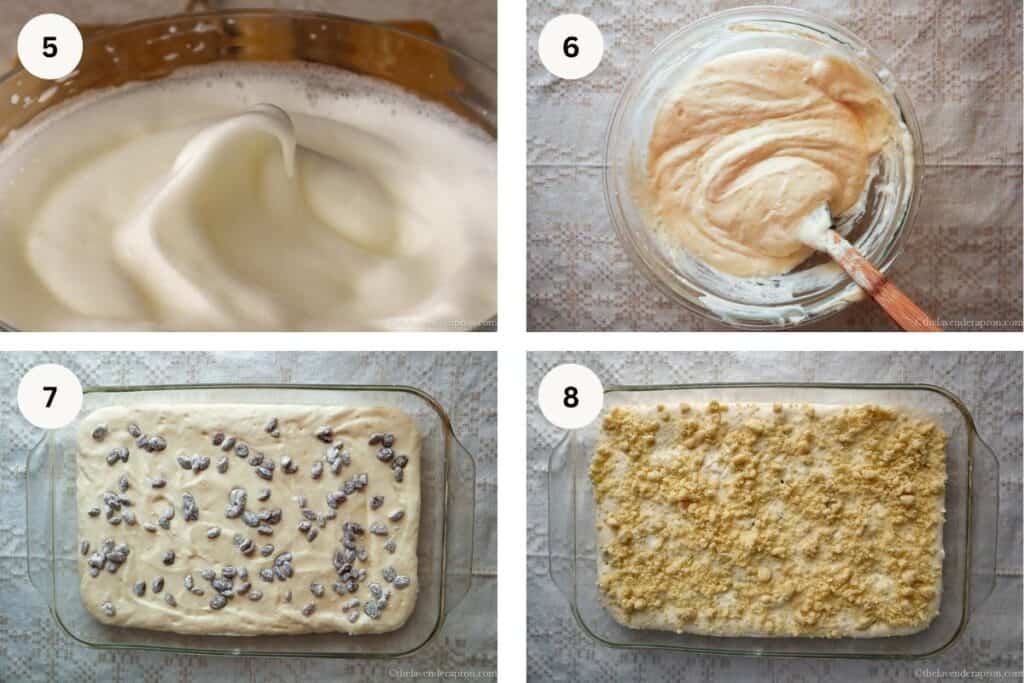
5. Whip the egg whites
In a clean, completely grease-free bowl, beat the egg whites until they reach soft peaks. They should hold a gentle curl when you lift the beaters but not be stiff or dry. A single drop of fat in the bowl (from yolk, butter, or washing-up residue) will prevent the whites from whipping properly, so dry the bowl well before you start.
6. Fold the whites into the filling
It’s easier to add the whipped whites to the cottage cheese mixture in three additions. Use a large spatula and fold gently, with big slow strokes from the bottom of the bowl, turning as you go. Three additions works better than two for a filling this size. It keeps more air in and makes each fold easier. Stop folding when you don’t see any more big white streaks.
7. Put it all together
Pour filling onto the crumb base.
If using raisins, first soak them in boiling water for 10 minutes. Drain well, dry with paper towels and coat with flour. Then take the flour covered raisins and scatter them evenly over the top. Then use a fork to sort of push them in.
8. Scatter the remaining crumbs on top.
Take the reserved crumbs straight from the fridge and scatter them over the top immediately before the dish goes into the oven.
9. Bake for 35-45 minutes.
It’s done when the top crumbs are golden and the centre has just the faintest wobble when you gently shake the pan. It shouldn’t look liquid. Don’t open the oven in the first 35 minutes.
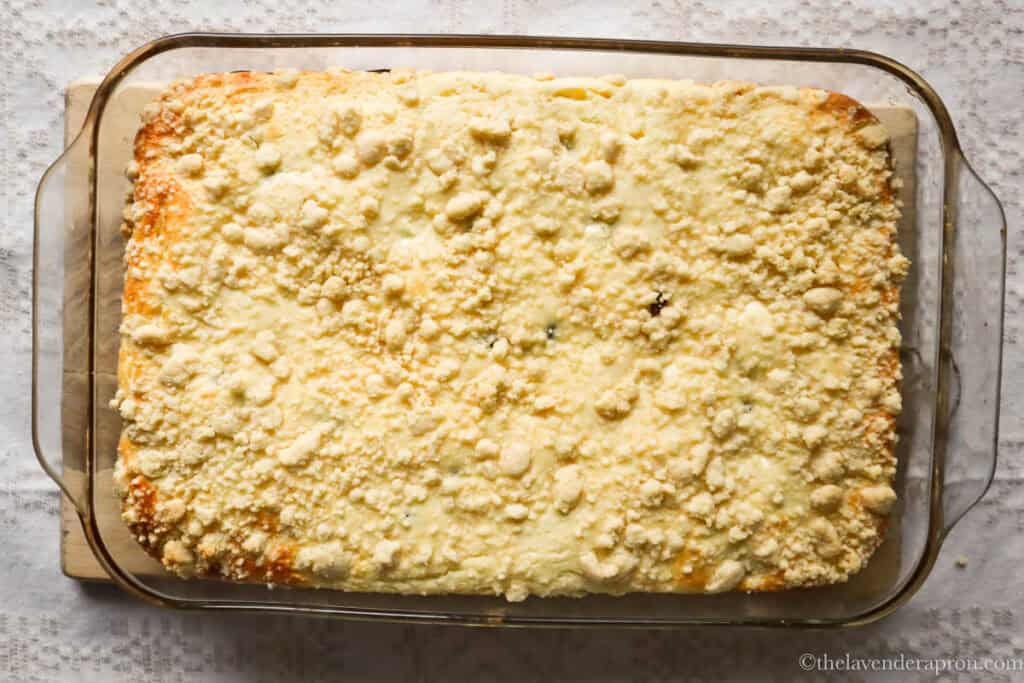
10. Cool and Chill
Remove from the oven and cover loosely with a clean tea towel or foil. Leave to cool completely at room temperature.
Once fully cooled, refrigerate for at least 4 hours. Overnight is better. The filling firms up properly as it chills. Slice with a clean knife, wiping between cuts for neat squares. It can be a tiny bit slightly crumbly. This is normal.
Tips for the Best Cottage Cheese Cake
- Drain properly. If your cottage cheese is too watery, the filling won’t set.
- Three additions, not two, for the egg white fold. It’s much easier.
- Don’t slice while it’s warm. You can try, and it will be ok, but the edges will not be very neat at all. It will look much prettier if you wait for it to set overnight. 🙂
Troubleshooting
- The filling cracked across the surface. Almost always overbaking. Pull it out while the centre still has a very faint wobble. It will get firmer in the fridge overnight. Also check your egg whites weren’t overwhipped to stiff peaks, which makes the filling more fragile. But don’t stress too much. It will still taste great!
- The filling is too soft and won’t hold its shape when sliced. Almost always a draining problem. Next time drain for longer, a few hours if your cottage cheese is particularly wet. If the cake is already baked, refrigerate for a few more hours. It won’t fully rescue a very wet filling, but it helps.
- The crumb base is greasy rather than sandy. The butter was too warm when you rubbed it in. Take it out of the fridge 20 minutes before you start rather than 30, especially in a warm kitchen. The crumbs should look fine and even, not smooth.
- The top is browning faster than the centre is setting. Cover with foil at around the 35-minute mark. Fan ovens run hotter so this is more likely if that’s what you have.
- The egg whites deflated when I folded them. Either they were overwhipped, the bowl had a trace of fat, or the folding was too vigorous. The cake will still taste good, just a little denser. It will be fine. You can actually make this recipe without whipping the egg whites at all.
Storage and Make-ahead
- Biezpienmaize keeps in the fridge for up to 3 days, covered. Take it out about 15 minutes before serving if you prefer it at room temperature.
- Freezing: You can freeze it, but I feel it does not taste as nice. It’s better fresh.
- Make-ahead: It’s actually better made ahead. The filling firms up overnight. Bake the day before, chill overnight, slice it in the morning.
What to Serve With Biezpienmaize
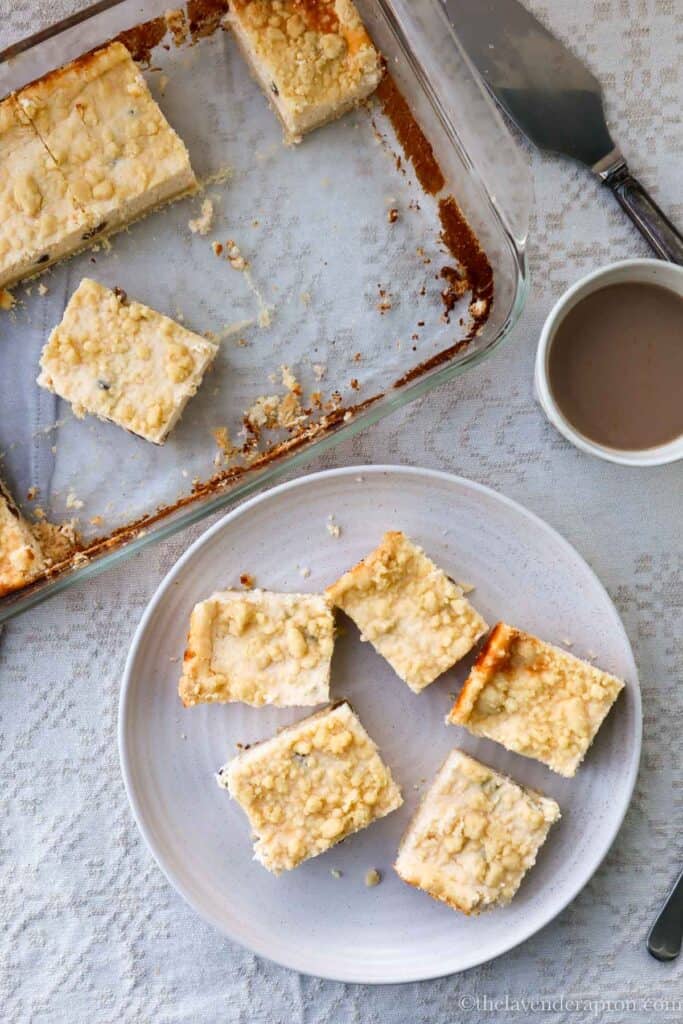
Traditionally this cottage cheese cake is served plain, with no garnish, no cream, just the cake cut into squares.
Biezpienmaize is often served as a “launags” food. Launags is the Latvian afternoon meal between lunch and dinner, usually something sweet or a light snack. Not a full meal and not a formal occasion. Just a cup of tea, a piece of cake, kind of like the French “quatre-heure”.
At home I sometimes add a small spoonful of fresh berries alongside, to add a bit of color.
If you’re putting together a Latvian meal, this is a nice dessert following Latvian meat patty kotletes for the main dish, along with boiled potatoes and lettuce salad, creamy cucumber salad or red radish salad.
FAQ
They are quite different. American cheesecake is built on cream cheese and generally has quite a bit of sugar, so it’s high in fat and rich. This Latvian cottage cheese cake uses cottage cheese instead, which is lower in fat and has a fresher tang. The whipped egg whites make it fluffier. And there are three distinct layers, crumb, filling, crumb, rather than a single dense layer on a biscuit base. I can eat way more Latvian biezpienmaize than I can American cheesecake without feeling sugared out.
You can, but the flavor won’t be the same. Ricotta is milder and the characteristic tang of biezpienmaize comes specifically from the cottage cheese. Farmers cheese is a closer substitute.
If you don’t live in Latvia or a country that sells dry cottage cheese, then yes, always. See the ingredient notes and Step 1 for what the drained weight should look like.
What to Make Next
More cottage cheese recipes:
- Cottage Cheese Frosting – naturally sweetened. Works on carrot cake, banana muffins, anything you’d normally frost.
- Blueberry Cottage Cheese Muffins – another way the Latvian love of cottage cheese shows up in baking. Soft, moist and not too sweet.
- Cottage Cheese Avocado Toast – the Baltic breakfast. Latvians love putting cottage cheese on bread.
More European cakes and desserts:
- Belgian Chocolate Cake – same European approach to sweetness. Made with real Belgian dark chocolate, whipped egg whites for lift, and less sugar than you’d expect. A proper celebration cake.
- French Yogurt Cake – one bowl, no mixer, a very popular French cake. Simple and completely delicious.
- Carrot Cake – coming soon. Warm spices, less sugar, very yummy .
Made this? Leave a rating below. It helps other home cooks find it. Every recipe on this blog is made and tested in my own kitchen. You can read more about how I develop and test recipes here. 🙂
Latvian Cottage Cheese Cake Recipe Card
Want to save this recipe?
Cottage Cheese Cake Recipe (Latvian Biezpienmaize)
Equipment
- Fine mesh sieve For draining the cottage cheese
- large bowl For the crumb and filling
- medium bowl For the egg whites
- Blender Or food processor, or immersion blender (for smoothing the cottage cheese) or a sieve and spoon to push it through
- Hand mixer Or stand mixer (for whipping the egg whites — a balloon whisk works too but takes longer)
- Spatula For folding the egg whites
- 9 x 13 in (23 x 33 cm) baking dish Pyrex glass or metal
- Clean tea towel or foil For covering while cooling
Ingredients
Crumb base and topping
- 2 cups all-purpose flour 250 grams
- 1/2 cup + 1 tbsp unsalted butter 130 g unsalted butter, softened but cool
- ⅓ cup white sugar 85g
- 1½ tsp baking powder
- Pinch of salt
Filling
- 1.5 lb full-fat cottage cheese 700 grams
- 3 large eggs separated
- ⅓ cup sugar 75 grams
- 2½ tbsp cornstarch 20 grams (or potato starch)
- 2½ tbsp sour cream 38 grams
- 1 tbsp lemon zest
- 1¼ tsp vanilla extract or vanilla sugar
- ⅓ cup raisins, soaked and drained, optional 30-65 grams
Instructions
Drain the Cottage Cheese
- Put your cottage cheese in a fine mesh sieve over a bowl and leave it to drain for at least an hour, ideally a few hours. The filling will not set properly if the cheese is too wet. After draining, push it through the sieve with a spoon or blend it smooth using a blender, food processor, immersion blender.
Make the Crumb for the Base and Topping
- Combine flour, sugar, baking powder, and salt in a large bowl.
- Add butter and rub in with your fingertips until fine, even crumbs form with no large lumps (or pulse in a food processor until the mixture looks like damp sand). The crumbs should hold together when pressed between your fingers.
- I use a 9 x 13 in (23 x 33 cm) baking dish. No need to grease it or line it if it's glass. If it's metal, then I line it with baking paper. Press two-thirds of the crumb mixture firmly into the base. And keep the rest in a bowl to use for the topping.
- Refrigerate for at least 30 minutes.
Make the filling
- Mix the smooth cottage cheese with egg yolks, sugar, cornstarch, sour cream, lemon zest, and vanilla.
- If using raisins, soak in hot water for 10 minutes, drain and then pat dry. Toss in flour and set aside.
- In a clean, grease-free bowl, beat egg whites to soft peaks. They should hold a gentle curl but not be stiff.
- Fold egg whites into the cottage cheese mixture in three additions, using a large spatula with gentle sweeping strokes. Stop as soon as no white streaks remain.
Assemble the cottage cheese cake:
- Heat oven to 350°F (180°C / gas 4).
- Pour filling over and spread evenly. Scatter flour-covered raisins over the top and push them in with a fork. Take the remaining crumb mixture straight from the fridge and scatter on top.
- Bake 35-45 minutes until the top is golden and the center has just a slight wobble. Start checking at 35 minutes.
- Pull it out while the center still wobbles a very tiny bit.
- Remove from oven and cover loosely with a clean tea towel or foil. Cool completely at room temperature, then refrigerate at least 4 hours, overnight is better.
- Slice with a clean knife, wiping between cuts.
Notes
Nutrition
How Did I Test This Recipe?
This recipe is my grandmother’s, which I’ve been making for years. So really, the testing was already done long before I thought about writing it up. 😊
But when I started to write the recipe, I realized there are a few steps that I just take for granted but I actually need to be clear about. Like the things I have learned over time as I made this recipe. The draining time really, really matters. I tested with less and the center was noticeably softer. Tossing the raisins in flour before folding them in actually keeps them distributed rather than all sinking into the bottom.
I also made it both ways, with raisins and without. My honest preference is the plain version. But so many people prefer the raisin version and it’s easy enough to leave them out if you prefer. And it’s not overwhelmingly raisiny anyway, just little pockets of sweetness here and there, which is exactly how my grandmother made it.




What an interesting recipe! Love it! I personally don’t eat a ton of dairy but this looks so good! I loved learning about a new thing today! Lovely site as well!
Thanks so much Adrienne! It’s a Latvian classic 🙂
An absolute delight with a cup of tea on a drizzly day. I can totally recommend it!
Thank you so much Brigitte! I’m so happy you enjoyed it 🙂
This sounds wonderful. I need to make this.
I hope you enjoy it 🙂