
Cottage Cheese Frosting (Naturally Sweetened)

This post may contain affiliate links. Read my disclosure policy.
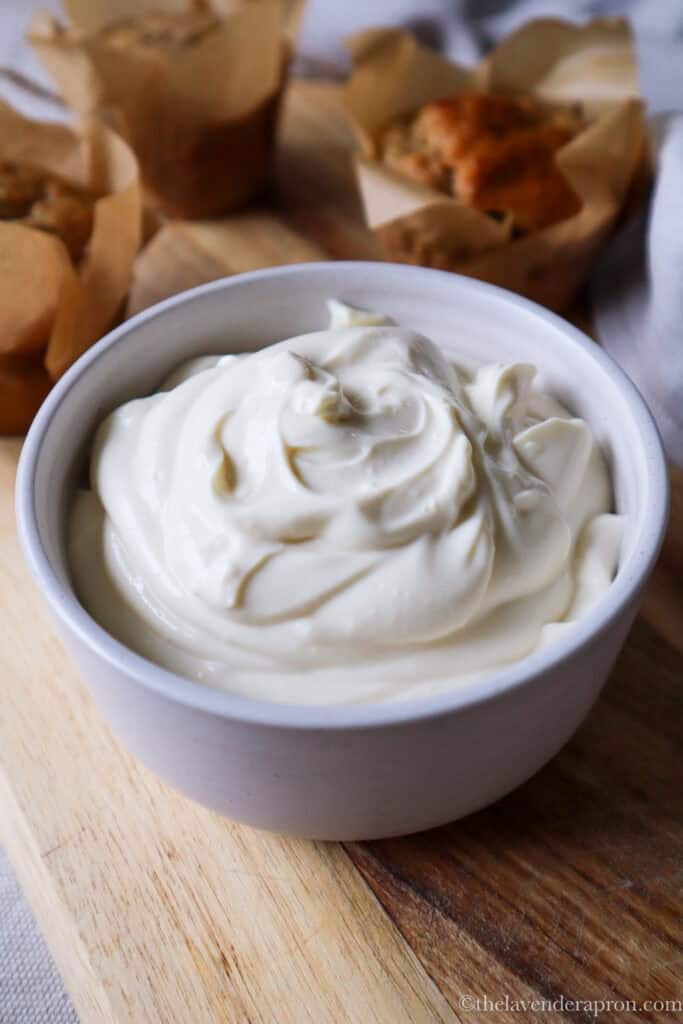
Cottage cheese frosting, or icing, depending on where you’re from, is creamy, naturally sweetened, and lighter than traditional cream cheese frosting. Which means you can be generous with it without that heavy, I’ve-had-too-much feeling.
Six ingredients, a blender or food processor, and five minutes. It works on carrot cake, muffins, banana cake, cupcakes, or anything else you’d normally frost.
Want to save this recipe?
Three variations below: lemon for blueberry muffins, warm-spiced for carrot cake, and chai for apple or banana muffins. The vanilla base goes with practically everything.
Table of contents
Quick Look
- Prep time: 5 minutes + 1 hour chilling
- Total time: 1 hour 5 minutes
- Servings: Frosts 12 muffins or one 20cm / 8-inch cake
- Main ingredients: Cottage cheese, cream cheese, maple syrup or honey, vanilla
- Why it works: Cottage cheese is the base, over half the recipe. A smaller amount of cream cheese gives it enough structure to hold liquid sweeteners and stay on the muffin. No butter, no icing sugar required.
- Don’t skip: Drain the cottage cheese for at least 1 hour. Undrained, it will make the frosting too watery to use.
“Would never have thought to use cottage cheese in frosting… oh my gosh! What a game changer. All the added protein and it still tastes great! ” – Maggie
I grew up with Latvian parents, and my Vecmāmiņa always kept cottage cheese on the top shelf of her fridge, next to the sour cream and the butter. It was just always there, on rye bread for breakfast, stirred into salads, or blended into desserts.

Not a health food. Just a staple, the way butter is a staple. It goes into my muffins, my overnight oats, my cottage cheese avocado toast, and now my frosting. 🙂
In traditional Baltic baking, biezpiena krēms (cottage cheese cream) is always a filling between sponge cake layers — you don’t see it on top of things. The cream cheese is what changes that. It gives this frosting enough stability to stay on a muffin rather than melt into it. So use it the classic Baltic way as a cake filling, or spread it on top. Both work beautifully. If you want to know more about how cottage cheese shows up across Baltic cooking, My Guide to What’s on the Baltic Table has it all.
What Makes This Cottage Cheese Frosting Special
- No butter, no icing sugar required. Most cottage cheese frosting recipes tell you liquid sweeteners won’t work, and they’re right that the frosting needs structure. But that structure comes from a smaller amount of cream cheese working alongside the cottage cheese base. Not from sugar. Maple syrup, honey, agave, date syrup, and rice malt syrup all work perfectly.
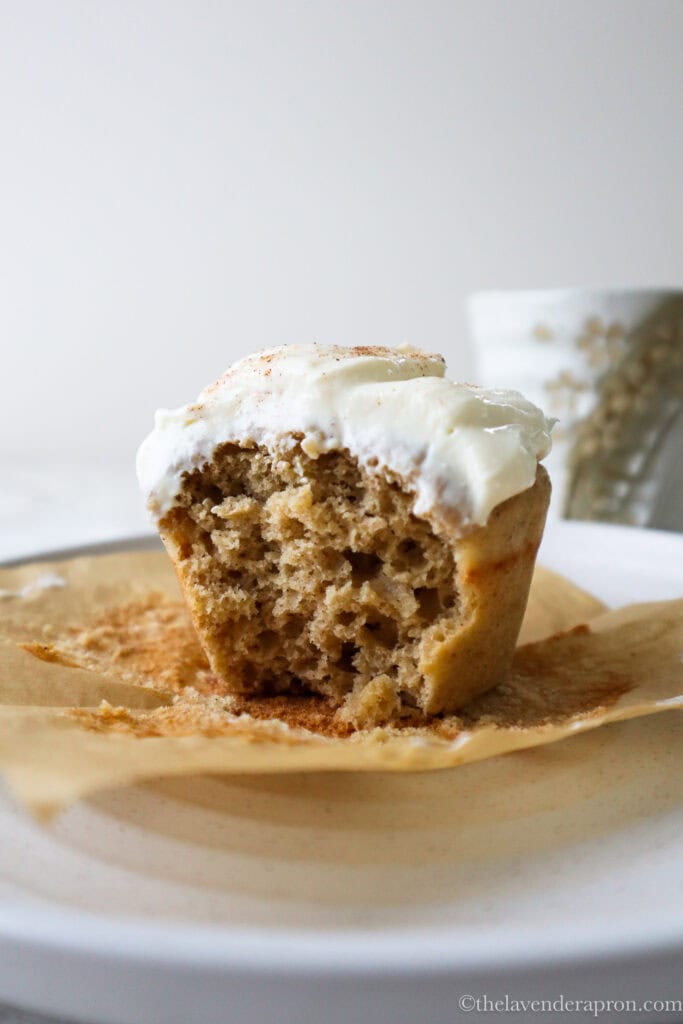
- Lighter than cream cheese frosting, but it stays on. It sits somewhere between cream cheese frosting and whipped cream. The same reason you can eat more cream cheese on toast than butter on toast: it’s lighter, and you don’t hit a wall as quickly.
- More protein than traditional frosting, thanks to the cottage cheese and cream cheese both. A nice bonus, though the reason to make it is the flavour.
- Lightly sweet in the European style. You can taste the cream cheese, the vanilla, the spices. It’s sweet, but not a sugar bomb!
- Four flavour variations. Vanilla for everything, lemon for citrusy or berry muffins, warm-spiced for carrot cake, and chai for apple or banana muffins.
Ingredients for the Basic Vanilla Frosting
Full quantities and measurements are in the recipe card below.
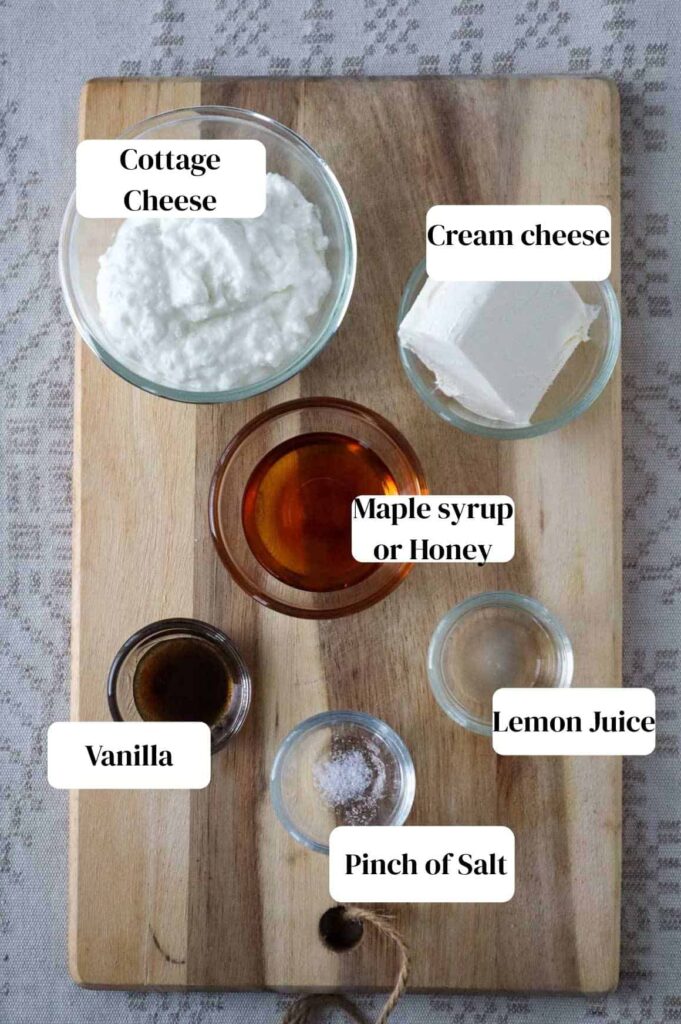
- Cottage cheese — Whole milk is best. Low-fat works, but the texture won’t be quite as rich.
- Cream cheese — This is what gives the frosting its structure. Don’t reduce it. It’s what makes liquid sweeteners possible without the whole thing sliding off the muffin at the worst possible moment. 😅
- Maple syrup or honey — 2 to 3 tablespoons, depending on how sweet you like it. Date syrup works well in the spiced and chai variations. Agave and rice malt syrup work if you want something more neutral. Powdered sugar also works if you prefer it, but the texture will be slightly denser because of the cornstarch.
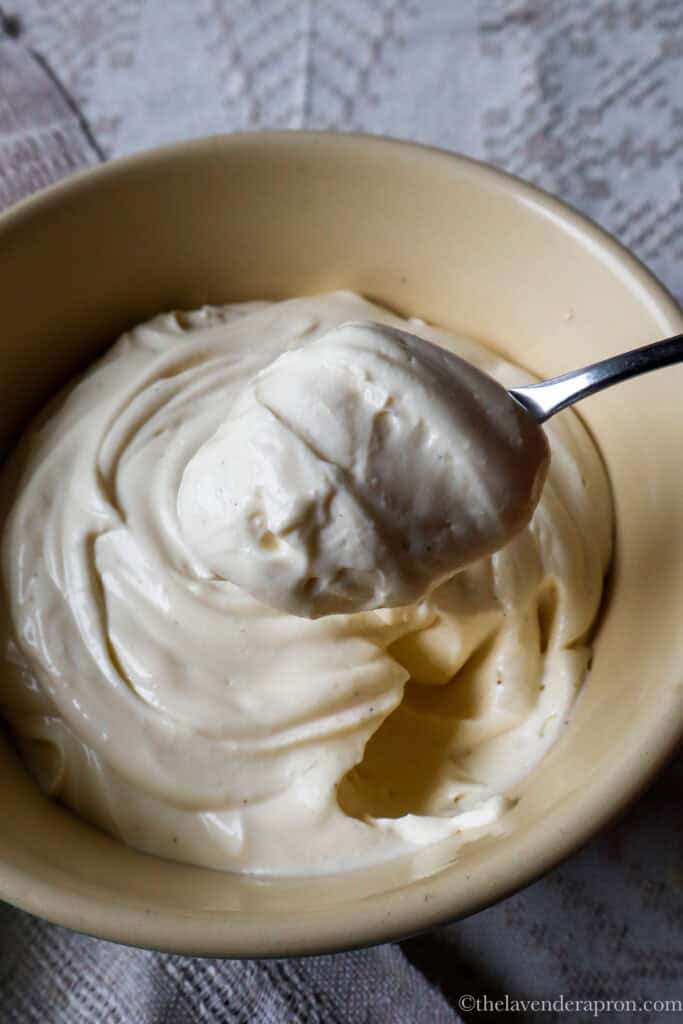
- Vanilla extract or vanilla bean paste — Vanilla bean paste makes a real difference here if you have it. The specks of vanilla look beautiful in the finished frosting.
- Fresh lemon juice — Optional, but it adds brightness and balances the sweetness.
Instructions for Basic Vanilla Frosting
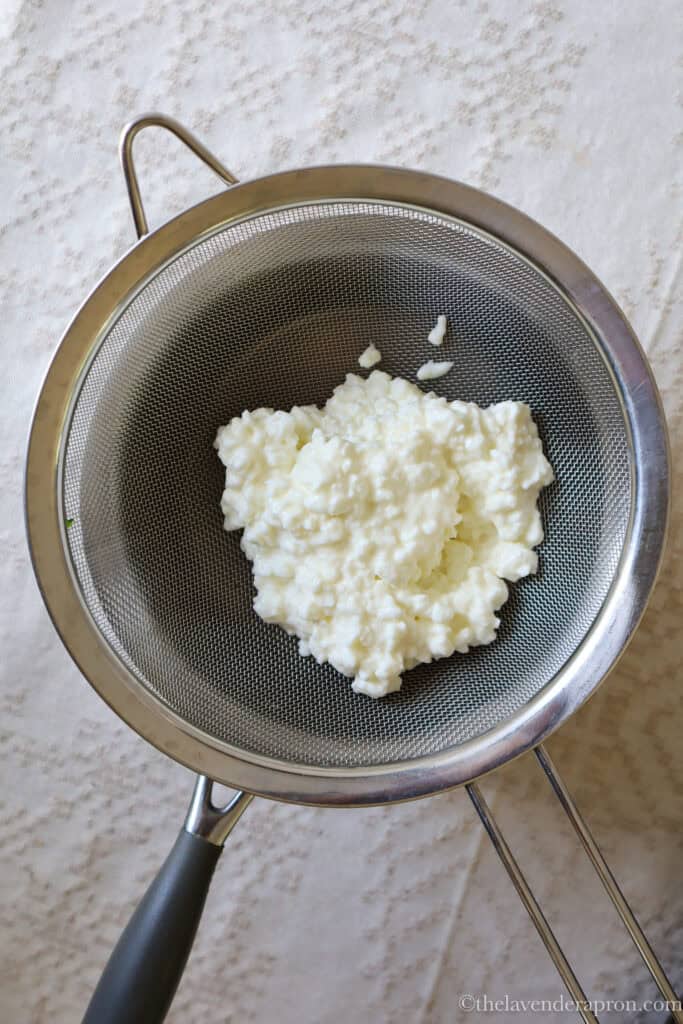
1. Taste and drain the cottage cheese. Before anything else, taste it. If it’s noticeably salty, rinse under cold water first, then drain. Drain in a fine-mesh strainer for at least 1 hour.
This is the step people skip and regret. Undrained cottage cheese will make the frosting watery and it won’t hold its shape. You’ll be surprised how much liquid comes out.
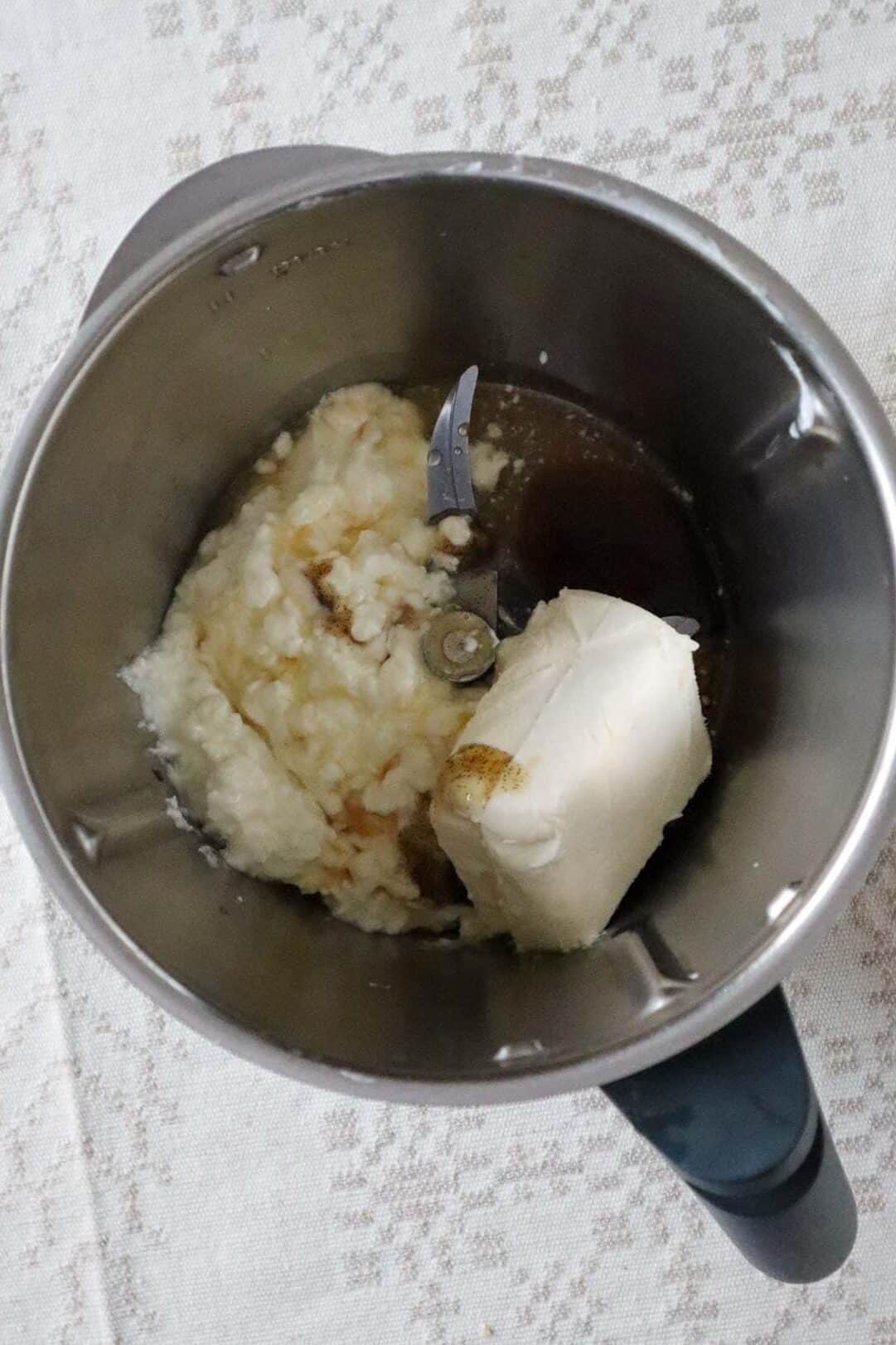
2. Blend until completely smooth. Add the drained cottage cheese, cream cheese, maple syrup, vanilla, and lemon juice (if using) to a food processor, blender, or Thermomix. A stick blender works too. Blend for 1 to 2 minutes until completely smooth.
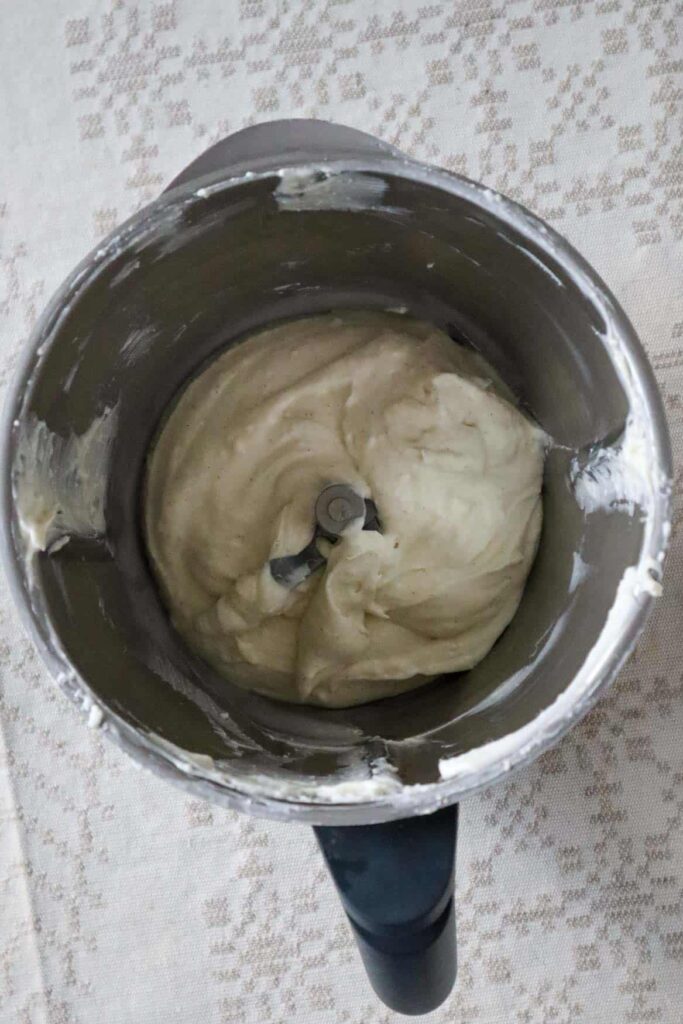
3. Refrigerate for at least 1 hour. Transfer to a bowl and refrigerate until firm enough to spread. It will look very soft straight out of the blender. That’s fine, the fridge does the work.
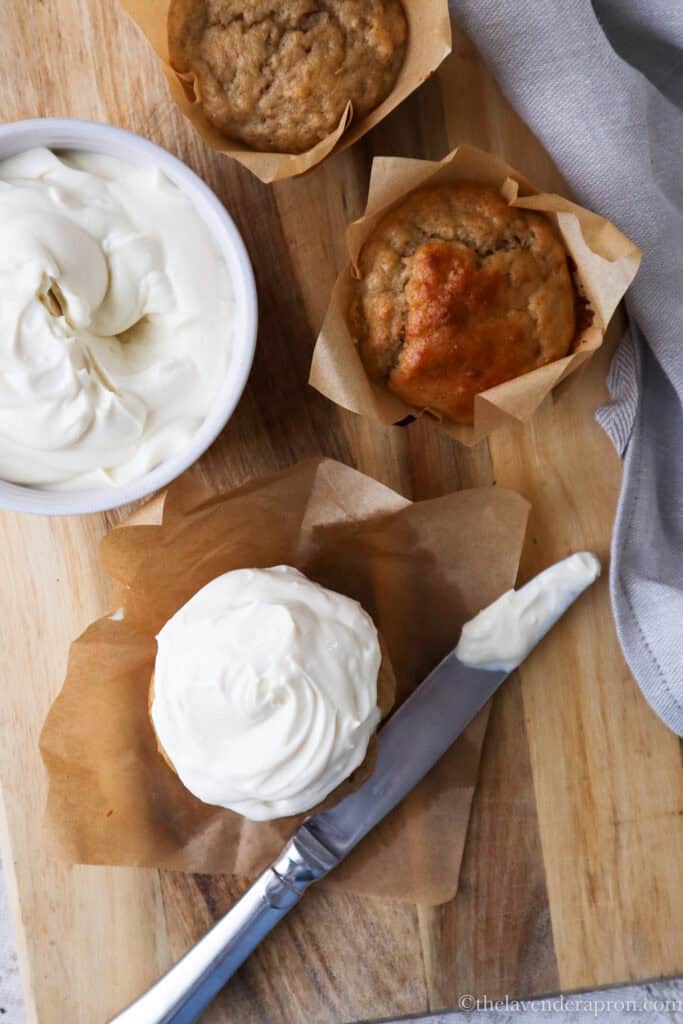
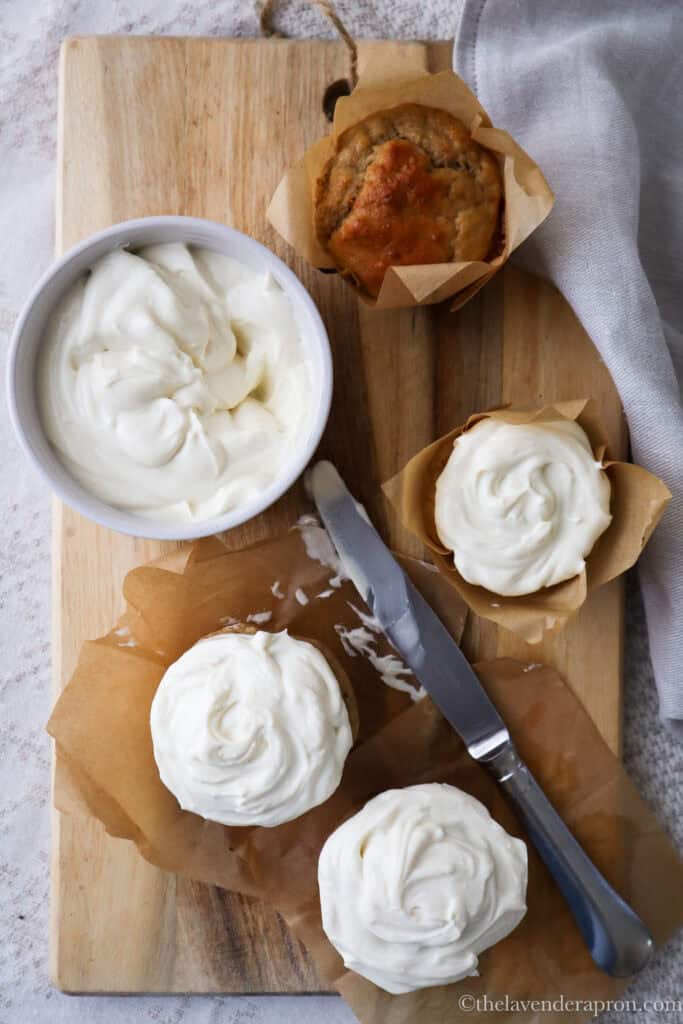
4. Frost completely cooled muffins or cake. Make sure whatever you’re frosting is fully cool. Warm muffins will melt the frosting straight away. Use a palette knife or the back of a spoon and spread generously.
Cottage Cheese Frosting Variations
Full quantities for all variations are in the recipe card below.
Lemon Cottage Cheese Frosting Add lemon zest and a good squeeze of lemon juice, reduce the vanilla to 1/2 teaspoon. Fresh and bright and great on blueberry muffins or anything citrusy.
Spiced Cottage Cheese Frosting Add cinnamon, nutmeg and a little ground ginger. This is the one for carrot cake. Because it’s less sweet than a traditional cream cheese icing, the spiced flavour of the cake really comes through.
Chai Cottage Cheese Frosting Cinnamon, cardamom, ginger and a pinch of cloves. Pairs beautifully with apple or banana muffins. The cardamom is the thing. It’s a classic Baltic spice and it makes this one a little unexpected.
Tips for the Best Cottage Cheese Frosting
- Use full-fat cottage cheese and cream cheese for the best flavor, but you can use low-fat if you choose.
- Taste your cottage cheese before you start. If it tastes salty, rinse it well under cold water before draining. Different brands vary quite a bit.
- Like all dairy frostings, this one doesn’t love the heat. Even with powdered sugar, it will soften if it sits out in a warm kitchen. Frost your muffins or cake straight from the fridge, keep them cool until serving, and refrigerate leftovers promptly.
- Make sure muffins or cakes are completely cool before frosting.
Storage
- Refrigerate in an airtight container for up to 4 days.
- Do NOT freeze. It does not defrost well and loses its shape.
FAQ
It’s not one for piping. The texture is too soft to hold a piped shape. Use a spoon or palette knife and spread it generously.
Not really, once it’s blended smoothly with the cream cheese and sweetener. If your brand is on the stronger side, a quick rinse under cold water before draining takes the edge off.
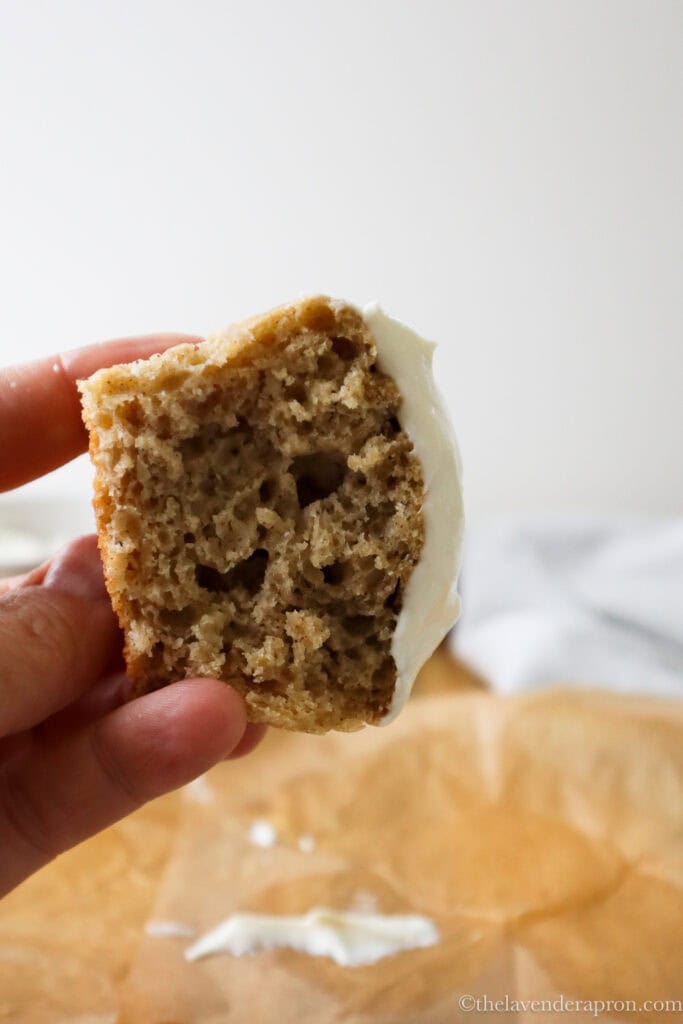
Really well. The spiced variation was made for it. Because this icing is less sweet than a traditional cream cheese version, the spiced flavour of the cake comes through more. It also works on red velvet cake if you want something lighter than classic cream cheese frosting.
Anything you’d normally frost. Cupcakes, banana cake, zucchini muffins, or spread it over chocolate brownies with cream cheese frosting for a lighter topping. The vanilla version is the most versatile. The lemon version is especially good on anything citrusy or with blueberries.
Yes, that’s what this recipe is all about. Most cottage cheese frosting recipes require powdered sugar because they don’t have enough fat for structure. This one uses more cream cheese, which means maple syrup, honey, agave nectar, rice malt syrup and date syrup all work perfectly. If you do want to use powdered sugar, it works fine here too, just expect the texture to be slightly denser because of the cornstarch it may contain.
Yes. It keeps well for up to 4 days. Give it a quick stir before using.
Cottage Cheese Frosting Recipe Card
Want to save this recipe?
Cottage Cheese Frosting (Naturally Sweetened)
Equipment
- 1 Food processor, blender, thermomix or similar You can also use a hand mixer, but the texture will not be as light and airy.
Ingredients
Basic Vanilla Cottage Cheese Frosting
- 1 cup cottage cheese – whole milk is best 225 grams
- 4 oz cream cheese 112 grams
- 2-3 tablespoons pure maple syrup or honey, agave nectar, rice malt syrup, date syrup (or powdered sugar or glucose powder if you prefer to use sugar)
- 2 teaspoon vanilla extract
- 1 teaspoon fresh lemon juice Optional, for brightness
Recipe Variations:
Lemon Cottage Cheese Frosting
- 1 cup cottage cheese 225 grams
- 4 oz cream cheese 112 grams
- 2-3 tablespoons maple syrup or honey
- 1 tablespoon lemon zest
- 1/2 tablespoon lemon juice
- 1/2 teaspoon vanilla extract
Spiced Cottage Cheese Frosting (for Carrot Cake)
- 1 cup cottage cheese 225 grams
- 4 oz cream cheese 112 grams
- 2-3 tablespoons maple syrup or honey
- 1/2 teaspoon cinnamon
- 1/4 teaspoon nutmeg
- 1/8 teaspoon ground ginger
- 1/2 teaspoon vanilla extract
- 1 teaspoon lemon juice for brightness
Chai Cottage Cheese Frosting
- 1 cup cottage cheese 225 grams
- 4 oz cream cheese 112 grams
- 2-3 tablespoons maple syrup or honey
- 1/2 teaspoon cinnamon
- 1/4 teaspoon cardamom
- 1/8 teaspoon ground ginger
- Pinch of cloves
- 1/4 teaspoon vanilla extract
- 1 teaspoon lemon juice for brightness
Instructions
- Taste your cottage cheese before you start. If it tastes salty, rinse it well under cold water before draining. Different brands vary quite a bit.
- Drain the cottage cheese in a fine-mesh strainer for at least 1 hour. Don't skip this step! Undrained cottage cheese will make the frosting too watery to use.
- In a food processor, blend the drained cup of cottage cheese, cream cheese, maple syrup or honey, vanilla extract or vanilla bean paste, spices, and lemon juice (if using) until completely smooth (about 1-2 minutes). A hand mixer works in a pinch but won't get it as smooth, and you may see small curds in the finished frosting.
- Transfer to a bowl and refrigerate for at least 1 hour before using to firm up.
- Apply to completely cooled muffins, cupcakes or cake.
Notes
Tips for the Best Cottage Cheese Frosting
- Use full-fat cottage cheese and cream cheese for the best flavor, but it will work with low fat if you choose.
- Use vanilla bean paste if you can, it really does make a difference for this cottage cheese icing recipe.
- Like all dairy frostings, this one doesn’t love the heat. Even with powdered sugar, it will soften if it sits out in a warm kitchen. Frost your muffins or cake straight from the fridge, keep them cool until serving, and refrigerate leftovers promptly.
- Make sure muffins or cakes are completely cool before frosting.
Storage:
- Refrigerate in an airtight container for up to 4 days.
- Do NOT freeze. It does not defrost well and loses its shape.
Nutrition
What to Make Next
- Blueberry cottage cheese muffins and banana and raspberry muffins – best with the lemon version
- Banana cottage cheese muffins – best with the chai version 😋

Would have never thought to use cottage cheese in frosting… oh my gosh! What a game changer. All the added protein and it still tastes great!
Yes, and you can eat more of it 🙂
Yummy!! This looks delicious and with the cream cheese and cottage cheese it will be higher in protein as well. I think this would be delicious with some raspberries.
Raspberries would go really well with this cottage cheese frosting. Lingonberries also go really well. I have mixed it with lingonberry jam (from Ikea) and it was lovely.
This looks yummy, and it’s a much healthier option without all the sugar.
I want to tweak this recipe and add some vanilla protein powder and a tablespoon of heavy cream so each cupcake would have 4-5 g of protein and use it as a dip for strawberries or eat it straight like a mousse.
I’ve used it as a base for fruit. If I have leftover frosting, I just put in a bunch of fruit and it’s delicious. The protein powder idea is great!