The French Table
A Guide to Unfussy, Everyday French Home Cooking
This page is both an introduction to how I cook and a guide to the French recipes you’ll find here.
When I moved to France, I quickly realized that everyday French home cooking is not about complicated cooking or restaurant-style meals. It’s the opposite. It is a way of planning and preparing food so that, when the meal begins, everyone sits down together to eat well, take their time, enjoy the conversation and the food that is meant to taste really good, not just fill a plate. This is French home cooking as it’s actually lived.
After fifteen years living in Strasbourg and Paris, I learned that a meal has a rhythm. There is the sound of a fresh baguette being sliced, the smell of butter browning in a pan, and the gentle wobble of a quiche just set. This page is my guide to that rhythm and how to bring it into an everyday home kitchen without fuss or intimidation.
This is not about cooking one perfect French recipe. It is about learning how meals fit together, how ingredients are chosen, and how food is meant to be enjoyed at the table.
The Market Rule: “C’est pour quand ?”
At French markets, there’s an unspoken rule: you don’t touch the produce on your own. But, you can ask for a taste. French vendors take pride in their work and want you to eat the best version of their produce. You join the longest line, because that’s usually where the best fruit is, and you wait.
When it’s your turn, the vendor doesn’t just fill a bag. They ask, “C’est pour quand ?” When is it for?
If you say tonight, they’ll choose the avocado that’s ready now. If you say Sunday, they’ll give you one that needs a few days on the counter. Often, you also explain what you’re planning to cook, and the vendor will guide you toward the right tomato for a salad, the best apple for a tart, or the plum variety that will actually taste good baked. If they are not too much in a rush, they enjoy a chat and will take the time to discuss your “menu”.
Today I cook in rural Australia. I try to shop locally or at markets when I can, but even in an ordinary grocery store, I cook with the same mindset. I pay attention to where ingredients come from, what’s in season, and how they’ll taste, not just how they look. Very often, the most flavorful fruit or vegetables aren’t the prettiest ones.
This ingredient-first way of cooking shapes everything I make. Ingredients come first. Recipes follow.
The Structure of a French Meal
A French home meal has a beginning, a middle, and an end. Not every meal includes every course, but the order stays the same. They really do eat this way.
(My French husband says he simply cannot eat in any other order.)
This structure is what allows French home cooking to feel calm and intentional rather than rushed. According to OECD data, the French spend over two hours a day at the table. This is more than any other country in the world. This isn’t because the food is fancy or the cooking is difficult. It is because the culture treats even a simple weeknight dinner as a time to actually sit down and stay a while. When everyone knows what’s coming next, the meal flows naturally, and there’s no sense of scrambling or urgency.
Canapés: Only really for Special Occasions
Canapés are not an everyday habit in French homes. They’re reserved for Christmas, birthdays, or when friends are coming over.
When we do serve them, they’re simple, easy to eat, and prepared ahead. A few favorites include crackers with a spread, baked prunes wrapped in bacon and served on toothpicks, mini quiches, small verrines, or classic combinations like prosciutto with cantaloupe.
They can also be as simple as toasted baguette slices topped with salmon dip or sautéed mushrooms with tomatoes.
The goal isn’t to fill people up. Canapés give everyone time to arrive, chat, have a drink, and settle in. They offer a little something special while the main meal waits.
Everyday Beginnings
On ordinary days, a meal usually starts simply. A small crudité salad or a light soup is enough.
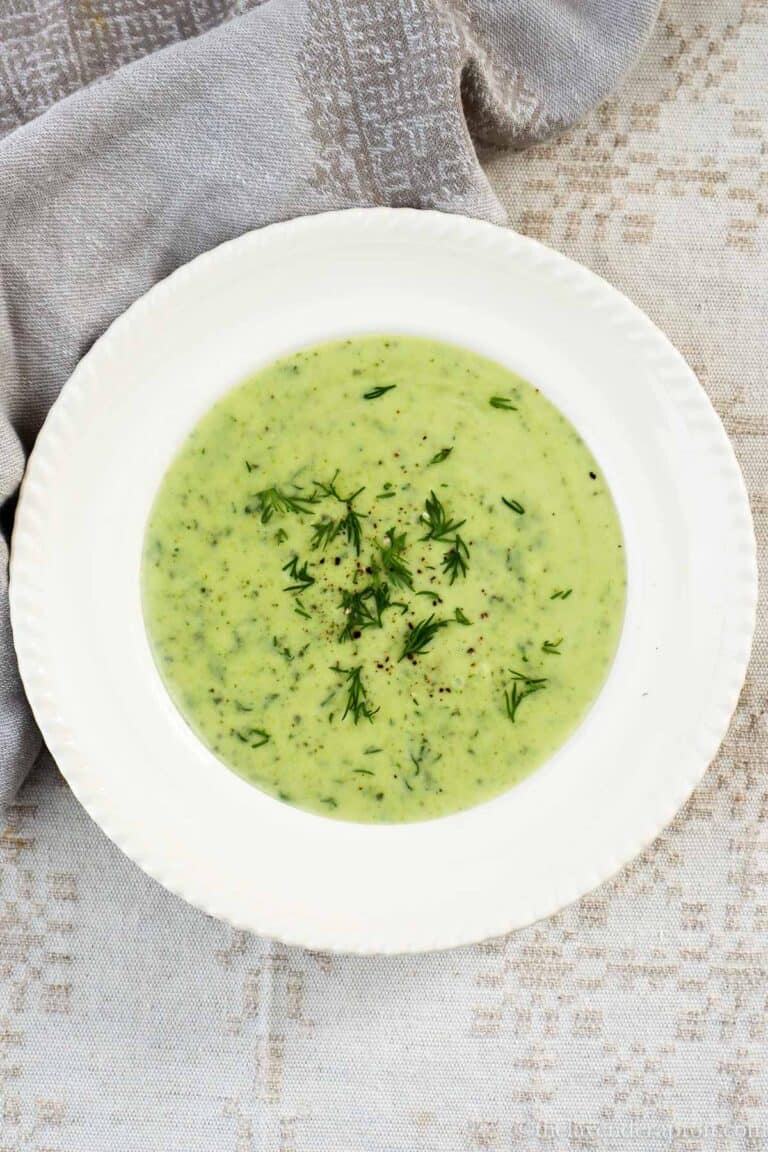
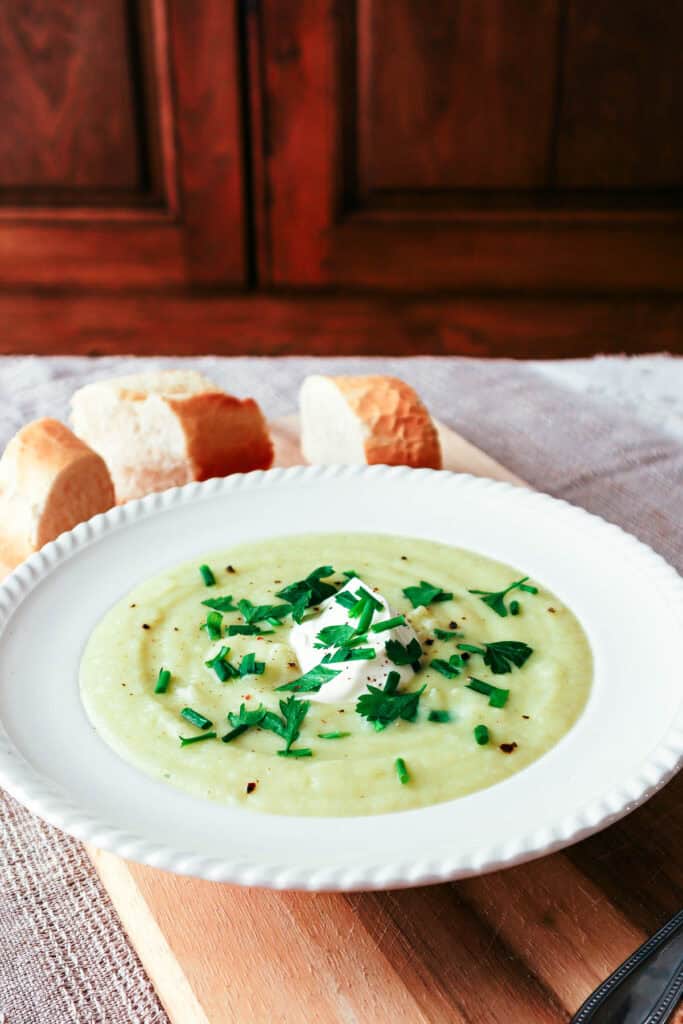
This might be something like French Carrot Salad or a smooth vegetable soup such as Cauliflower, Potato and Leek Soup. These dishes are quick, seasonal, and easy to prepare ahead, which keeps the beginning of the meal relaxed.
The Main Course
The main dish is the heart of the meal, and it is chosen with “staying at the table” in mind. Most of the work is done before anyone sits down. The cook shouldn’t be jumping up and down once the meal begins.
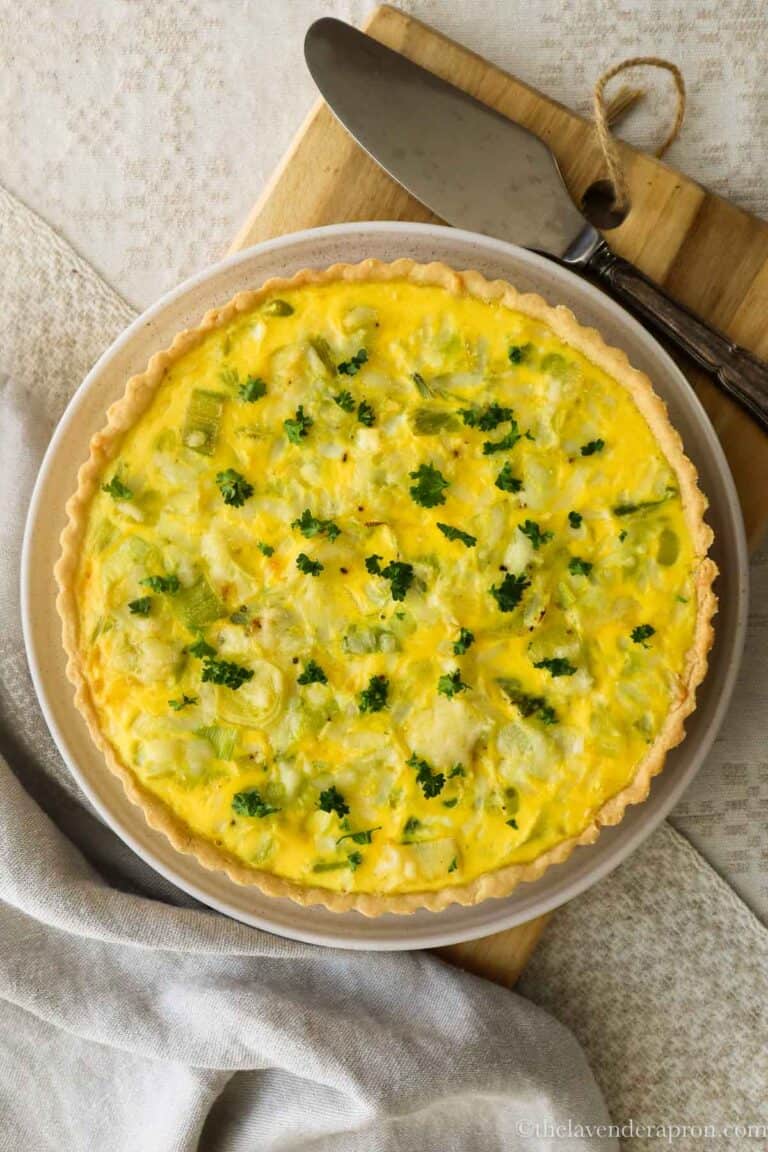
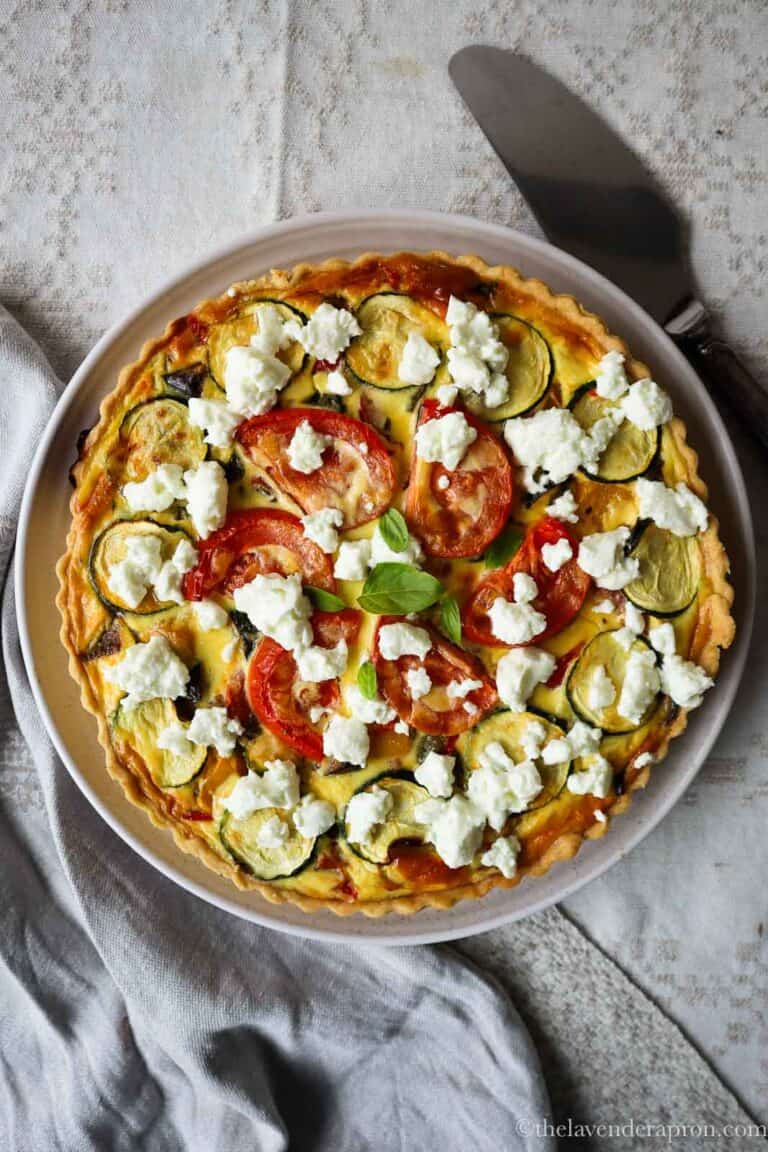
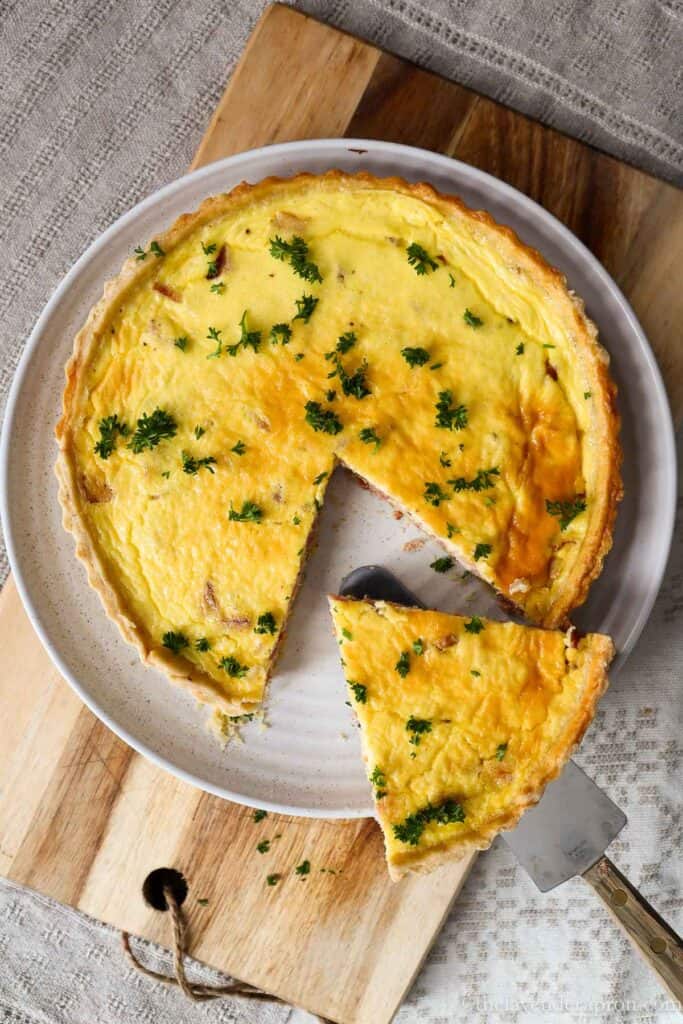
Quiches and savory tarts are classic French home cooking for a reason. Authentic French Quiche Lorraine or Bacon and Mushroom Quiche can be made in advance and served warm, leaving the cook free to enjoy the meal. And for a vegetable-forward version that captures the flavors of the south, try quiche Provençale from the south of France.
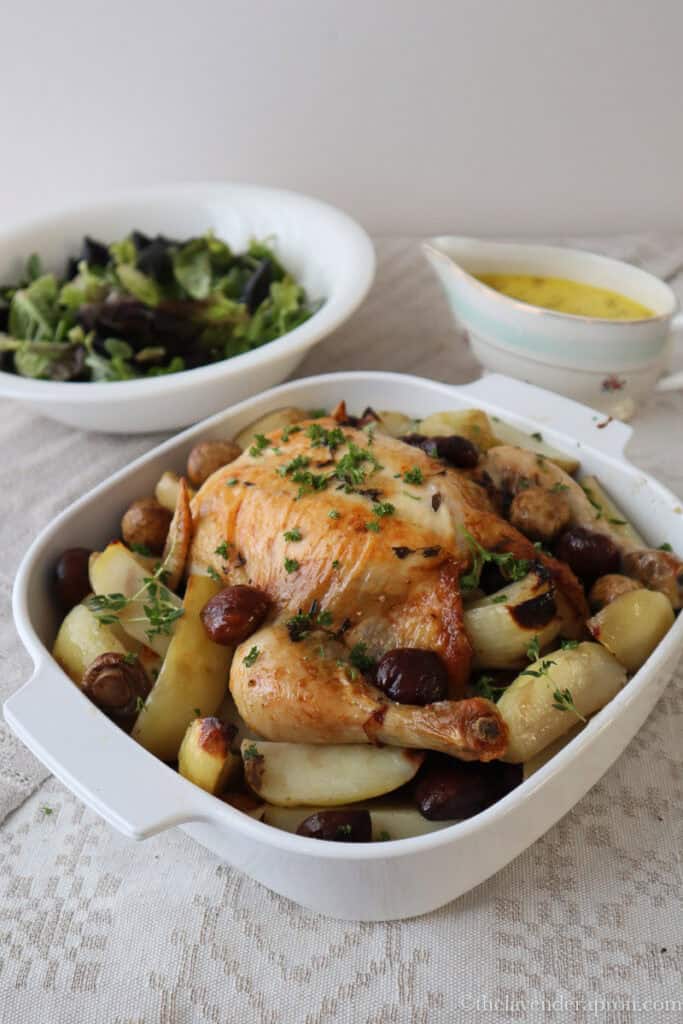
Roasts work the same way. French Roast Chicken with Chestnuts is a perfect example of simple ingredients made interesting, and it fits beautifully into a relaxed family Sunday lunch or dinner with friends.
The Salad Comes After
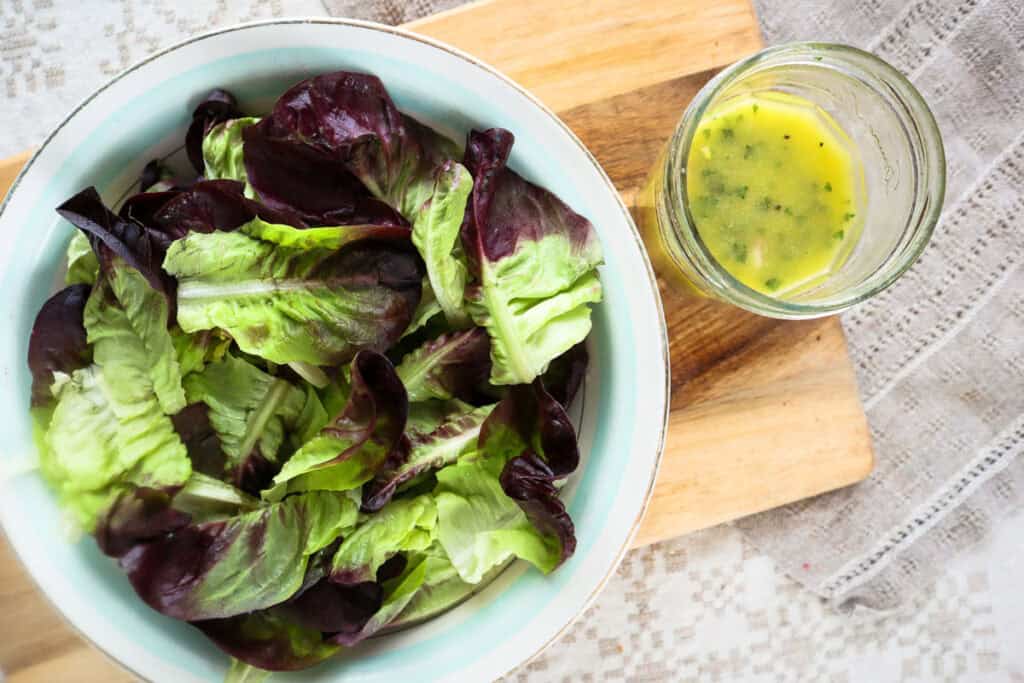
One detail that often surprises people is that the green salad comes after the main course, not before. It’s usually just lettuce tossed with a simple vinaigrette, such as a Lemon Shallot Vinaigrette.
This salad is not meant to be filling. It refreshes the palate and signals a gentle transitions the meal toward cheese or dessert.
Dessert, If There Is One
Dessert is often simple, and sometimes skipped entirely. When it appears, it is meant to taste like the ingredients themselves.
Home cooks tend to make things from scratch, rather than buy ready made. For example, many French desserts rely on a good crust. I learned the technical side of pastry through Le Cordon Bleu Online, but the method I use at home is simple and tactile.
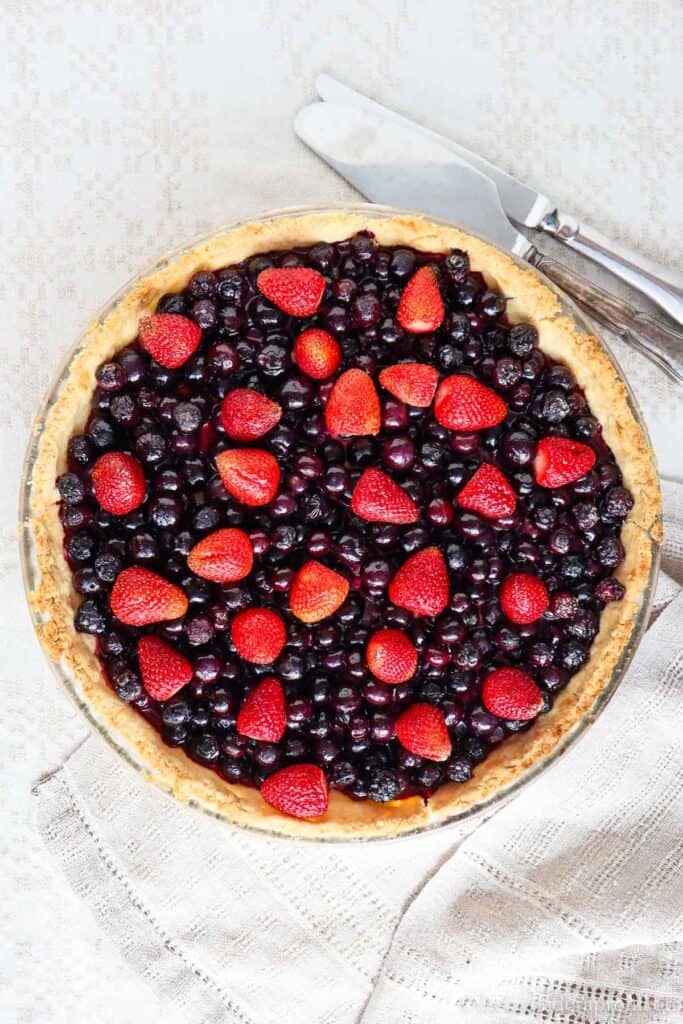
I make handmade Pâte Brisée without a food processor. Using your hands lets you feel when the butter is just right. Once you master this dough (and it is actually super easy!), it opens the door to anything from a savory quiche to a fruit tart, like this Blueberry Strawberry Pie.
For holidays, there are also traditional desserts, like a chocolate chestnut log at Christmas. Sweetness is balanced and restrained, finishing the meal gently rather than overpowering it.
A Few French Table Habits I Keep
- Meals are planned ahead, not to save time or money, but to make eating enjoyable. Planning a menu is more like planning a vacation; you choose what will be most interesting and satisfying.
- Cooking follows the seasons. What is available and at its best determines what we eat.
- The “Smart Lazy” approach to leftovers. We often cook a larger meal on Sunday, like a Pot-au-Feu, and “recycle” the ingredients into a new dish, like hachis Parmentier on Tuesday. It’s about being efficient so you aren’t starting from scratch every single night.
- Homemade is the default for “Quatre Heures.” The afternoon snack is a ritual. Instead of processed boxes, I keep the habit of baking something simple such as a lemon yogurt cake, muffins, or cookies. It’s a small effort that makes the day feel more thoughtful.
- We start eating together, once everyone is served, and we stay at the table until the meal is finished.
- Phones stay off the table. Conversation is part of the meal.
- A green salad appears after lunch and dinner almost every day, no matter how simple the rest of the meal is.
- Ingredients matter more than shortcuts. When I develop my recipes, I try to avoid prepackaged sauces and mixes and let real food do the work.
What this looks like at home
A French meal doesn’t need to be complicated or heavy. It’s about balance and flow. Here are two menus that reflect how I actually cook.
Menu 1: A Simple Quiche Lunch
- French Carrot Salad
- Authentic French Quiche Lorraine
- Green Salad with Lemon Shallot Vinaigrette
- Cheese
- Apple Tart
Menu 2: A Sunday Family Dinner
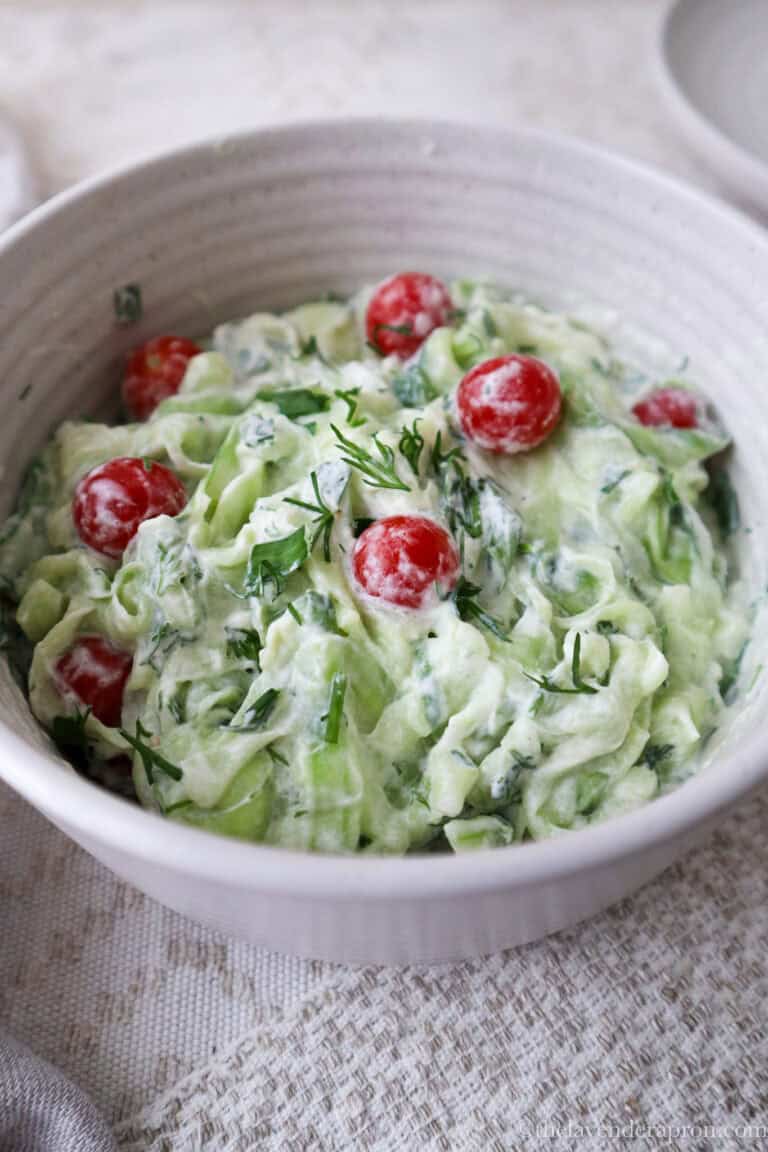
- Cucumber Salad or Light Vegetable Soup
- French Roast Chicken with Chestnuts
- Green Salad
- Blueberry and Strawberry Tart
French Home Cooking is for Everyone
French home cooking is not about perfection or luxury. It is about choosing good ingredients, respecting their season, and giving yourself permission to slow down and enjoy the meal, even if you are eating alone.
If you are curious about French food but have felt intimidated by it, this is where to start. Not with complicated techniques, but with a way of eating that makes everyday meals feel thoughtful, calm, and genuinely delicious.
I also have many recipes from the Baltic region, as my parents are from Latvia. If you’re curious about Baltic home cooking, I’ve written a guide to the Latvian table too.