
Juicy Baked Chicken Tenderloins with Lemon and Dill

This post may contain affiliate links. Read my disclosure policy.
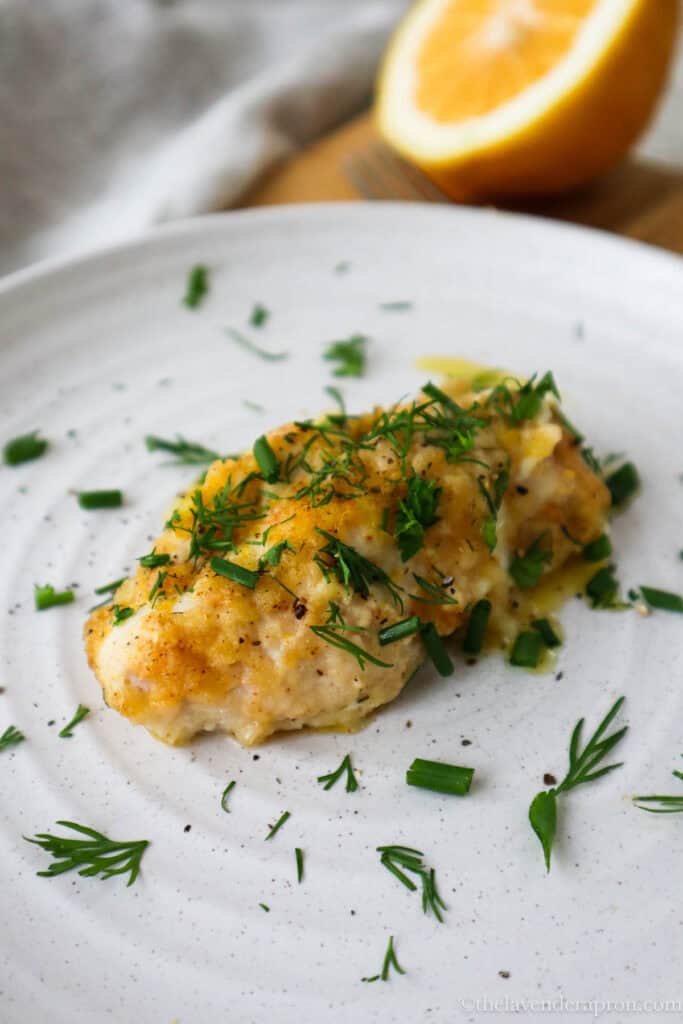
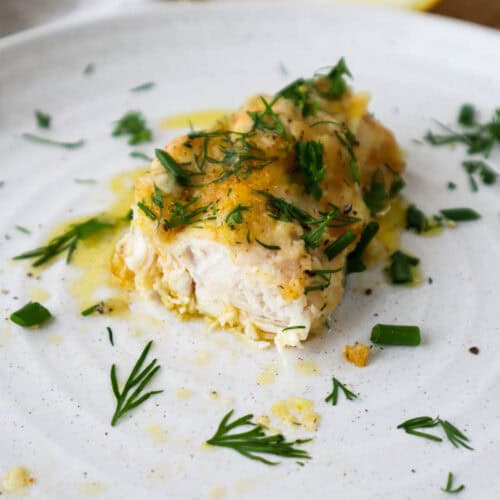
These juicy baked chicken tenderloins are rolled in melted butter and seasoned flour, baked until golden brown, then finished in the oven with a lemon, garlic and dill sauce. Serve them as they are with potatoes or a salad, or stir a little cream into the juices in the dish and toss it all with pasta.
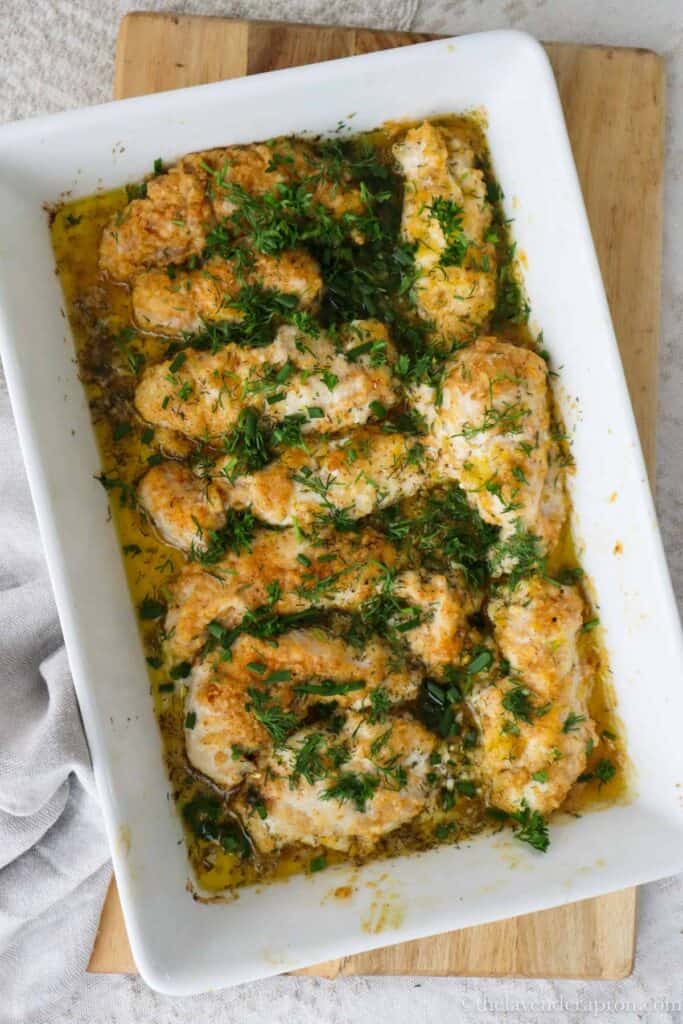
This is the kind of recipe that pretty much everyone likes. Lemon, butter, fresh herbs – what’s not to like! And what I love about this baked chicken tenderloin recipe is how quick and easy it is to make for a weeknight dinner.
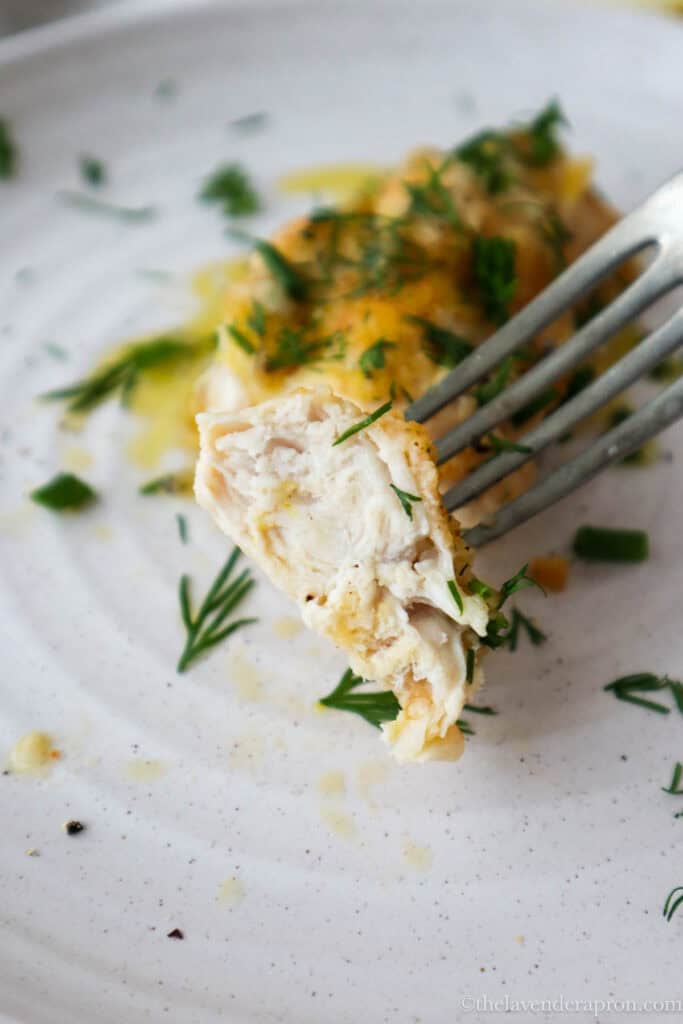
Baked Chicken Tenderloins Recipe at a Glance
- Time: 30 minutes
- Serves: 4
- Main ingredients: chicken tenderloins, butter, flour, lemon, dill
- What makes it work: the flour coating soaks up the butter and lemon sauce, so the chicken stays juicy and the sauce clings
- Two ways: plain with potatoes or salad, or creamy over pasta
- One tip: tenderloins cook fast, so start checking at 15 minutes
Lemon and Dill Baltic Flavors
I grew up with a Latvian mother and grandmother who put dill in practically everything, so of course I used it here. In Latvian cooking, dill goes on potatoes, cucumbers, soups and just about everything. Here it’s in the sauce and scattered fresh on top.
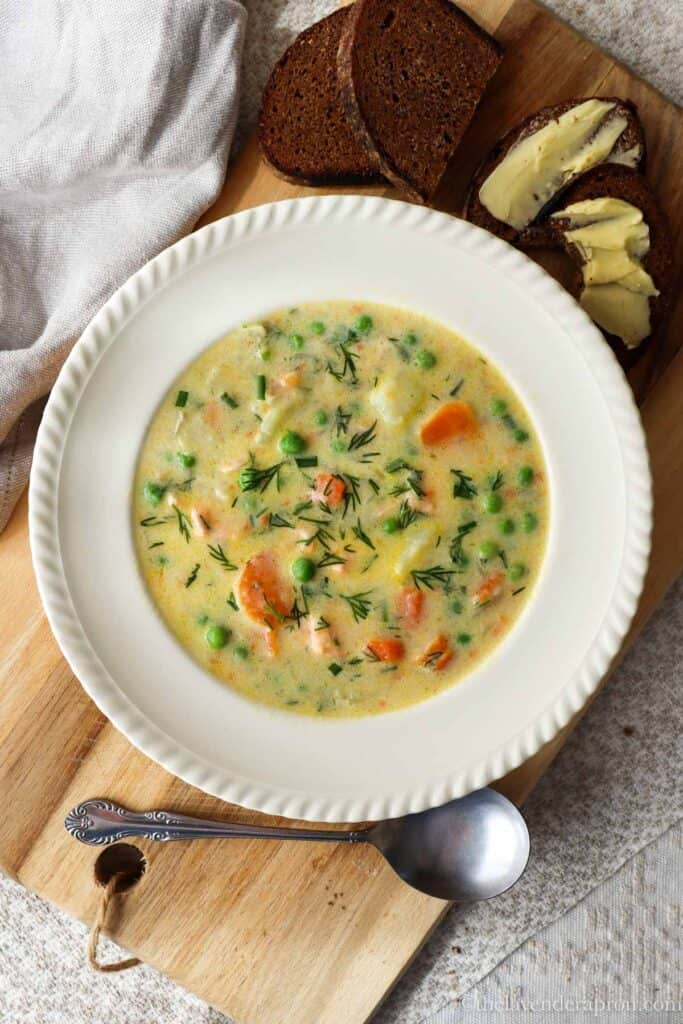
If you would like to try more Baltic recipes with dill, try my zucchini soup with dill, salmon soup with dill or my red cabbage salad with dill.

What Makes These Baked Lemon Chicken Tenderloins Special
Most baked chicken tenderloin recipes are a spice rub and a hot oven, and a lot of the popular ones add brown sugar to the seasoning. This one has no sugar at all, and no breadcrumbs or egg wash either. It’s oven baked chicken tenders with just a light flour coating, and the flavor comes from the butter, lemon and dill.
- The butter and flour coating. The butter, flour and lemon combination borrows from a French technique, the same idea behind sole meunière. The flour holds onto the butter, turns lightly golden, and gives the lemon sauce something to cling to. It also helps keep the chicken juicy.
- The lemon sauce goes on halfway. You pour it over after 10 minutes, so it bubbles around the chicken and mixes with the butter in the dish instead of soaking the coating from the start.
- One dish, two dinners. Eat the chicken as it is, or turn the juices into a light cream sauce for pasta without washing another pan.
If you like lemon with chicken, my lemon pepper chicken drumsticks are another easy meal for weeknights, baked or in the air fryer.
Equipment
- 9 x 13 inch baking dish
- Kitchen thermometer
- Small shallow bowl
Ingredients and Ingredient Notes
Full quantities in the recipe card below.
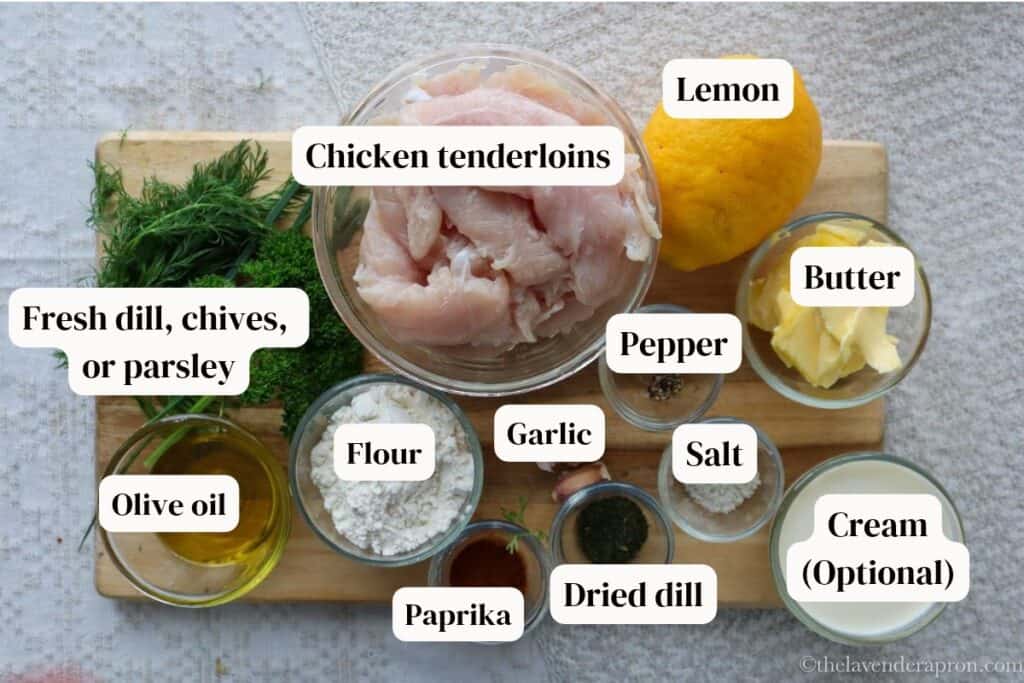
- Chicken tenderloins. The small strips from the underside of the chicken breast, sometimes sold as chicken tenders, chicken strips or mini breast fillets. They’re already boneless and skinless, so there’s no prep beyond patting them dry. I used 1⅓ lb (600 g), which was about 10 to 12 pieces. They vary a lot in size from one pack to the next, which affects the baking time.
- Butter. For rolling the chicken. Salted or unsalted both work. If you use salted, go a little lighter on the salt in the flour.
- All-purpose flour (plain flour). Seasoned with salt, pepper and a little sweet paprika. The paprika is mostly there for color, so the coating looks golden.
- Lemon. You need the zest and the juice, so zest it before you squeeze it. Fresh lemon makes a real difference here; bottled juice tastes flat in a sauce this simple.
- Garlic. One fresh clove, crushed, goes into the sauce. It’s only in the oven for the last few minutes, sitting in liquid, so it doesn’t burn. No fresh garlic? ¼ teaspoon garlic powder works too.
- Dried dill. Dill is one of the few herbs that still tastes good dried. I use ½ to ⅔ teaspoon in the sauce, which is plenty.
- Fresh herbs to finish. Dill, chives, parsley or spring onion, whatever you like or have in the garden. I use a generous handful.
- Cream (for the pasta version). Light cream, crème fraîche or heavy cream. More on that below.
Substitutions and Additions
- Chicken breast instead of tenderloins: slice the breasts into strips about ½ inch (1.5 cm) thick, so they cook in roughly the same time.
- Dried dill: swap for dried thyme, oregano or marjoram if you’re not a dill person. Use the same amount.
- Fresh dill in the sauce: use about 2 teaspoons chopped fresh dill instead of the dried.
- Paprika: leave it out if you like. The flavor barely changes, the chicken just looks paler.
- Cream: crème fraîche or heavy (thickened) cream are the safest choices with all that lemon. Light cream worked well for me when stirred into the hot dish.
- No crème fraîche? Mix ⅔ heavy cream with ⅓ full-fat Greek yogurt and you’re pretty much there.
- Gluten-free: a plain gluten-free flour blend should work for the coating, though I haven’t tested it yet.
How to Bake Chicken Tenderloins in the Oven
You’ll need a 9 x 13 inch (23 x 33 cm) baking dish. I use a ceramic one. Metal or cast iron works too and browns a little faster. If yours is glass or ceramic, gently warm the cream before adding it to the dish, because cold liquid in a hot glass or ceramic dish can crack it.
- Heat the oven to 400°F / 200°C / 180°C fan.
- Pat the chicken very dry with paper towel. Dry chicken holds the butter and flour much better.
- Mix the flour with the salt, pepper and paprika in a shallow bowl.
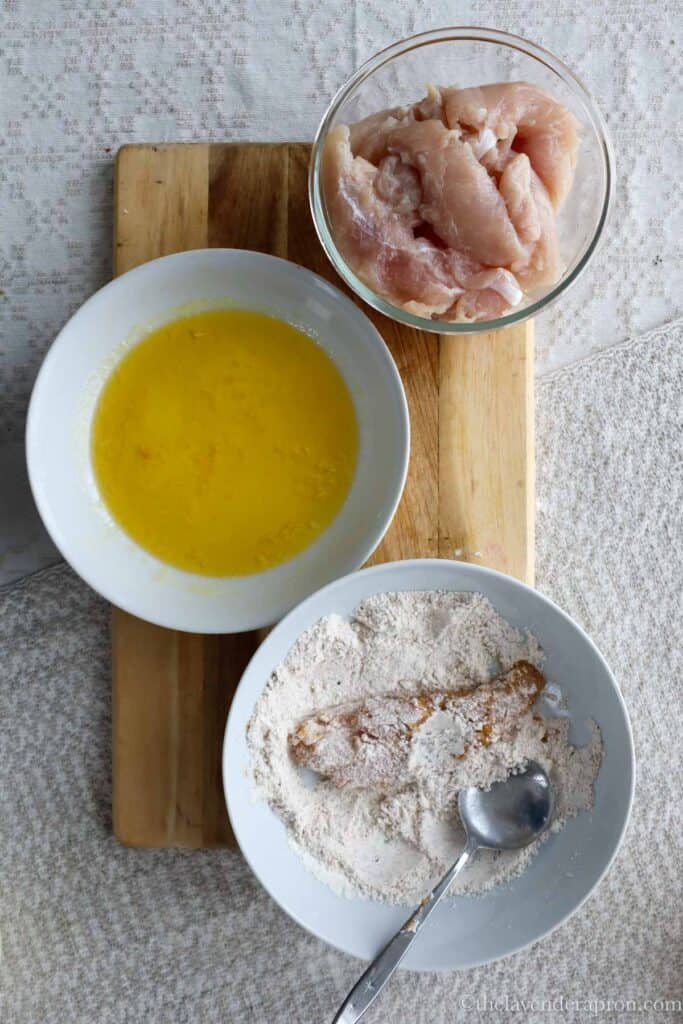
4. Roll each tenderloin in melted butter, then in the flour. Shake off the excess and lay them in the dish in a single layer with a little space between each one. Try to coat them evenly, but don’t fuss. A few bare patches where the flour pulls away are completely fine. Once the sauce goes on, nobody will notice 🙂 Drizzle any leftover butter over the top.
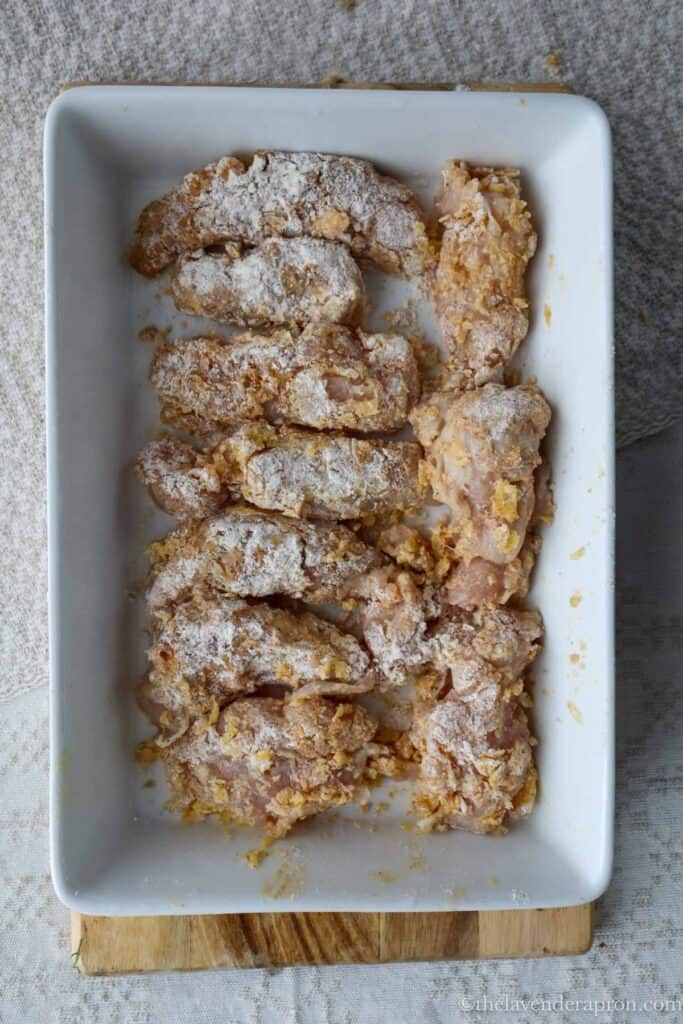
5. Bake for 10 minutes. While they’re in the oven, whisk the olive oil, lemon juice, lemon zest, garlic, salt, pepper and dried dill together.
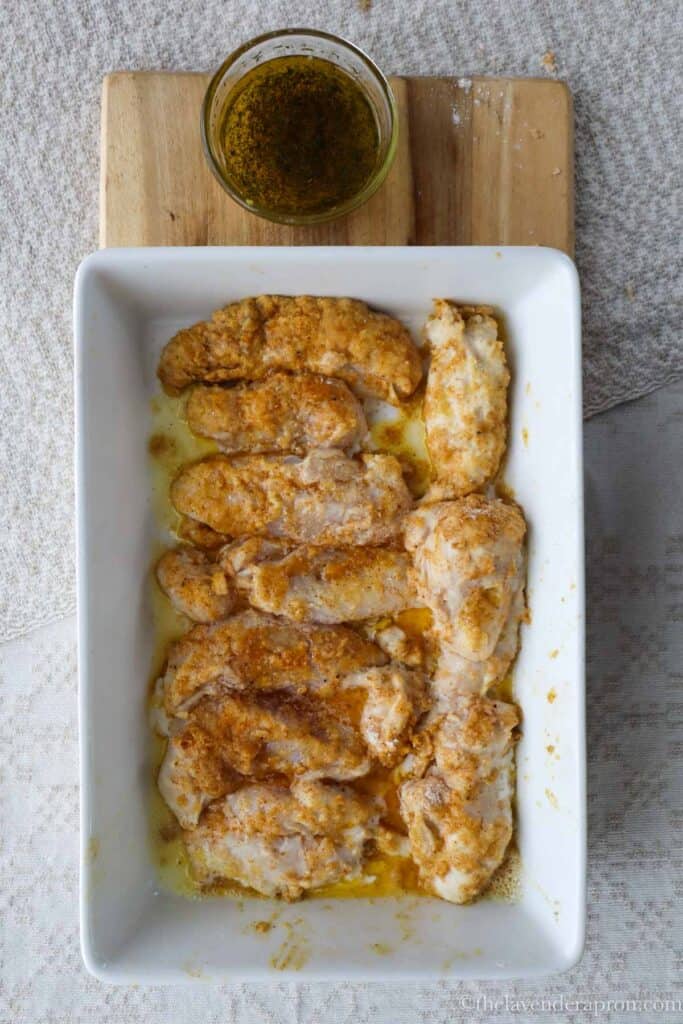
6. Pour the lemon sauce over and around the chicken, then bake for another 5 to 7 minutes, until the thickest piece reaches 165°F / 74°C.
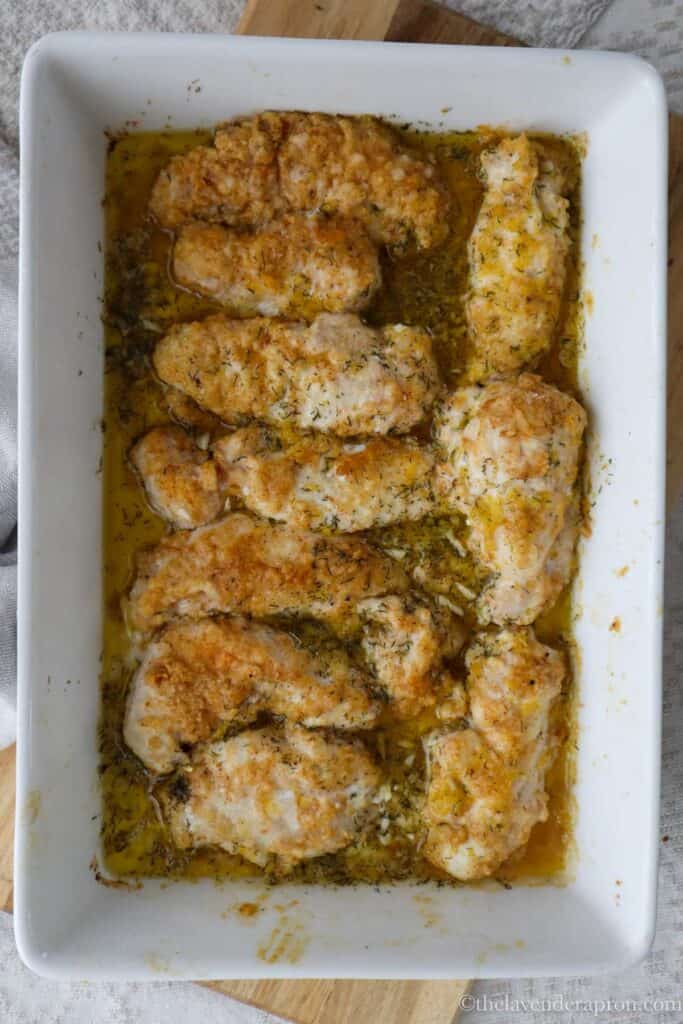
7. Rest for 5 minutes, spoon the sauce over, scatter with plenty of fresh herbs and finish with a squeeze of lemon.
The Creamy Lemon Chicken Pasta Version
It’s very easy to turn this into a full pasta meal. Put the pasta water on when the chicken goes into the oven, and everything finishes at about the same time. I used egg fettuccine, but any pasta works. I cook about 1¾ oz (50 g) of dried pasta per person, which is enough with the chicken on top.
- Save a cup of pasta water (250 ml) before you drain the pasta.
- Move the cooked chicken to a plate and leave all the juices in the dish.
- Slowly stir in ⅔ cup (160 ml) warmed cream, then ½ cup (125 ml) of the pasta water, scraping up the golden bits from the sides of the dish. Note: Don’t pour in fridge-cold cream as your dish can crack. I warm mine in the microwave for a few seconds before adding it.
- Taste the sauce and add a pinch of salt if it needs it. If it has cooled down too much, put the dish back in the oven for 2 to 3 minutes.
- Toss the pasta in the sauce. It thickens up a bit once it coats the pasta, so add a splash more pasta water if it looks too thick.
- Top with the chicken, lots of fresh herbs and a squeeze of lemon.
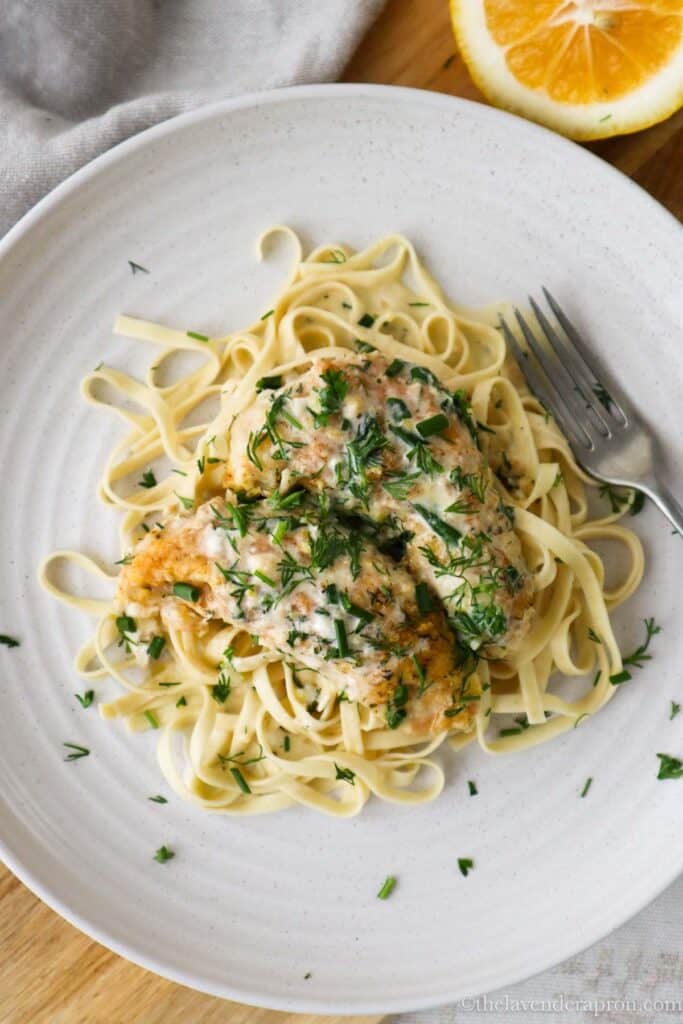
This gives you enough sauce to coat the pasta, which is all it needs. It won’t be swimming in sauce, so if you like a very saucy pasta, add a little more cream and pasta water.
A note on cream and lemon. There’s quite a bit of lemon in this dish, and acid can split cream. Crème fraîche and heavy (thickened) cream have enough fat that it won’t happen. Light cream worked well for me, because it only warms in the hot dish and never boils. The flour from the coating helps hold everything together too.
If you love creamy pasta, my creamy pasta alfredo with asparagus is another quick one.
How Long to Bake Chicken Tenderloins (and How to Tell They’re Done)
At 400°F / 200°C / 180°C fan, chicken tenderloins take about 15 to 17 minutes in total: 10 minutes on their own, then 5 to 7 minutes with the sauce. Big, thick tenderloins, or ones straight from the fridge, take a bit longer. Small or thin ones are done sooner, so start checking at 15 minutes.
The chicken is done when the internal temperature reaches 165°F / 74°C in the thickest piece. An instant-read thermometer is the easiest way to know.
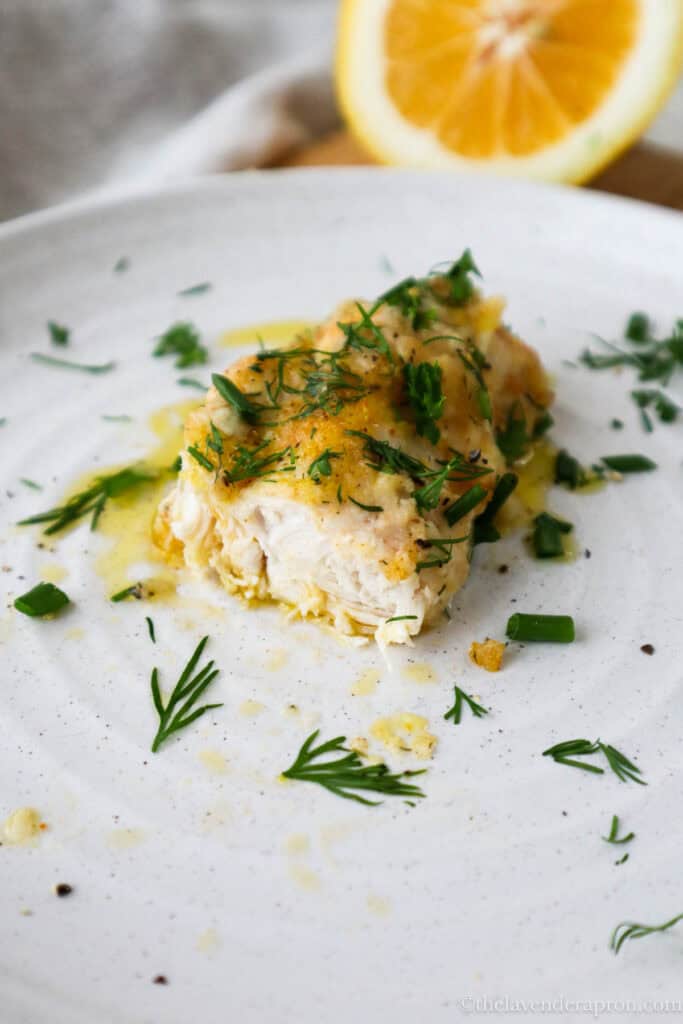
If you don’t have a thermometer, cut the thickest tenderloin open. It’s done when the meat is white all the way through and the juices run clear. Don’t go by the coating. With the lemon sauce on top, it can look ready before it is.
I bake these at 400°F / 200°C because it’s hot enough to turn the coating golden and cook the chicken quickly, so it stays juicy. Much hotter and the butter in the dish starts to burn at the edges.
Tips for the Best Lemon Dill Chicken Tenderloins
- Dry the chicken well. Wet chicken makes the flour gluey and patchy.
- Give them a little space in the dish. Crowded tenderloins tend to steam and stay pale.
- The tendon is optional. If your tenderloins have a thick white tendon at one end, you can snip it off with a knife or kitchen scissors. It’s safe to eat, just a little chewy once cooked.
- Season the cream sauce at the end. Cream needs more salt than you’d think, so always taste it before tossing the pasta.
What to Serve with Baked Chicken Tenderloins
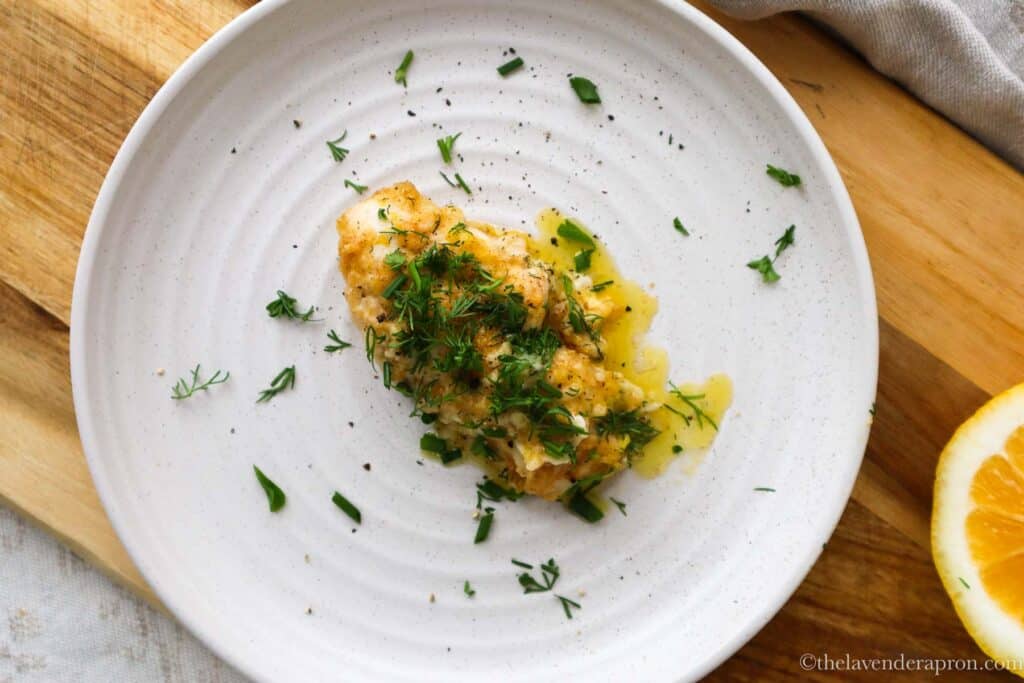
For the plain version, potatoes are the obvious choice, and the lemon butter sauce is lovely spooned over them. Try boiled new potatoes with dill, a baked potato, or my cottage cheese mashed potatoes.
A fresh salad on the side balances the butter. My creamy cucumber salad with dill is the Latvian way to go, or keep it French with a grated carrot salad. If you’d like a warm vegetable, roasted asparagus and carrots can go in the oven at the same temperature.
Leftover baked chicken tenderloins are also good sliced cold into a salad or a wrap the next day.
Storage and Make-Ahead
- Fridge: keep leftover chicken in an airtight container for up to 3 days. The pasta version keeps for 2 to 3 days.
- Freezer: the plain baked tenderloins freeze for up to 3 months. Thaw overnight in the fridge. I wouldn’t freeze the creamy pasta, because cream sauces tend to separate when thawed.
- Reheating: warm the chicken gently, covered, with a spoonful of the sauce or a splash of water so it doesn’t dry out. For the pasta, add a splash of milk or cream, since the sauce thickens as it sits.
- Make ahead: you can mix the seasoned flour and the lemon sauce earlier in the day. Coat the chicken just before baking, though, or the flour goes gummy.
FAQ
Yes, but thaw them first. The butter and flour won’t stick to frozen chicken, and they may cook unevenly.
Yes. Slice it into strips about ½ inch (1.5 cm) thick and check the temperature from 15 minutes.
Yes, the cream is only for the pasta version. Without it, you have the lemon butter sauce, which is lovely over potatoes, rice or plain pasta.
It probably boiled too hard, or the cream was too low in fat. Whisk in a splash of pasta water off the heat, and next time use crème fraîche or heavy cream.
No. It’s perfectly safe to eat. Some people prefer to trim it because it gets a bit chewy.
Yes, they’ll just cook a little faster, so start checking at 12 minutes. Keep an eye on the edges of the dish, because butter browns quickly at that heat.
No, they are not crispy like breaded tenders. The flour coating turns lightly golden and soft once the lemon sauce goes on, which is what makes it juicy.
No. The lemon sauce goes on in the oven, so there’s nothing to plan ahead.
About 20 to 25 minutes in total. Add the lemon sauce after about 15 minutes and start checking at 20. The coating won’t brown quite as much at the lower temperature. I usually bake mine at 400°F.
What to Make Next
Try these recipes from my Baltic collection.



Made these baked chicken tenders? Leave a star rating and a comment below. It helps other home cooks find the recipe, and I read every one. Every recipe on this blog is made and tested in my own kitchen. You can read more about how I develop and test recipes here. 🙂
Juicy Baked Chicken Tenderloins with Lemon and Dill
Equipment
- 1 shallow bowl
Ingredients
Chicken
- 1⅓ lb chicken tenderloins
- 6 tbsp butter melted
- ½ cup all-purpose flour plain flour
- 1 tsp salt
- ¼ tsp black pepper
- ½ tsp sweet paprika
Lemon sauce
- 3 tbsp olive oil
- ¼ cup fresh lemon juice
- 2 tsp grated lemon zest
- 1 garlic clove crushed
- ¼ tsp salt
- 1 pinch black pepper
- ½ to ⅔ tsp dried dill
To finish
- 1 large handful fresh herbs chopped (dill, chives, parsley or spring onion)
- ½ lemon for squeezing
Creamy pasta version (optional)
- 9 oz dried pasta such as egg fettuccine
- ⅔ cup cream crème fraîche or light cream
- ½ cup reserved pasta water plus extra as needed
Instructions
- Heat the oven to 400°F / 200°C / 180°C fan.
- Pat the chicken tenderloins very dry with paper towel.
- Mix the flour, salt, pepper and paprika in a shallow bowl.
- Roll each tenderloin in the melted butter, then in the flour. Shake off the excess.
- Lay the chicken in the baking dish in a single layer with a little space between each piece. Drizzle any leftover butter over the top.
- Bake for 10 minutes. Meanwhile, whisk together the olive oil, lemon juice, lemon zest, garlic, salt, pepper and dried dill.
- Pour the sauce over and around the chicken. Bake for another 5 to 7 minutes, until the thickest piece reaches 165°F / 74°C.
- Rest for 5 minutes. Spoon the sauce over, scatter with fresh herbs and finish with a squeeze of lemon.
For the creamy pasta version
- Cook the pasta while the chicken bakes. Save 1 cup (250 ml) of pasta water before draining.
- After step 7, move the chicken to a plate. If your cream is fridge-cold, warm it in the microwave for a few seconds. Slowly stir the cream, then ½ cup pasta water, into the hot juices in the dish.
- Taste and add salt if needed. If the sauce has cooled too much, return the dish to the oven for 2 to 3 minutes.
- Toss the pasta in the sauce, adding a splash more pasta water if it’s too thick.
- Top with the chicken, fresh herbs and a squeeze of lemon.
Notes
- Timing: depends on the size and thickness of your tenderloins, and whether they’re straight from the fridge. Start checking at 15 minutes.
- Coating: it’s fine if the flour isn’t perfectly even or pulls away in spots.
- Tendon: optional. Snip off the thick white end if you like; it’s safe to eat but a little chewy.
- Cream: crème fraîche and heavy cream won’t split with the lemon. Light cream works because it only warms in the hot dish and doesn’t boil. Never put a ceramic or glass dish on the stovetop.
- Sauce amount: Just enough to coat the pasta. You can add more cream and pasta water if you like it saucier.
- Chicken breast: slice into ½ inch (1.5 cm) strips and cook the same way.
- Storage: Store in the fridge for up to 3 days. Plain chicken freezes up to 3 months; don’t freeze the creamy pasta. Reheat gently with a splash of water.
