French Yogurt Cake (Gâteau au Yaourt)

This post may contain affiliate links. Read my disclosure policy.
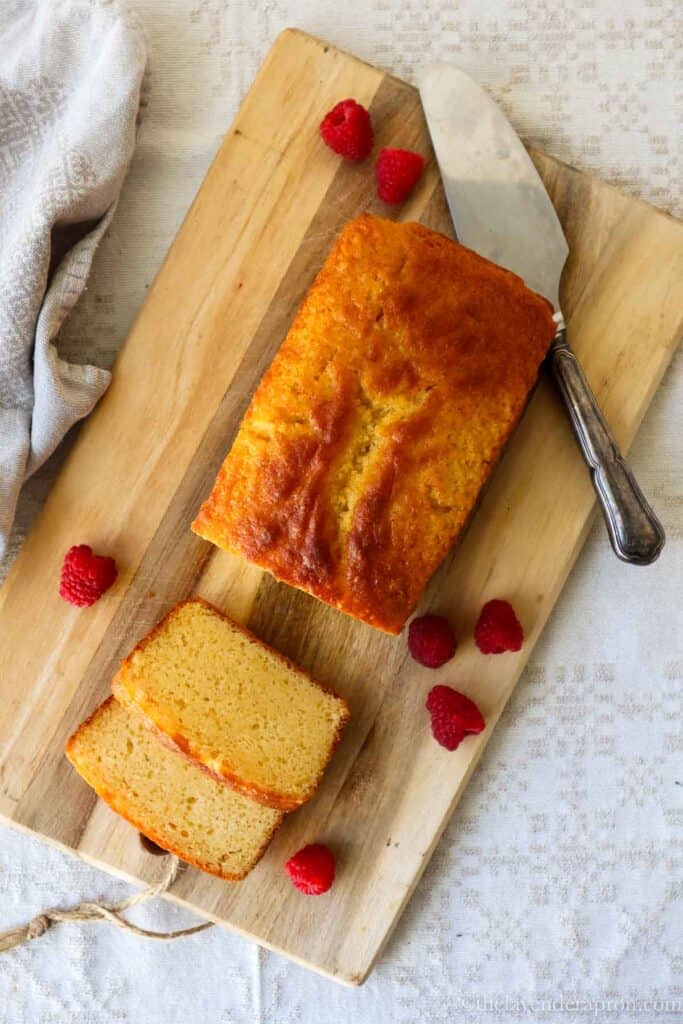
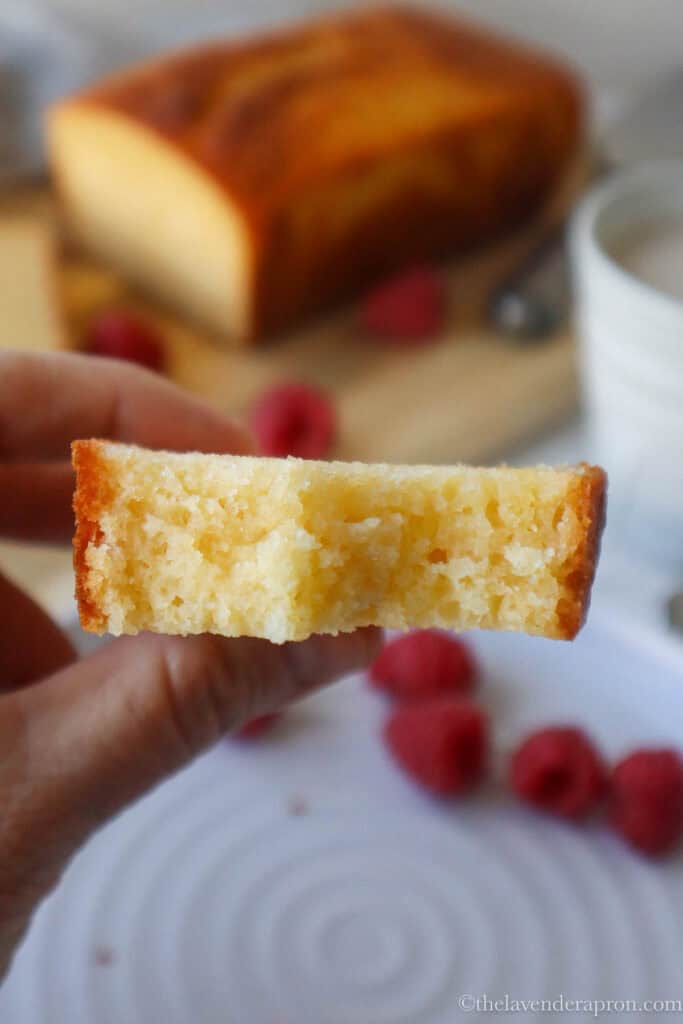
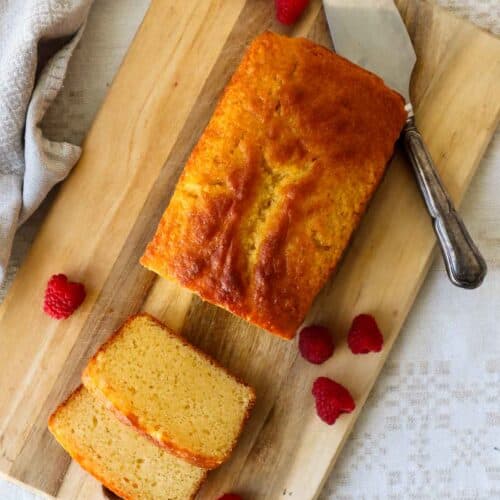
This French yogurt cake is moist, tender, and one of the easiest cakes you’ll ever make. One bowl, no scales, done in under an hour, and stays fresh on the counter for days.
The classic version is plain vanilla, just as our Mamie made it. My personal favorite is the lemon version, with a glaze that soaks straight into the warm crumb. Both are in this post, along with the traditional 1-2-3 and 1-2-3-4 ratio methods so you can make it the authentic French way.
Quick Look
Prep: 10 min | Bake: 45–50 min | Total: Under 1 hour | Serves: 8–10 | Pan: 22 x 12 cm (9 x 5 inch) loaf pan
- Key ingredients: Yogurt, light olive oil, eggs, vanilla, plain flour
- Why it works: Oil instead of butter keeps it moist for days. Yogurt adds a subtle tang and a tender crumb butter cakes can’t match.
- One thing to know: Spoon flour into the measuring cup and level off. Don’t scoop. Scooping packs the flour and is the most common reason this cake comes out dry.
- Making the lemon version? Pour the glaze over the cake while it’s still hot. Not warm. Hot. It soaks in completely differently that way.
Mamie’s Yogurt Cake
Everyone in France knows this cake. It’s one of the first things French children learn to make, in school, at home, standing on a stool at the kitchen counter, because it needs no scales, no technique, and about ten minutes of your time.
It’s also the perfect goûter cake (afternoon snack cake). French school days are long, kids get home around 4:30, and dinner doesn’t happen until 7 or 8.

This fills the gap, lower in sugar than most cakes, sweet enough for an afternoon snack, not so sweet it ruins dinner. My blueberry cottage cheese muffins and banana raspberry muffins follow the same logic.
My French mother-in-law made this constantly. She never got out a scale. She used the empty yogurt pot to measure everything else, rinsed it out, and got on with it. We called her Mamie. And in France, this cake is sometimes known as “gâteaux de Mamie” for exactly that reason. It’s the cake grandmothers make 🙂
Table of contents
- Quick Look
- Mamie’s Yogurt Cake
- Why You’ll Love This Recipe
- A Brief History of French Yogurt Cake
- Ingredients and Notes
- Substitutions
- The Yogurt Pot Method
- How to Make French Yogurt Cake
- Tips for the Best Result
- How to Serve It
- French Yogurt Cake Variations
- Storage
- Troubleshooting your French Yogurt Cake
- FAQ
- What to Make Next
- French Yogurt Cake Recipe Card
Why You’ll Love This Recipe
- One bowl, ten minutes of work. No creaming butter, no separating eggs, no chilling dough. Whisk everything together and pour the batter into the pan.
- It stays moist for days. Oil keeps this cake moist in a way butter simply doesn’t.
- Not overloaded with sugar. At 200g you can actually taste the yogurt, the vanilla, the subtle tang. Pile in more sugar and those flavours disappear. European home baking has always worked this way. It’s generally less sweet, but has more flavour. It’s not a health thing, it just tastes better.
- Olive oil instead of neutral oil. I use a light-flavour extra virgin olive oil. It adds a subtle fruitiness that pairs naturally with the cake and brings the health benefits of olive oil to every slice without tasting of olive oil at all. And Julie Andrieu, one of France’s most loved food writers, recommends olive oil as her preferred fat for gâteau au yaourt, for the extra moistness it adds.
- It’s a French classic – This French yogurt cake recipe is one of those recipes that’s been in French home kitchens forever. If you want to know more about how French people actually eat at home, I’ve got a whole guide over at The French Table.
A Brief History of French Yogurt Cake
The gâteau au yaourt emerged from French home kitchens in the 1950s, when yogurt first became widely available. The recipe hasn’t changed since.
The pot itself has a backstory. In 1929, Daniel Carasso opened a small yogurt shop in Paris, selling yogurt in ceramic pots through pharmacies as a digestive remedy. His father Isaac had founded the company in Barcelona ten years earlier, naming it after Daniel’s nickname, Danone. You can read the full story on Danone’s own history page.
Within a generation those little pots moved from the pharmacy to the kitchen counter, and by the 1950s someone realised the empty yogurt pot or cup was exactly the right size to measure the other ingredients. The 1-2-3 ratio was born and the traditional recipe hasn’t changed since.
Ingredients and Notes
Full quantities in the recipe card below.
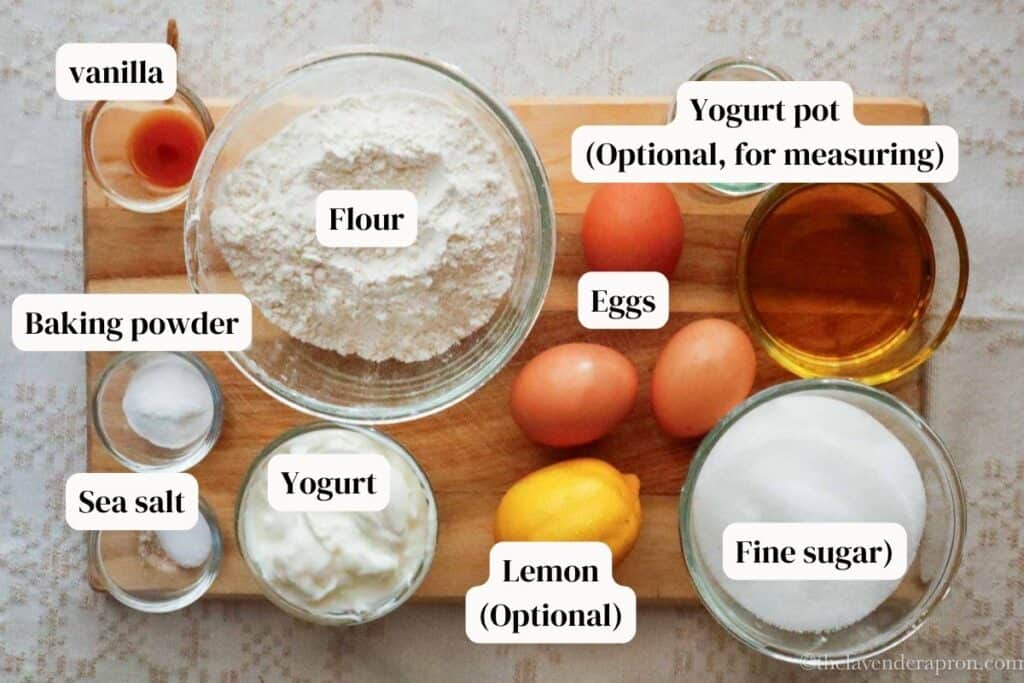
- Yogurt. Yogurt adds moisture and a subtle tang, and because it has less fat than sour cream, the result is lighter. Use full-fat plain yogurt. In France this means a small 125g pot of plain, unsweetened whole milk yogurt. In Australia, Danone Activia individual pots are exactly the right size. In the US, individual pots are harder to find at 125g. The Oui by Yoplait glass jar (142g) is the closest option, or simply use ½ cup measured from a larger container.
- Oil. Light-flavour extra virgin olive oil. Don’t use a strongly flavoured extra virgin or it will compete with the vanilla. Vegetable oil or canola oil work fine too.
- Eggs. Three large eggs, room temperature if you remember, straight from the fridge if you don’t.
- Sugar. 200g, slightly less than the traditional 220g. Restrained sweetness, vanilla doing the work. Go to 220g if you prefer a more classic level.
- Vanilla. Pure vanilla extract, 2 tsp. This is the flavour of the traditional recipe.
- Flour. Plain flour (all-purpose). Spoon into the cup and level off. Don’t scoop.
Substitutions
- Oil: Vegetable oil or canola oil work in place of olive oil, same result, slightly more neutral flavour. Melted butter (same quantity) also works, though the cake won’t keep as long. For a lighter result, reduce the oil to ½ cup (half a pot). The cake will be less rich but still moist.
- Yogurt: Full-fat Greek yogurt works well, same quantity, very slightly denser. Kefir also works as a 1:1 substitute. Same acidity, same result, slightly thinner batter. Don’t use low-fat or flavoured yogurt. Low-fat has too much water and flavoured will change the taste.
- Flour: Plain flour only. Don’t use self-raising flour without removing the baking powder from the recipe.
- Sugar: Caster sugar (known as superfine sugar in the US) is ideal. Regular granulated sugar works fine. Don’t substitute powdered sugar. The cornstarch it contains affects the texture.
- Lemon version: Lime zest works for a sharper result. Orange zest gives a milder, warmer flavour.
The Yogurt Pot Method
This is how French children learn to make this cake, no scales, no measuring cups, just the empty yogurt pot or yogurt cup rinsed out and used for everything else. The ratio is 1-2-3: one pot oil, two pots sugar, three pots flour. Once you know it, you never forget it.
The flour point is worth understanding. When you measure flour by pot volume, three pots gives you approximately 190g. Many English-language recipes convert this to weight incorrectly, treating one pot as 125g and ending up with 375g of flour, which is double the authentic amount. That’s why some versions of this cake taste dense and heavy. Measuring by volume, or using 190g on scales, gives you the light, airy result the French actually make.
Some versions use 4 eggs instead of 3. That’s the 1-2-3-4 version, which gives a slightly richer result. Both are traditional.
No yogurt pot? A standard ½ cup (125ml) measuring cup is the same size and works perfectly. Full measurements are in the recipe card below.
Once you get the hang of the 1-2-3 ratio, you won’t need to look at a recipe at all!
How to Make French Yogurt Cake
Preheat your oven to 180°C (350°F) and place a rack in the lower-middle position.
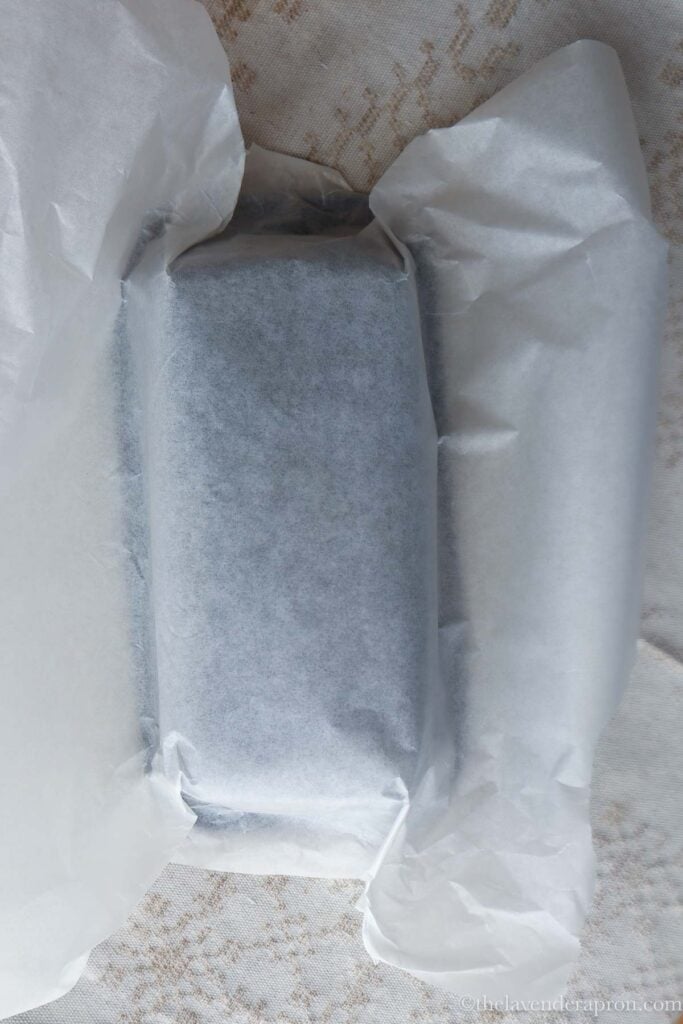
Step 1. Butter and flour your loaf pan (or round cake tin), or line the base with baking paper (parchment paper).
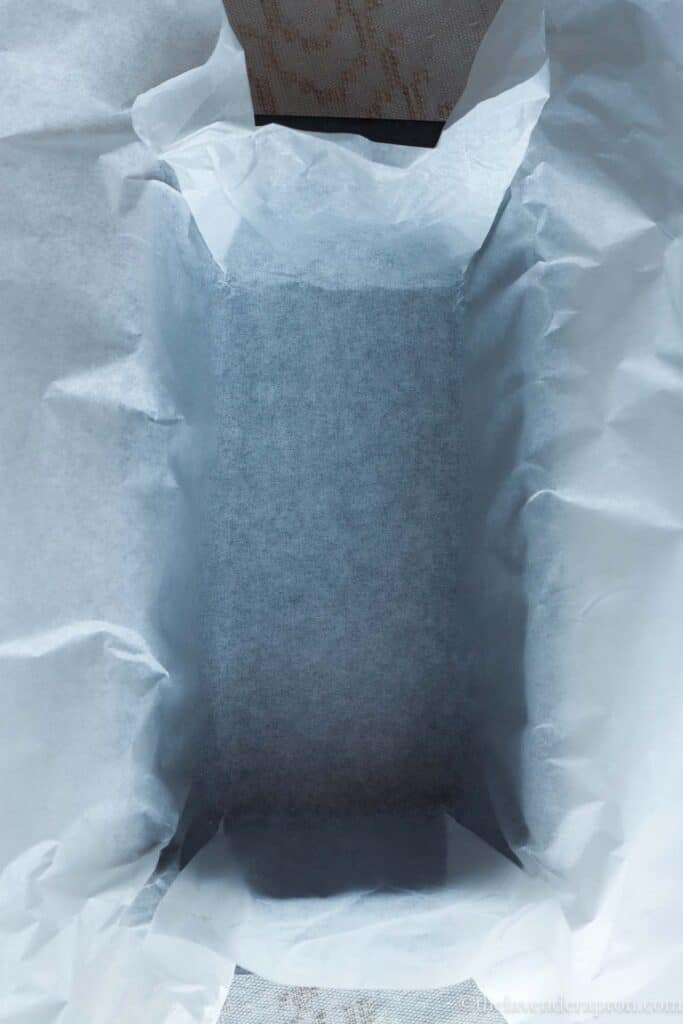
Tip: If using a loaf pan, turn the loaf pan upside down and wrap it with baking paper like a present with clean edges. Then flip it right side up again and place the baking paper inside.
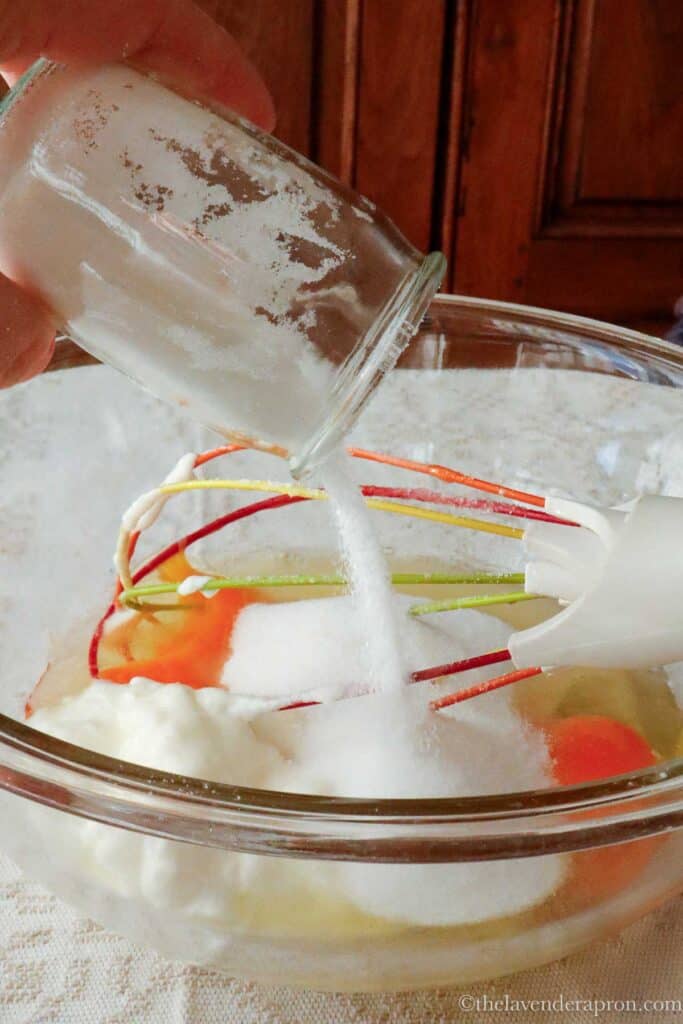
Step 2. Mix the yogurt, sugar and eggs. In a large bowl, whisk together the yogurt, sugar, and eggs until you have a smooth batter, about 1 minute.
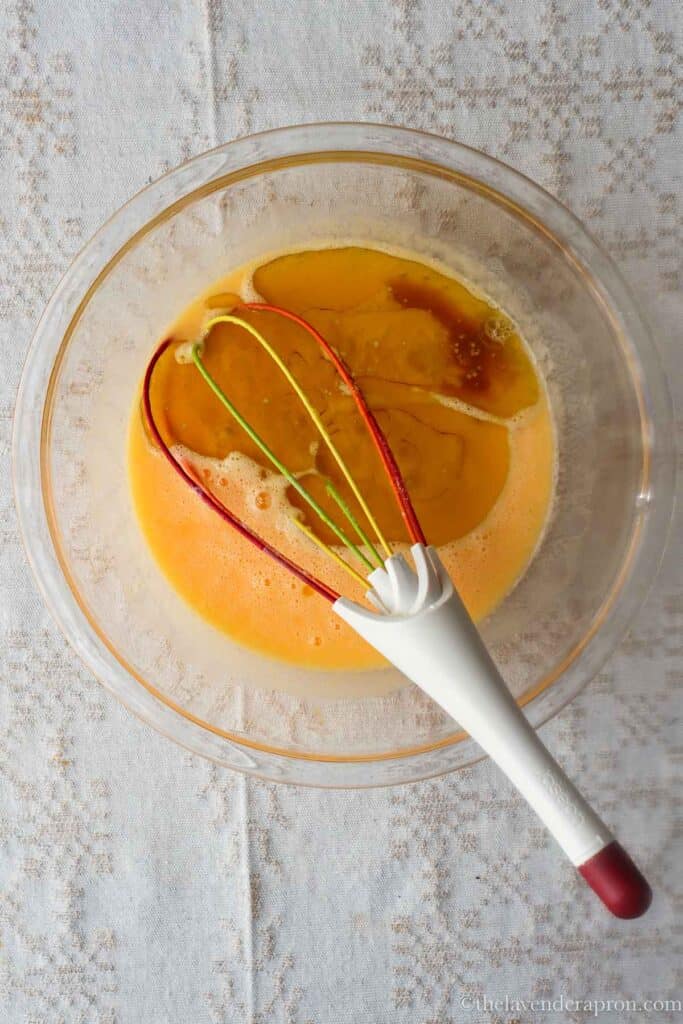
Step 3. Add the oil and vanilla. Whisk until combined. The batter should be thick but pourable, like heavy cream.
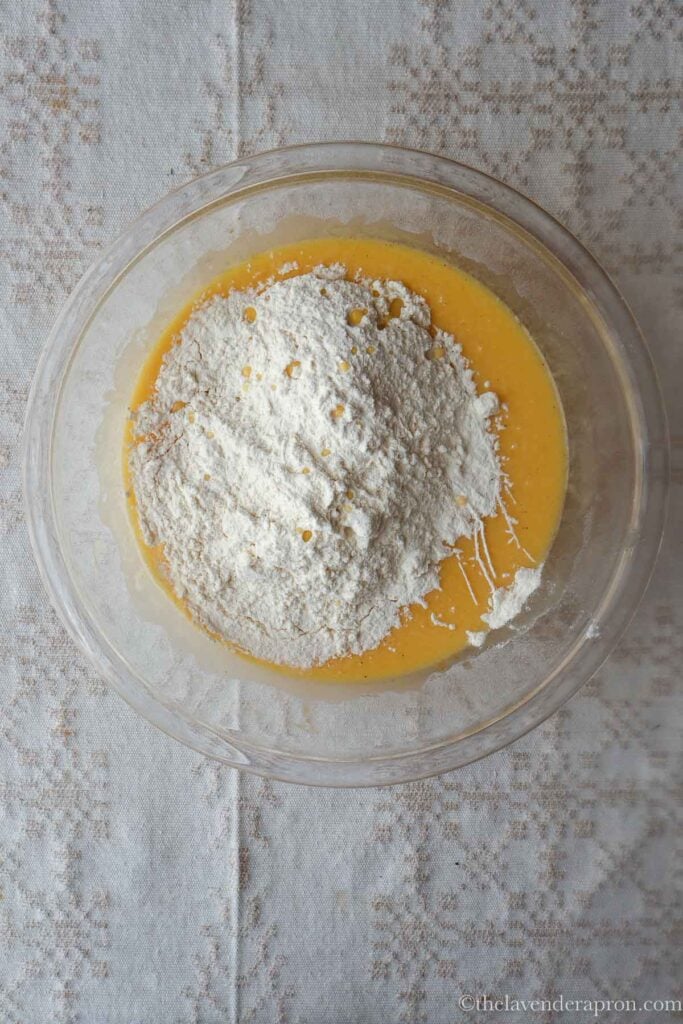
Step 4. Add the dry ingredients. Sift the flour, baking powder, and salt over the wet ingredients. Spoon flour into the cup and level off before measuring. Don’t scoop or the cake will be dry. Fold gently with a rubber spatula until just combined. Do not overmix. Overmixing develops gluten, which makes the crumb tight and chewy instead of tender.
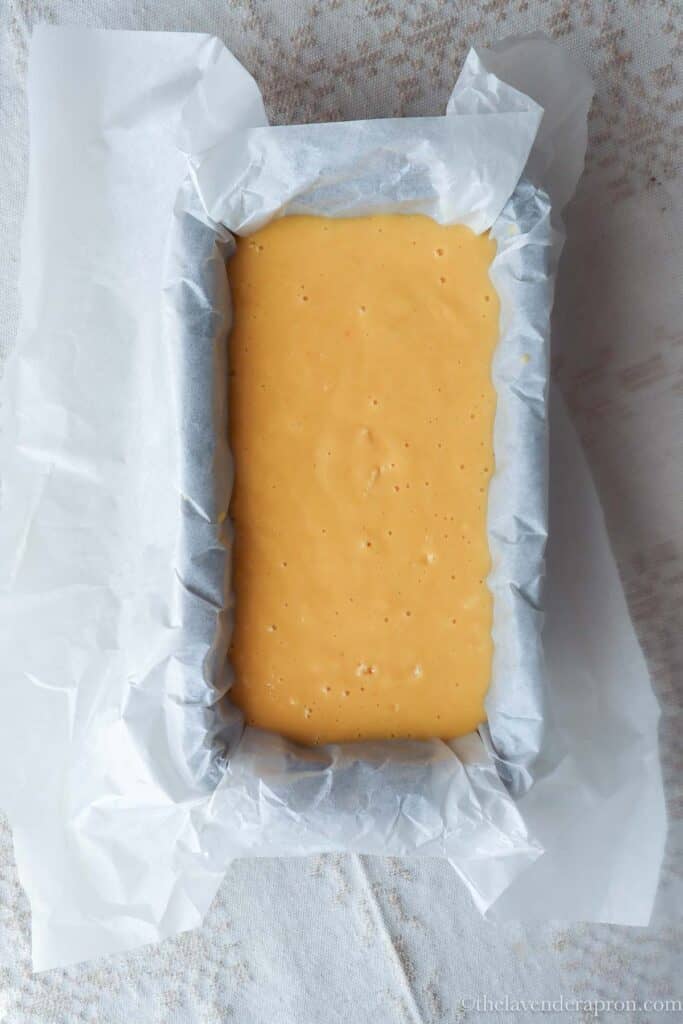
Step 5. Bake. Pour the batter into the prepared pan and smooth the surface. Bake for 45–50 minutes until the top is deep golden and a crack has formed down the middle. A skewer or cake tester inserted in the centre should come out clean.
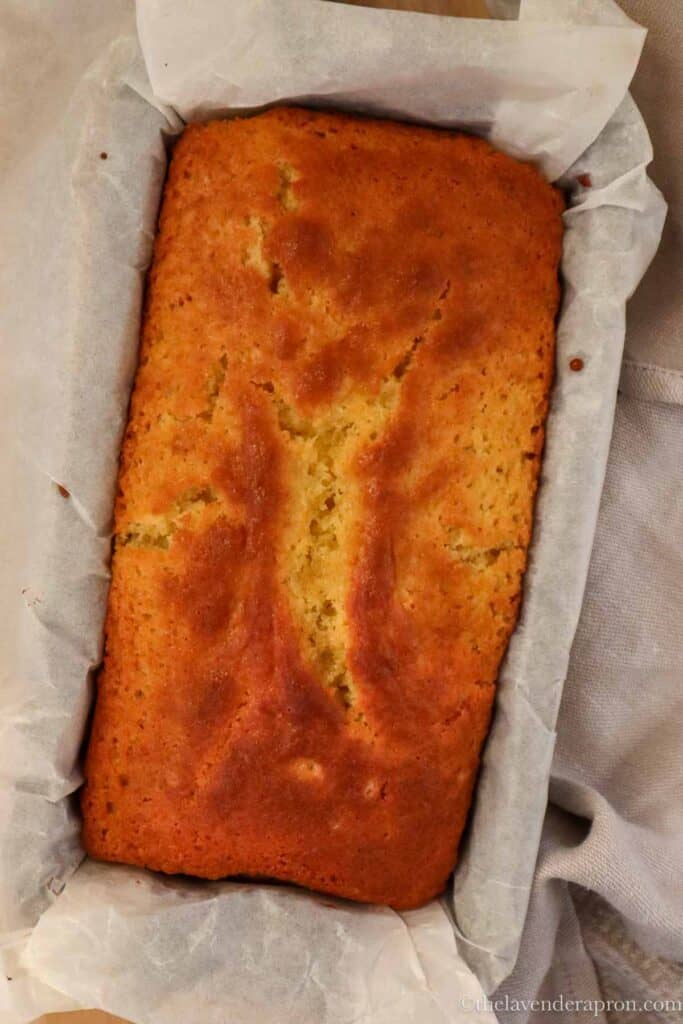
Step 6. Cool. Leave to cool in the pan for 15 minutes, then turn out onto a wire rack.
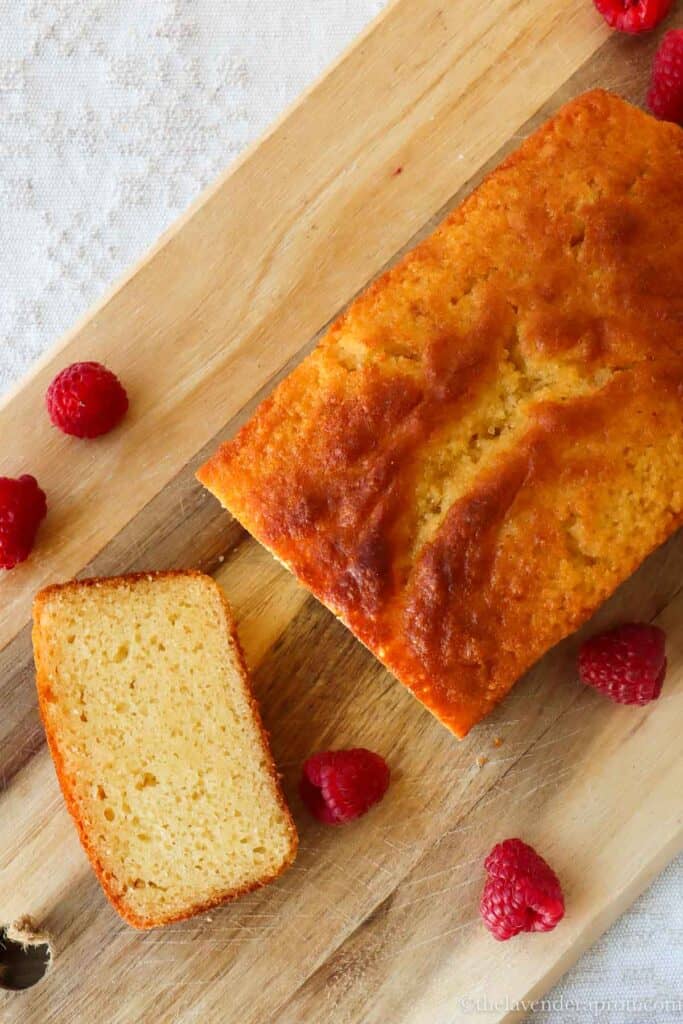
Cool completely before slicing. The cake is better the next day.
Want to save this recipe?
Making the lemon version? Before cooling, see the lemon variation below for the glaze instructions.
Tips for the Best Result
- The crack is normal. Mine splits right down the middle every single time. It happens to every French yogurt loaf cake. It’s the sign of a good one.
- If you’re adding fruit to the batter, use a wider, shallower pan rather than a deep loaf pan. The weight of the fruit can cause a dense, undercooked centre in a tall loaf. A flatter bake reduces that risk significantly. A 23 x 33 cm (9 x 13 inch) pan works well for a fruit version.
- Rest the batter before baking. If you have 30 minutes, let the batter sit in the pan before it goes in the oven. The crumb bakes up slightly more even and tender.
- Scatter sugar on top for a crunch. One or two tablespoons of caster sugar over the batter just before baking gives the top a faintly caramelised crust.
How to Serve It
- This cake works for almost any occasion: afternoon tea, school lunchboxes, after-school snacks, simple dessert or something easy to bring to a gathering. In France you cut a slice and eat it at four o’clock.
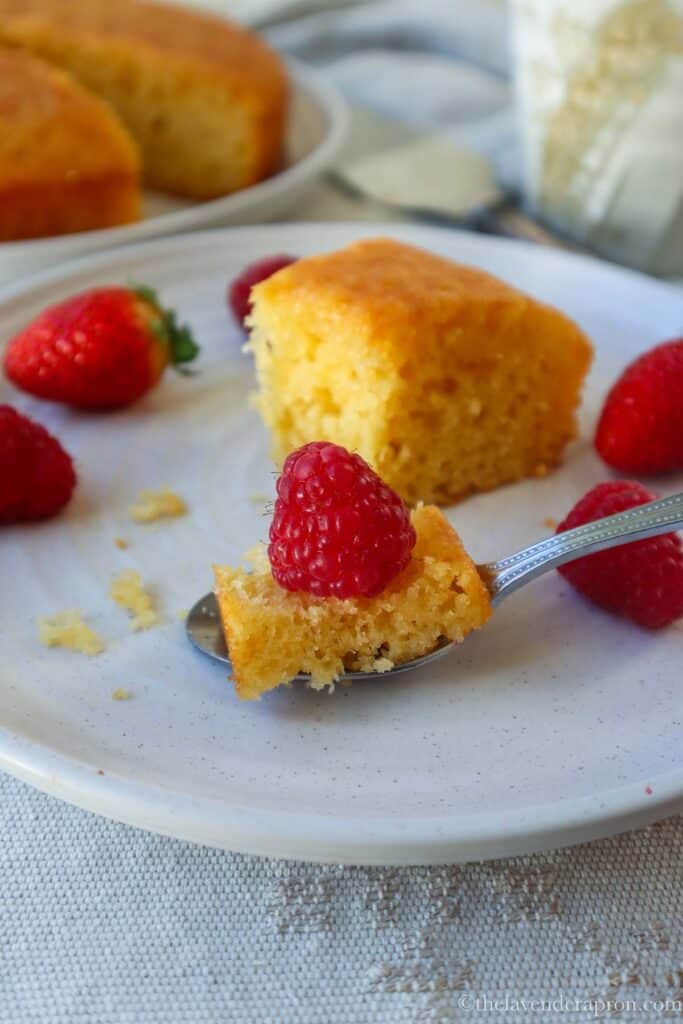
- Plain version: Fresh berries or a good jam spread directly on the slice. Apricot, plum, or tart cherry.
- Lemon version: Fresh berries alongside, or a spoonful of crème fraîche. As a dessert, dust with icing sugar and serve with tea, coffee or a small glass of Sauternes.
French Yogurt Cake Variations
The Lemon Version
I love this French lemon yogurt cake. This is the version I made most often in France and still make now. You can read more about my years there on my About page. The lemon glaze soaks straight into the warm crumb through skewer holes so the lemon flavour gets into every slice, not just the surface. The lemon glaze adds a little extra sweetness, though it soaks into the crumb rather than sitting on top.
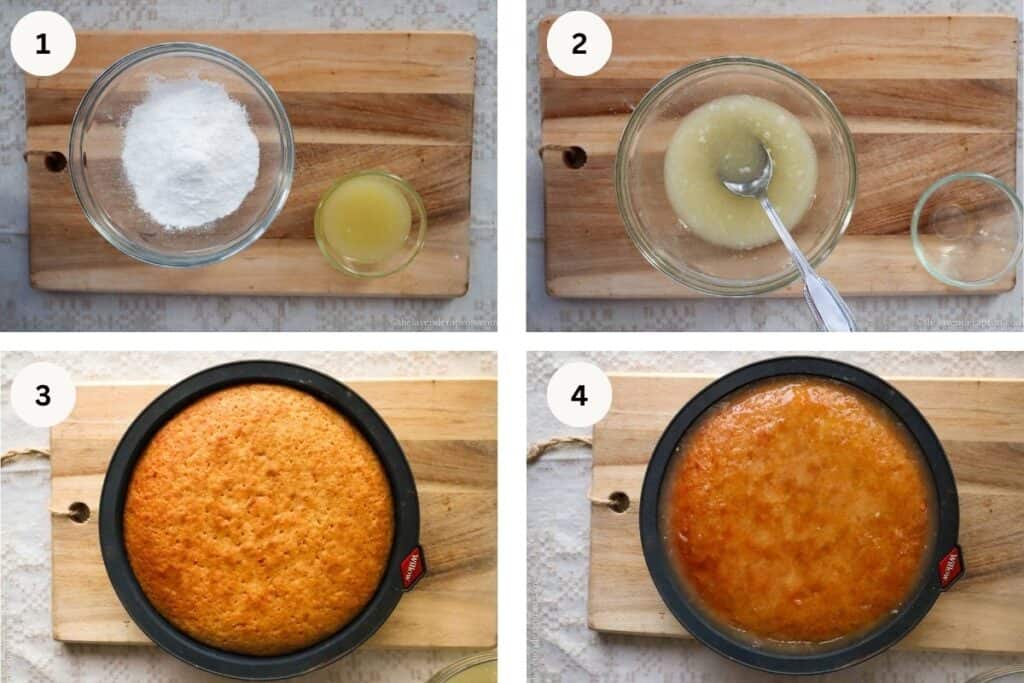
Add the zest of 1 lemon to the sugar and rub together with your fingers for 30 seconds before adding the other ingredients. This releases the oils from the zest and makes the lemon flavour noticeably brighter throughout the cake.
Lemon glaze: In a small bowl, whisk together 60g (½ cup) sifted icing sugar with 3–4 tbsp fresh lemon juice until smooth and pourable. For a sweeter, more visible glaze, increase to 80g (⅔ cup). As soon as the cake comes out of the oven, poke the surface all over with a thick skewer or chopstick. Pour the glaze slowly and evenly over the hot cake. Cool in the pan for 15 minutes, then turn out onto a wire rack.
Extra lemon, for people who think most lemon cakes never taste enough of lemon. Add zest of 2 lemons and 1 tbsp lemon juice to the batter. Increase baking powder to 2½ tsp. Make a double lemon syrup glaze: 120g icing sugar with 4–5 tbsp lemon juice. Pour half over the hot cake, wait 10 minutes, pour the rest. For the serious version, brush with 2 tbsp warmed lemon curd before the second pour.
If you love a blueberry lemon combination, my blueberry strawberry pie uses the same instinct.
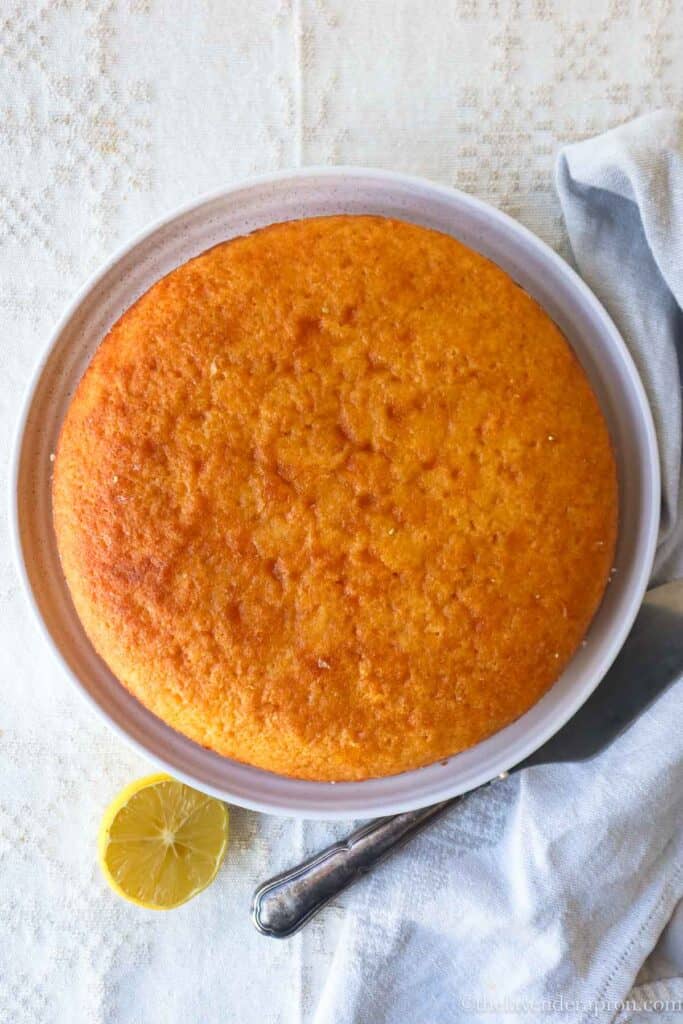
Other Variations
- Chocolate. Replace 2 tbsp of flour with 2 tbsp good quality cocoa powder. No other changes needed.
- Orange. Replace vanilla with orange zest. Use orange juice in a glaze if you like. Good in winter.
- Blueberry. Fold 150g fresh or frozen blueberries through the batter. Scatter a few extra on top. Works with or without the lemon glaze.
- Plum or cherry (summer). Press halved plums or cherries cut-side up into the batter just before baking. No glaze needed.
Storage
- 4-5 days at room temperature in an airtight container. Better on day 2 than day 1.
- Freeze unglazed, wrapped tightly in cling film (plastic wrap), for up to 2 months. Thaw at room temperature then add the glaze fresh if making the lemon version.
- Make ahead: This cake is worth baking the day before. Glaze while still hot if making the lemon version, cool completely, wrap, and refrigerate. It’s noticeably better the next day.
Troubleshooting your French Yogurt Cake
- The lemon glaze sits on top rather than soaking in. Make sure the cake is still hot, not just warm. Thin with a little extra lemon juice if it’s too thick to pour. This is the most common lemon version mistake. Don’t glaze a cool cake.
- The cake is dry. Almost always a flour measurement issue. Spoon flour into the cup and level off — don’t scoop. If you have scales, use them: 190g is exact.
- The centre is still wet after 50 minutes. Many home ovens run cool. Tent the top loosely with foil if it’s browning too fast and give it another 10 minutes.
- The cake stuck to the pan. Butter and flour both the sides and base, or line with baking paper. Loaf pans stick at the corners.
FAQ
- What makes French yogurt cake recipe different from other cakes? The whole recipe is built around a ratio (1-2-3) measured with the empty yogurt pot. One pot oil, two pots sugar, three pots flour. No scales, no measuring cups. That’s what makes it the first cake French children learn, and the one they never forget.
- Can I use Greek yogurt? Yes, full-fat only. Very slightly denser but the flavour is the same.
- Does the yogurt pot size matter? Not as long as you use the same pot for everything. A ½ cup measuring cup works perfectly.
- Can I make this without a loaf pan? Yes. A 20 – 23 cm (8 – 9 inch) round pan works well, reduce baking time to 30–35 minutes. A 23cm (9 inch) square pan also works.
- Why is my cake dense? Almost always a flour measurement issue. If you measured flour by weight using 125g per pot rather than by volume, you’ve used double the correct amount. Use 190g by weight, or measure by cup or yogurt pot volume. And remember to spoon the flour in the pot/cup rather than scooping the flour in.
What to Make Next
- Easy Belgian chocolate cake – For a very chocolaty alternative.
- Authentic French Quiche Lorraine — The other French home cooking cornerstone on this blog. This is the real deal. It’s creamy and full of flavor. Or try my Mediterranean-style quiche Provençale for a lighter French quiche.
- Latvian Cottage Cheese Cake (Biezpienmaize) — Nothing like American cheesecake. Lighter, less sweet, cut into bars. The Latvian version of what a baked cheesecake actually is.
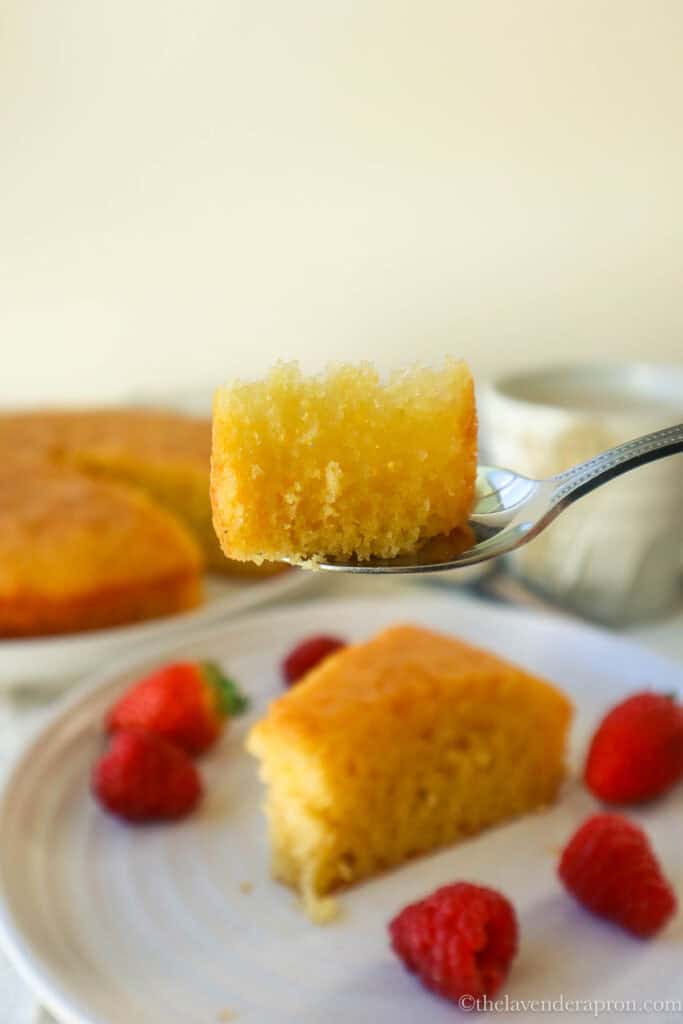
Made this French Yogurt Cake? Leave a rating below. It helps other home cooks find it. Every recipe on this blog is made and tested in my own kitchen. You can read more about how I develop and test recipes here. 🙂
French Yogurt Cake Recipe Card
Here’s the full recipe, both the plain and lemon versions.
French Yogurt Cake Recipe (Gâteau au Yaourt)
Equipment
- 1 9 x 5 inch (22 x 12 cm) metal loaf pan Or 8 – 9 inch (20 – 22 cm) round cake pan. Silicon and ceramic also work, but the exterior is softer.
- 1 Large mixing bowl
- 1 Whisk
- 1 Rubber Spatula
- 1 Skewer or chopstick (for the lemon version)
Ingredients
Cake
- 1/2 cup Plain yogurt or one 125 ml yogurt pot or 125g full-fat
- 1 cup Fine sugar or 2 yogurt pots or 200 grams caster sugar — see note
- 3 Large eggs room temperature
- 1/2 cup Light-flavour extra virgin olive oil or one 125 ml yogurt pot or 125ml
- 2 tsp Vanilla extract
- 1 1/2 cups Plain flour or 3 yogurt pots or 190g, spooned and levelled
- 2 tsp Baking powder
- ½ tsp Fine sea salt
For the Lemon version only
- Zest of 1 lemon
Lemon Glaze (Lemon version only)
- 1/2 cups Icing sugar, sifted 60 grams
- 4 tbsp Fresh lemon juice
Instructions
Plain vanilla version:
- Preheat oven to 180°C (350°F). Place a rack in the lower-middle position. Butter and flour a 22 x 12 cm (9 x 5 inch) loaf pan, or line the base with baking paper. See notes for round cake option.
- In a large bowl, whisk together the yogurt, sugar, and eggs until you have a smooth batter, about 1 minute. Add the oil and vanilla. Whisk until combined. The batter will be thick but pourable.
- Spoon flour into the cup and level off. Don't scoop. Sift the flour, baking powder, and salt over the wet ingredients. Fold gently with a rubber spatula until just combined. Do not overmix.
- Pour the batter into the prepared pan and smooth the surface. Bake for 45–50 minutes until the top is deep golden, a crack has formed down the middle, and a skewer or cake tester comes out clean.
- Cool in the pan for 15 minutes, then turn out onto a wire rack. Cool completely before slicing.
For the lemon version:
- Rub the lemon zest into the sugar with your fingers for 30 seconds before adding any other ingredients.
- Make the glaze: whisk icing sugar and lemon juice in a small bowl until smooth and pourable.
- As soon as the cake comes out of the oven, poke the surface all over with a thick skewer or chopstick. Pour the glaze slowly and evenly over the hot cake. Cool in the pan for 15 minutes, then turn out.

I love this! This sounds wonderful. Thank you. I can’t wait to make this. – im checking tomorrow to see if i have the ingredients.
Thank you Mary Ann, It’s a super quick recipe. Hope you enjoy it 🙂
Made the lemon version yesterday and it’s already gone. So moist and that glaze really soaks in. My husband asked if I could bake another one this weekend.
Thanks Claudia, I’m glad you enjoyed it. We love the lemon version too!
Wow this looks so good! Pinning this for later for sure!
Thanks so much Kimberly!
Love the yogurt in this cake! It makes it so moist. We also love that it’s not too sweet too.
Thanks so much! I’m glad you enjoyed it!
This looks absolutely delicious. I love how she shares the family history behind the recipe and explains why it became such a staple in French homes. Using the yogurt container as the measuring tool is such a simple idea, and the lemon version sounds especially tempting. All I need is a slice and a cup of coffee
Thanks Lisa – it really is a very traditional French cake, so I thought people might want to know about the history a bit.
This French Yogurt cake sounds so delicious, especially the lemon version! I have found a new love for baking with yogurt.
It’s super yum and really easy. I hope you get a chance to try it!
Very delicious!!
Thank you Lex! I’m so happy you liked it 🙂