Easy Belgian Chocolate Cake Recipe with Ganache

This post may contain affiliate links. Read my disclosure policy.
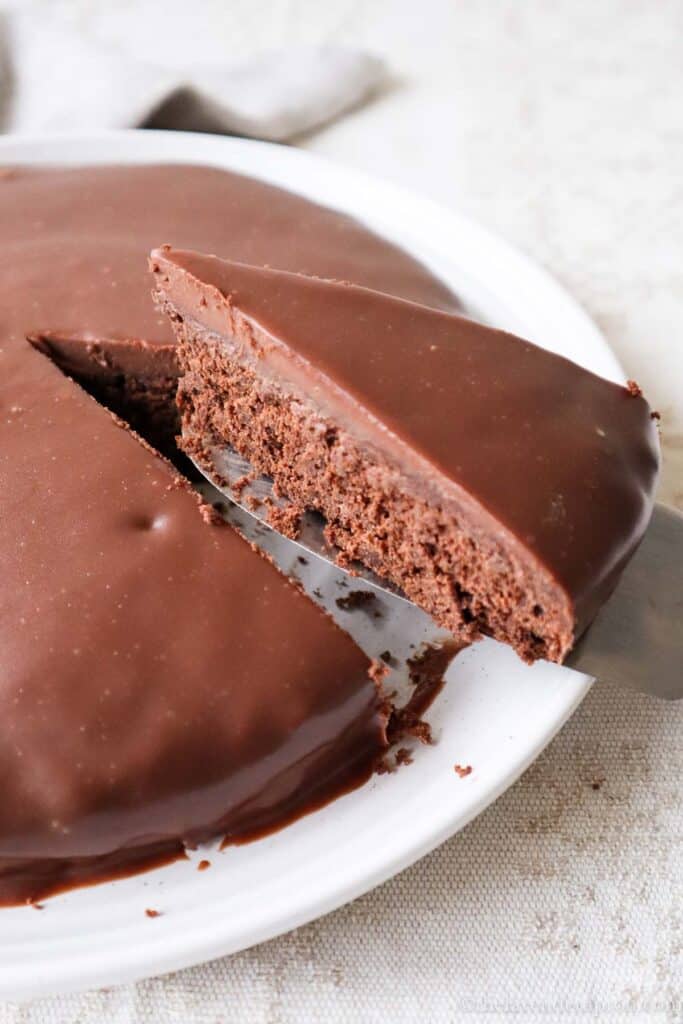
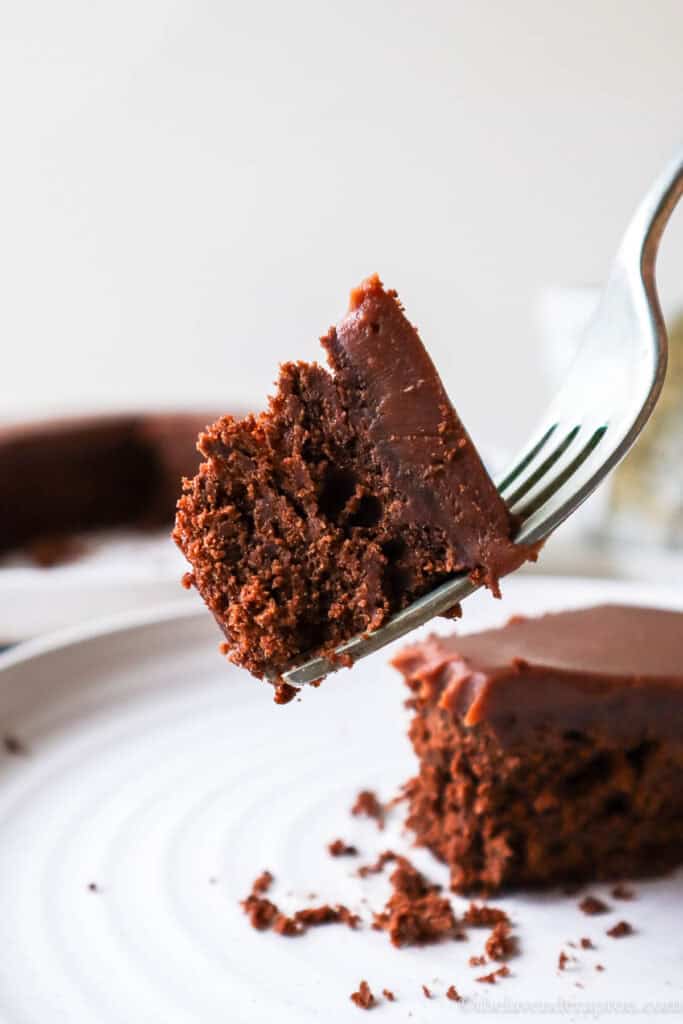
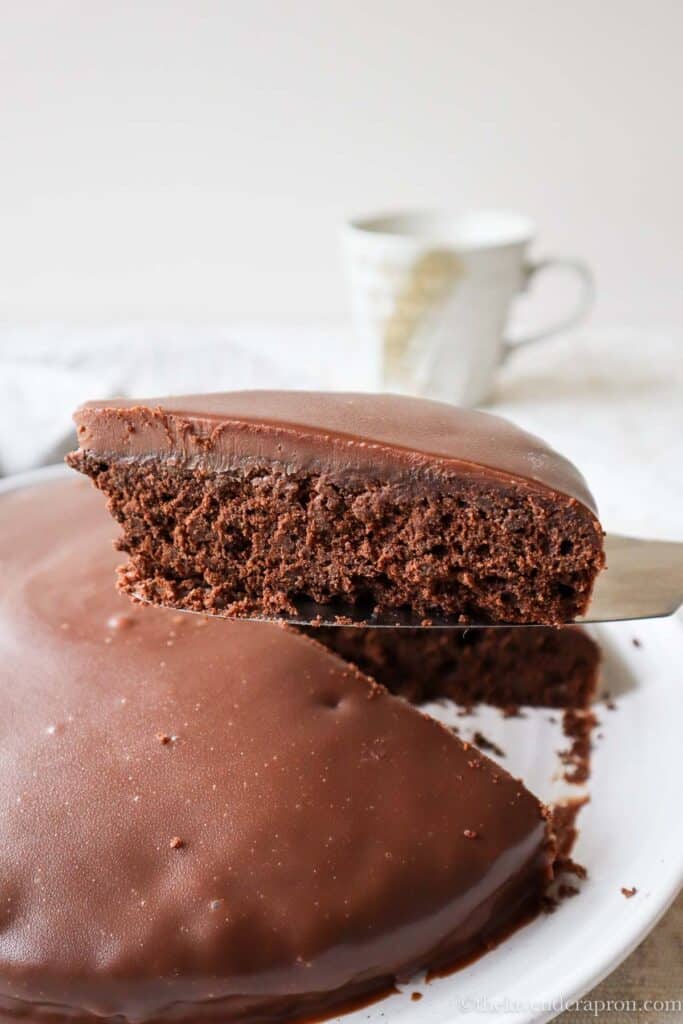
This Belgian chocolate cake recipe is deeply chocolatey, moist and fudgy in the centre, and easier than it looks. Just a couple of bowls and a hand mixer to whip the egg whites and it’s done in under an hour.
Want to save this recipe?
The base recipe uses Belgian dark chocolate (or any good quality 70% dark chocolate), so it’s sweet, but not a sugar bomb, and uses whipped egg whites for lift.
Three ganache options are in this post: dark, milk, and white chocolate. Or skip the ganache and serve it plain. It doesn’t need much.
Belgian Chocolate Cake Recipe Quick Look
Prep: 20 min | Bake: 28–32 min | Total: Under 1 hour (plus cooling) | Serves: 8–10 | Pan: 20–23cm (8–9 inch) round, square, or springform
- Key ingredients: Belgian dark chocolate (70%), 4 eggs (separated), butter, caster sugar
- Why it works: Melted chocolate instead of cocoa powder gives the cake real depth. Whipped egg whites keep it light rather than dense.
- One thing to know: Pull it from the oven when the centre still wobbles. It keeps cooking as it cools. Overbaking is the main way this goes wrong.
- Adding ganache? The cake needs to be fully cool before you pour, or give it 20–30 minutes in the fridge. A chilled cake gives a cleaner, more even finish.
A Moist European Chocolate Cake
I make a very chocolatey brownie my family loves, but a brownie isn’t a cake. This started as an attempt to get that same deep chocolate flavour into something you could actually frost and slice. The secret is melted Belgian chocolate rather than cocoa powder. It brings its own cocoa butter into the batter, which is why this cake stays moist for days. It worked first try, which almost never happens.🙂

It’s a European-style cake. Sweet, but not the kind where the sugar does all the talking. You taste the chocolate, the slight bitterness, the warmth from the cinnamon. That’s how European desserts tend to work, and it’s why I keep coming back to this one. If you want to read more about how French home cooking approaches sweetness and flavour, there’s a full guide on The French Table. Afternoon tea, birthdays, dinner parties. It fits all of them.
If you are interested in Baltic recipes, which also have generally less sweet, but more flavorful desserts, you can try my Latvian Cottage Cheese Cake with a balanced sweetness.
Table of contents
- Belgian Chocolate Cake Recipe Quick Look
- A Moist European Chocolate Cake
- Why You’ll Love This Belgian Chocolate Cake Recipe
- Why Belgian Chocolate and Where to Find It
- Equipment
- Ingredients
- Substitutions
- How to Make Belgian Chocolate Cake
- Optional: Belgian Chocolate Ganache
- Tips for the Best Result
- Troubleshooting
- What to Serve With Belgian Chocolate Cake
- Storage and Make Ahead
- FAQ
- Other Chocolate Dessert Ideas
- Belgian Chocolate Cake Recipe Card
Why You’ll Love This Belgian Chocolate Cake Recipe
- You taste the chocolate, not the frosting. Less sugar than most chocolate cake recipes. The chocolate is doing the work.
- Lighter than a brownie, more interesting than a sponge. Whipped egg whites give it a texture that’s hard to get any other way.
- Belgian chocolate or good quality dark chocolate, both work. Trader Joe’s Belgian 72% is widely available and affordable. You don’t need to spend a lot.
- Three ganache options. Dark chocolate for a dinner party, milk chocolate for a crowd that likes things a little sweeter, white chocolate with fresh raspberries for something more celebratory.
- No nuts. Works for guests with nut allergies, no substitutions needed.
Why Belgian Chocolate and Where to Find It
Belgian chocolate is ground finer than most, made with 100% pure cocoa butter rather than vegetable fat substitutes, and more cocoa-forward than Swiss chocolate. That’s why it produces a deeper, smoother result in baking than standard chocolate does.
In the US, Trader Joe’s Belgian 72% Dark Chocolate is good quality and very affordable. Callebaut is what professional pastry kitchens use. It’s at Whole Foods, Amazon, and Walmart. Guylian works for baking too.
In Australia, look for Coles Finest Belgian Dark Chocolate 70%, the plain block with “Finest” on the label. The standard Coles Belgian block is around 48% and contains milk solids. Not the same thing.
Can’t find Belgian chocolate? Lindt Excellence 70%, Green & Black’s Organic 70%, or Ghirardelli 72% Intense Dark all work well. Any good quality 70% bar with a short ingredient list gets you most of the way there.
Avoid chocolate chips regardless of brand. They’re made to hold their shape in baking, which means stabilisers that affect how they melt. Use a bar and chop it.
Equipment
- Two bowls. One for melting the chocolate (or your double boiler insert), one for the batter, and a clean, separate bowl for the egg whites.
- Double boiler – or a heatproof bowl set over a saucepan of barely simmering water. Or you can melt your chocolate in a microwave safe bowl. Once the chocolate is melted, transfer it to a clean mixing bowl to cool faster.
- Hand mixer. Useful for whipping the egg whites quickly. A balloon whisk works too but takes longer.
- Pan. Round, square, or springform all work here. I used both a 9-inch (23cm) round silicone pan and a 9-inch square metal pan. A standard 8 round metal pan or 9-inch (20–23cm) round metal or ceramic pan works too. Line the base with baking paper (parchment paper) and dust the sides with cocoa powder rather than flour. A springform pan releases very cleanly. Unlike thin batters, this one is thick enough that leakage isn’t a risk. A 8 or 9-inch square is easier to cut into neat portions for a gathering.
Ingredients
Full quantities are in the recipe card below.
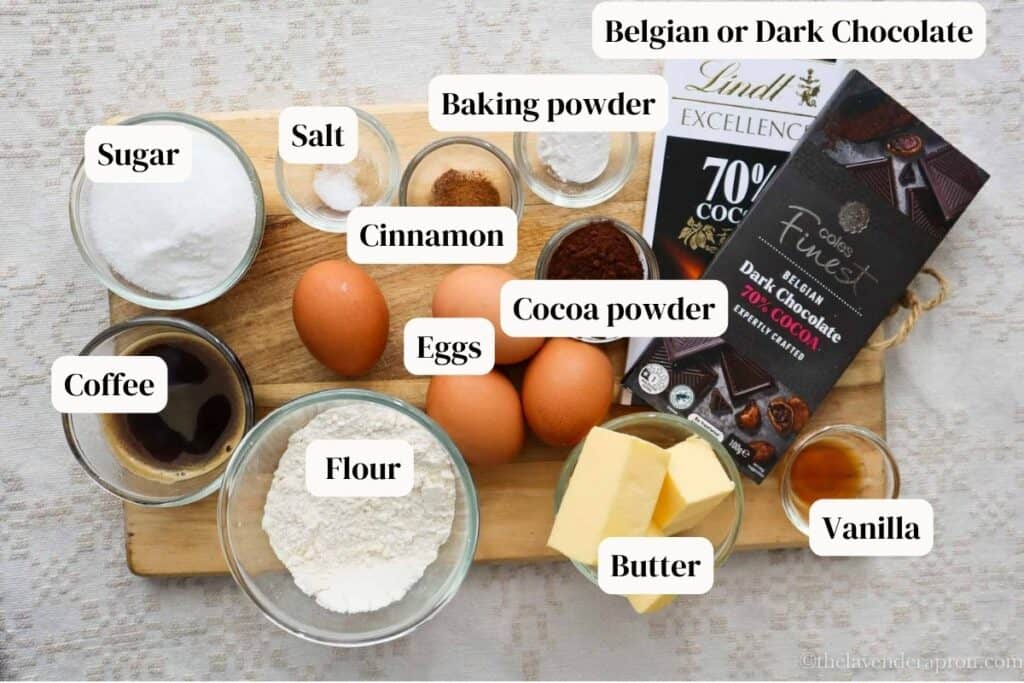
- Belgian dark chocolate, 70%. The main ingredient. See the section above for brand recommendations and alternatives. Stick to 70%. Going higher can dry the cake out. For a sweeter result, 55–56% works too.
- Unsalted butter. Real butter. Not spread, not margarine. Unsalted lets you control the salt level. If you only have salted butter, reduce the pinch of salt in the recipe accordingly.
- Caster sugar. Less than you’d expect. The chocolate carries the flavour.
- Eggs, separated. 4 large. Room temperature whites whip better. If yours are cold, sit them in a bowl of warm water for five minutes before separating.
- Plain flour. Just 60g. Minimal flour is part of what makes the texture what it is.
- Dutch-process cocoa powder. Adds depth alongside the melted chocolate. Smoother and less acidic than natural cocoa.
- Baking powder. A small amount, working alongside the whipped whites. The whites give the main lift. The baking powder adds a little insurance and helps the edges set cleanly.
- Ground cinnamon. Half a teaspoon. You won’t taste it, but the chocolate tastes more interesting with it in.
- Fine salt. A pinch. Always.
- Vanilla extract. One teaspoon.
- Strong brewed coffee or espresso, cooled. Two tablespoons. Same principle as the cinnamon. It deepens the chocolate without tasting of coffee. Leave it out if you don’t have any.
Substitutions
- No Belgian chocolate? Any good quality 70% dark bar works — see the sourcing section above for specific brands and alternatives.
- No Dutch-process cocoa? Natural cocoa works but gives a slightly sharper, more acidic flavor.
- No coffee? Leave it out. Still good.
- Dairy-free? Use a good dairy-free dark chocolate and replace the butter with refined coconut oil (same quantity). Use refined rather than unrefined. Unrefined can add a coconut flavor. The texture is very similar.
How to Make Belgian Chocolate Cake
Preheat your oven to 170°C (340°F). Grease a 20cm (8-inch) round cake tin, line the base with baking paper (parchment paper), and dust the sides with cocoa powder.
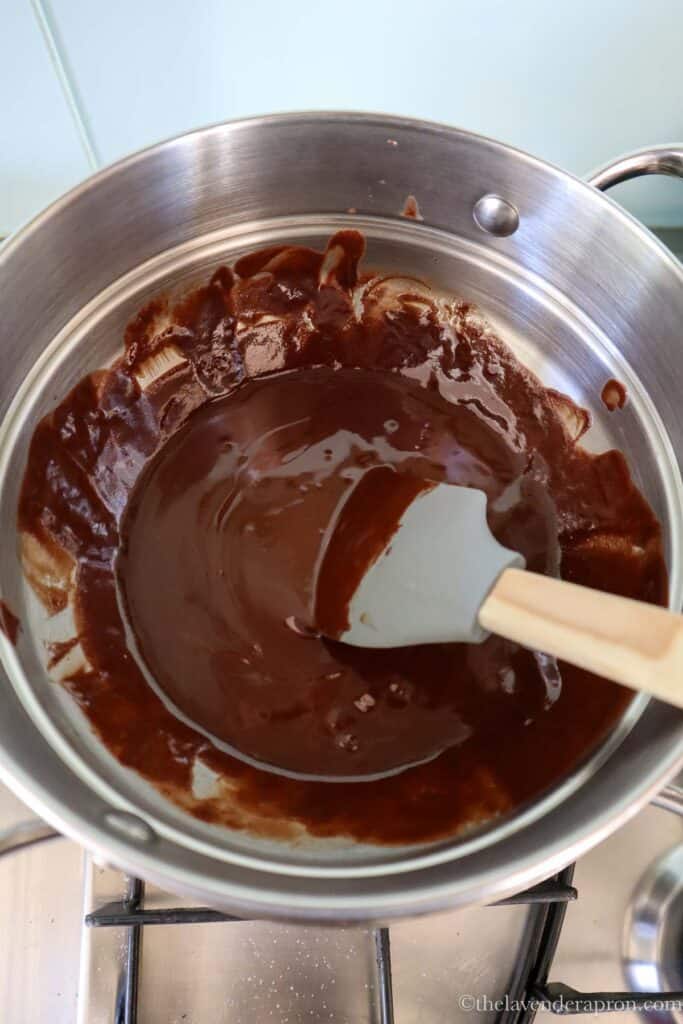
Step 1. Melt Chocolate and Butter. Place the chopped chocolate and butter in a heatproof bowl or a double boiler over a saucepan of barely simmering water. Don’t let the bowl touch the water. Stir occasionally until completely melted and glossy, then remove from the heat. Transfer to a clean mixing bowl to cool faster.
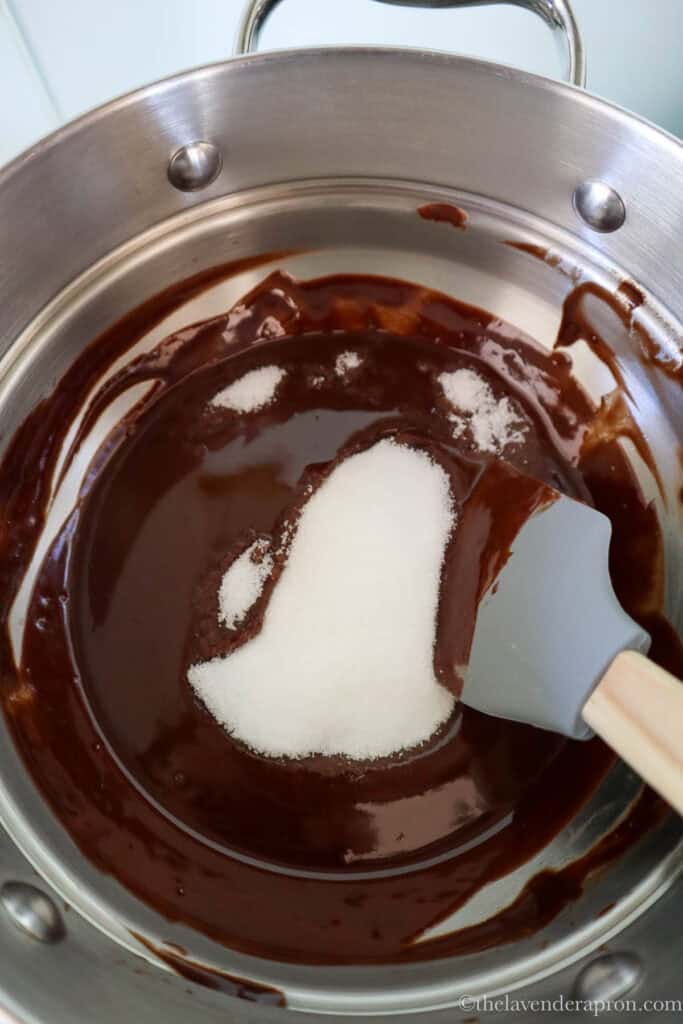
Step 2: Stir in sugar, then cool. While the mixture is still warm, stir in the caster sugar until dissolved. Set aside for about 10 minutes. It should feel warm, not hot, before the yolks go in. Too hot and you’ll scramble them.
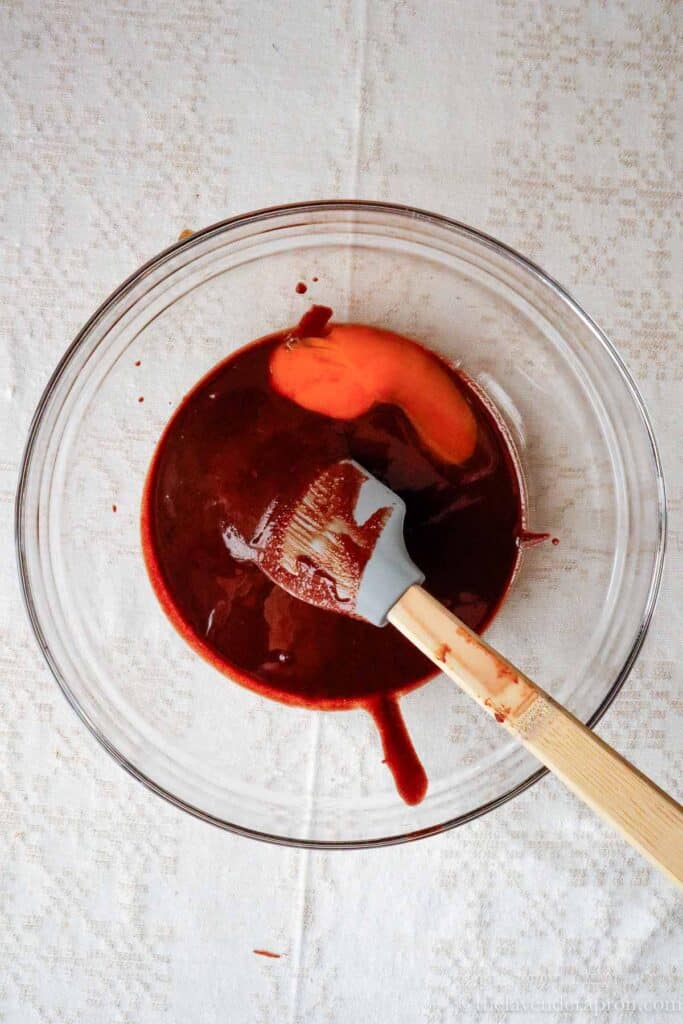
Step 3: Add yolks, vanilla, and coffee. Once cooled, add the egg yolks one at a time, stirring well with a wooden spoon after each. Then stir in the vanilla and coffee.
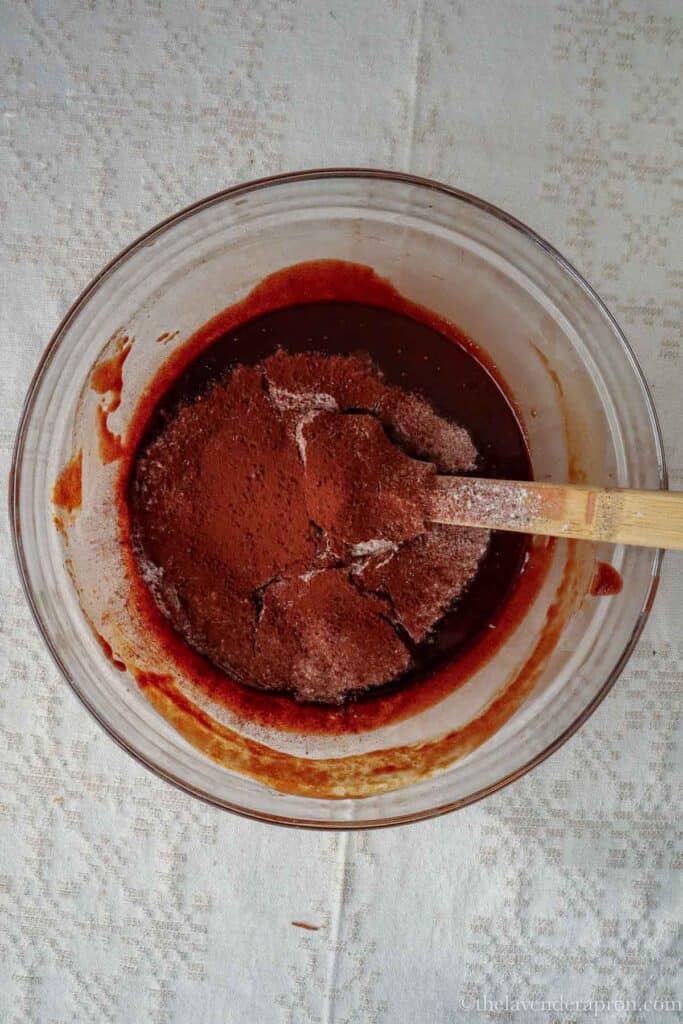
Step 4: Add dry ingredients: Sift the flour, cocoa powder, baking powder, cinnamon, and salt directly into the chocolate mixture. Fold gently with a spatula until just combined. Don’t overmix.
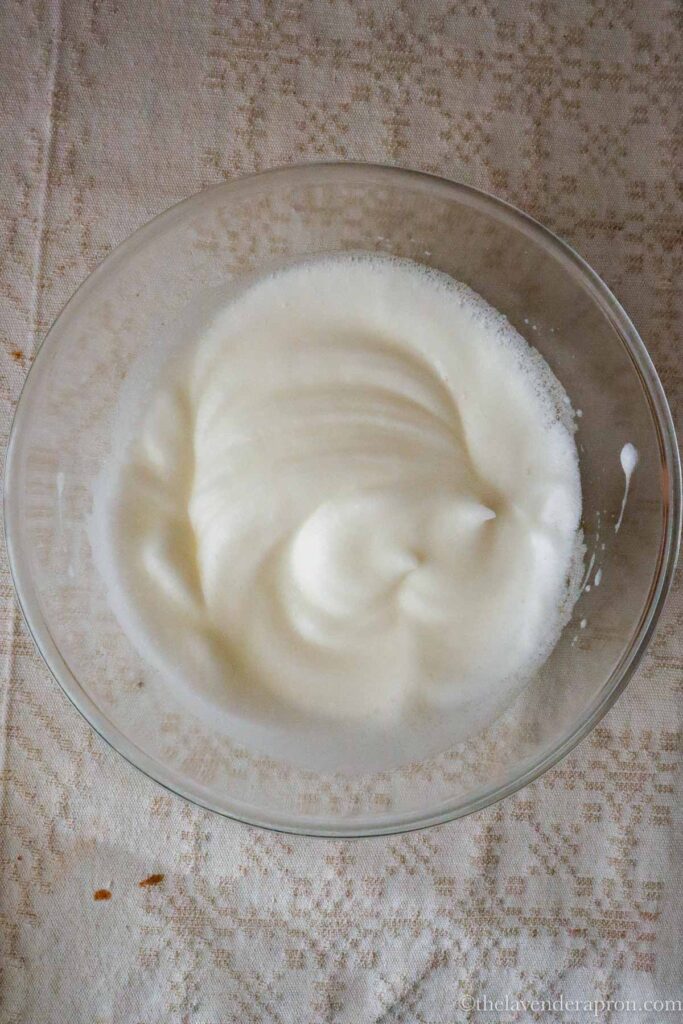
Step 5: Whip the egg whites. In a clean, dry bowl, whisk the egg whites with a hand mixer until they hold soft, glossy peaks. They should look smooth and shiny. If they look dry or clumpy, they’ve gone too far. Soft peaks are different from stiff peaks: when you lift the beater, the peak should curl over gently rather than stand straight up. Stiff peaks make the batter hard to fold and the cake denser. Wipe your bowl and beaters with a dry cloth first. Even a trace of fat or yolk stops whites from whipping.
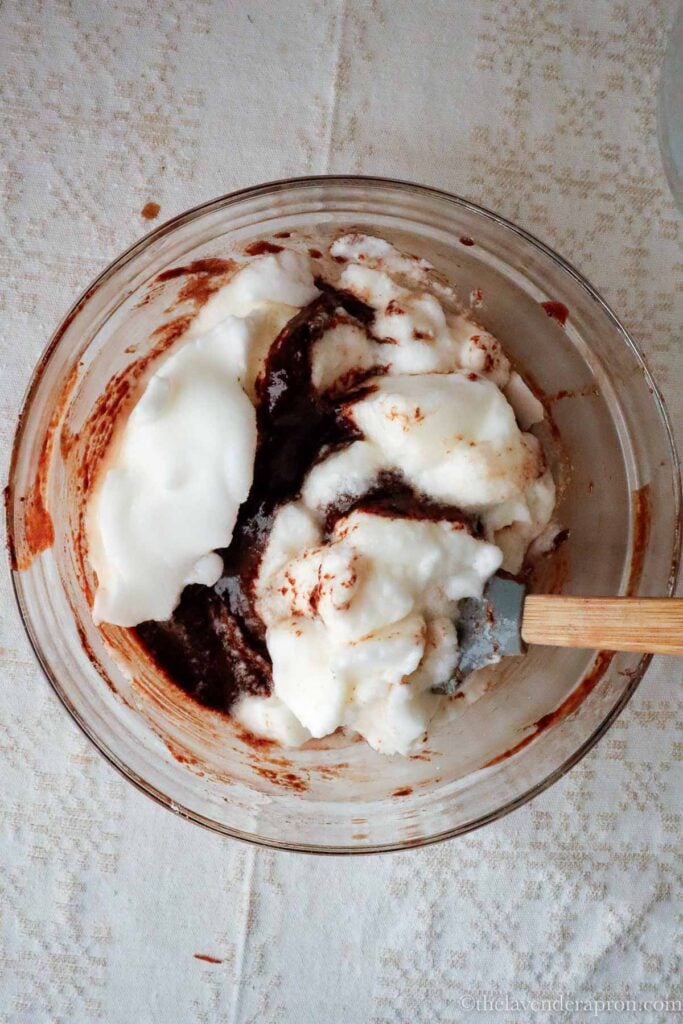
Step 6: Fold together. Add about a third of the whites to the chocolate batter and stir to loosen it. Then add half the remaining whites and fold gently with a large spatula until almost combined. Add the final half and fold until the batter looks uniform. Doing it in stages makes it easier to fold evenly without overworking the batter. Stop the moment you can no longer see white streaks. Every extra fold loses air.
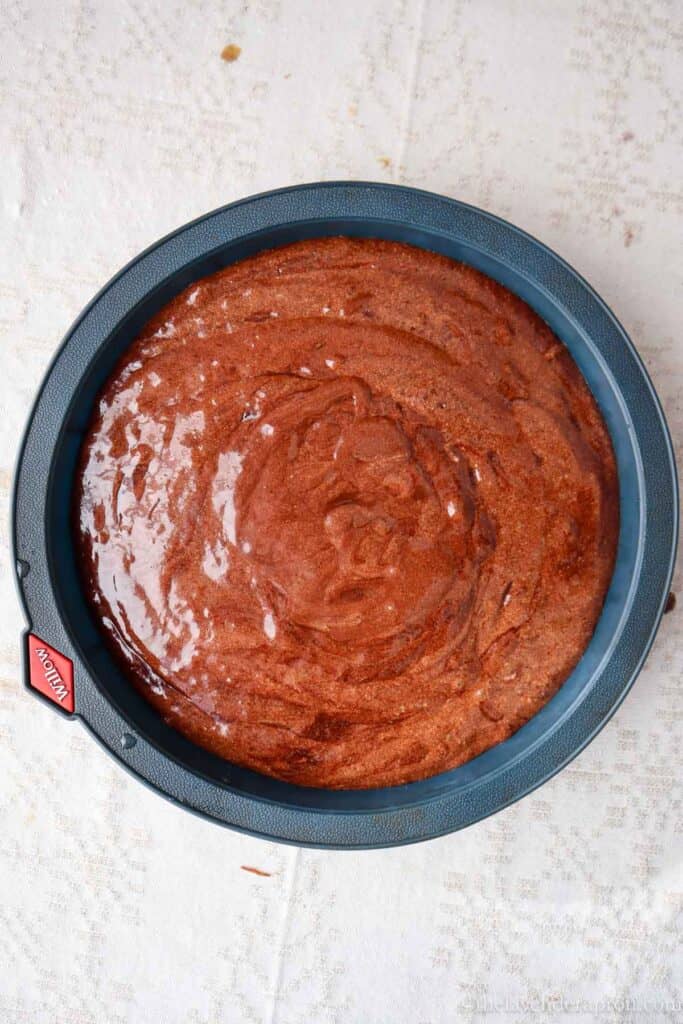
Step 7: Bake. Pour the batter into the tin and smooth the top. Bake for 28–32 minutes, until the edges are set and just beginning to pull away from the tin. The center should still have a slight wobble when you take it out. It firms up as it cools. An overbaked Belgian chocolate cake is a dry one.
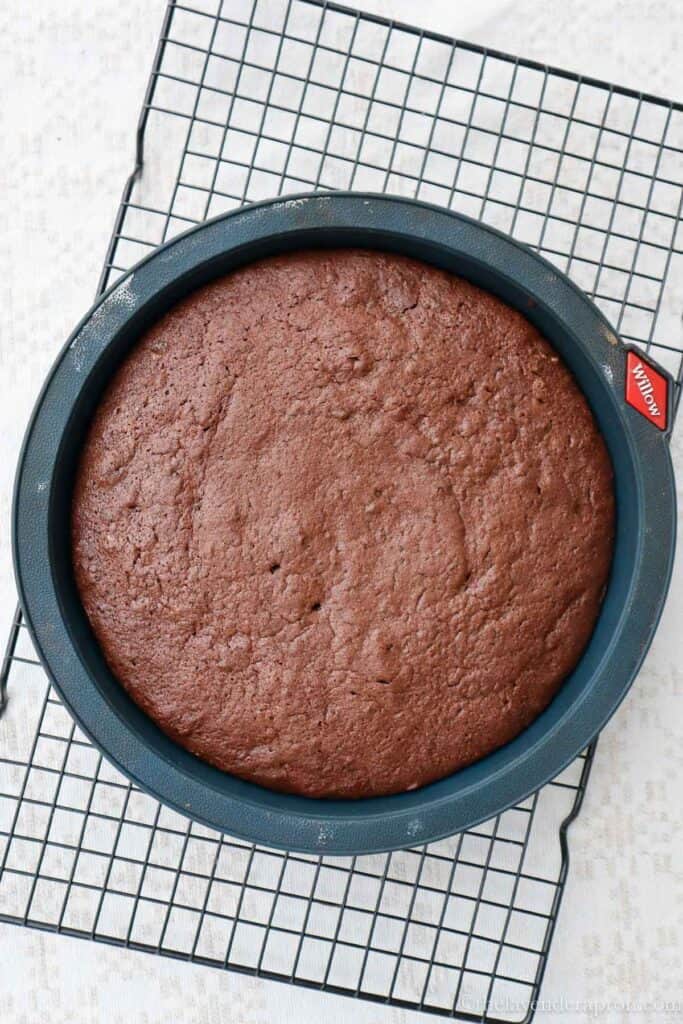
Step 8: Cool. Cool in the tin for 15 minutes, then turn out onto a wire rack. The center will sink slightly. Completely normal. If you’re adding ganache, the cake needs to be fully cool before you pour. To speed this up, put it in the fridge for 20–30 minutes after turning out. A slightly chilled cake gives a better ganache finish. It sets more evenly and pools naturally into the centre.
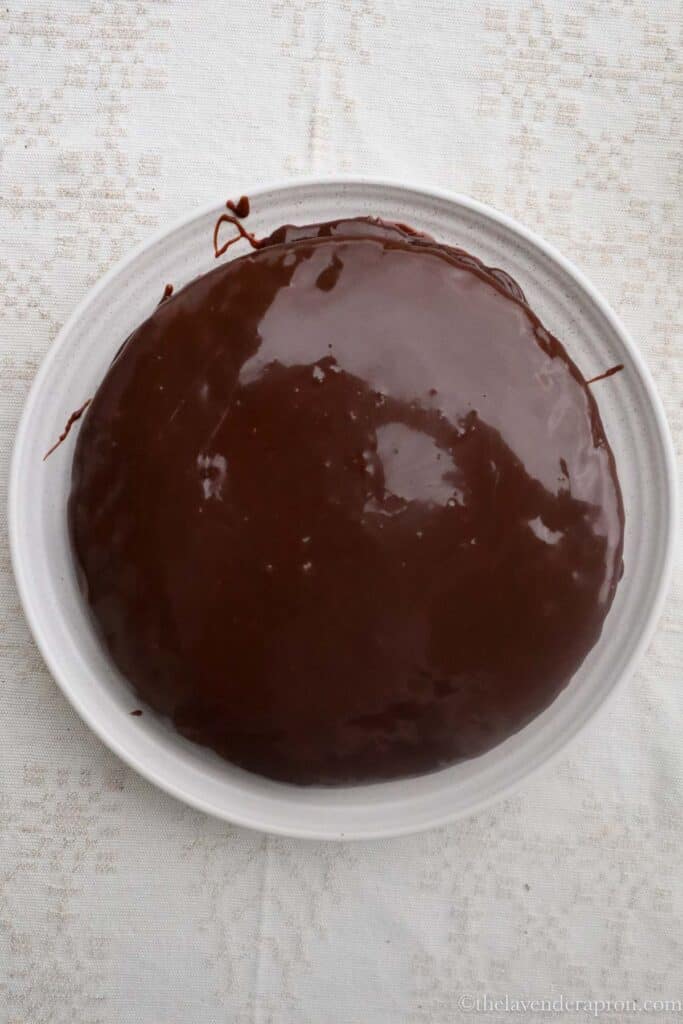
Optional: Belgian Chocolate Ganache
Three options depending on the occasion. Quantities for both a smaller and larger batch are in the recipe card below.
- Dark chocolate is rich, glossy, slightly bitter. The one I’d choose for a dinner party or an adult birthday. Heat the cream until just simmering, not boiling. Pour over the finely chopped chocolate and leave for two minutes without stirring. Stir gently from the centre outward until smooth and glossy. Cool for 10–15 minutes until slightly thickened, then pour over the cooled cake.
- Milk chocolate is sweeter and softer. Good when the crowd skews younger, or when you want a gentler finish. Same method as the dark version. Sets softer and shinier.
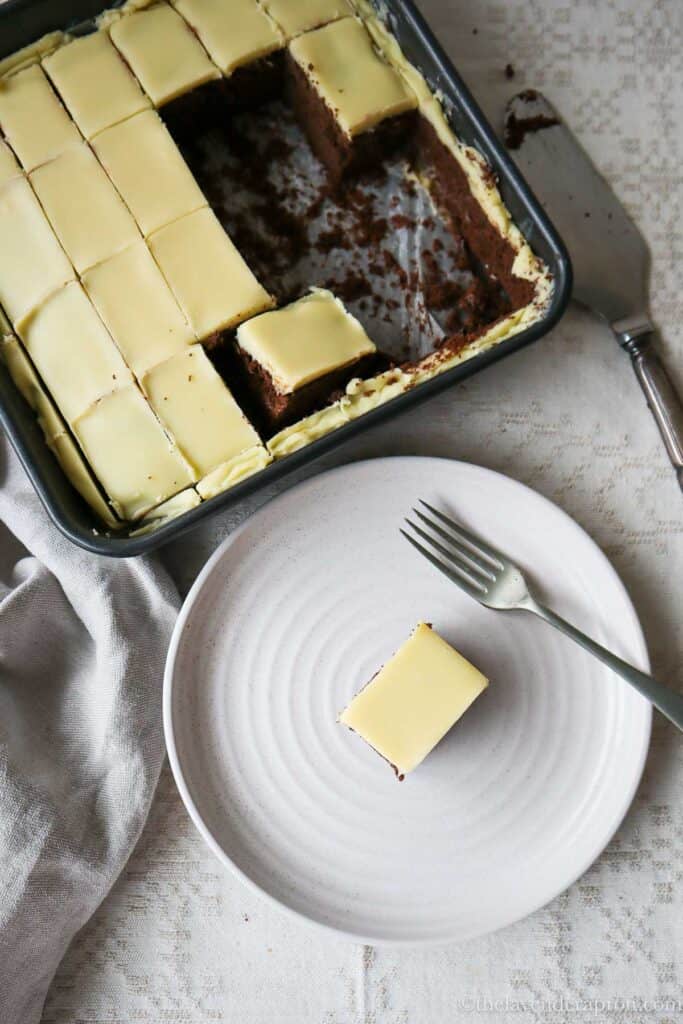
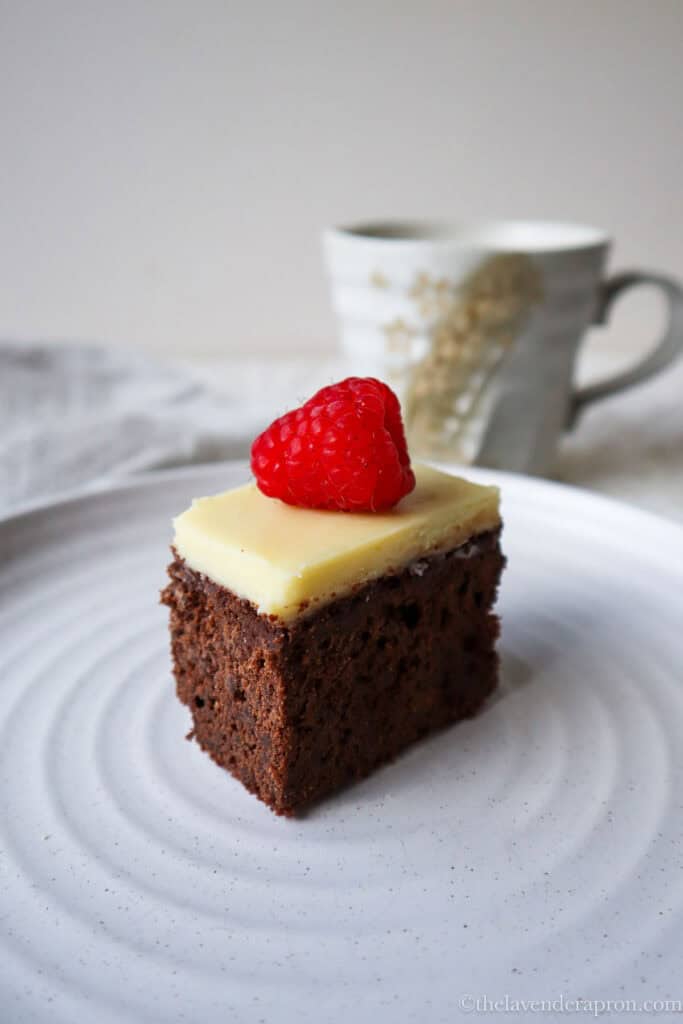
- White chocolate is ivory against the dark cake, very good with fresh raspberries or strawberries. More sensitive than dark or milk. Heat the cream to just below simmering, not a full simmer. Pour over the chocolate, leave for two minutes, then stir gently from the centre. If it looks grainy, 10 seconds in the microwave and another gentle stir usually fixes it. Cool for 15–20 minutes before pouring.
Use Belgian chocolate or a good quality chocolate for the ganache. It’s poured directly over the top and you taste it straight away.
Decorating your cake: This cake looks lovely with a perfectly smooth ganache or just some sifted cocoa powder or icing sugar on top. But if you prefer some more texture, once the ganache has set slightly but is still soft, drag the back of a spoon or a small palette knife across the surface in gentle swirls. Takes ten seconds and looks deliberate. If you don’t like how it looks, smooth it over and try again.
Tips for the Best Result
- Dust the tin with cocoa powder, not flour. Butter the tin, then dust with cocoa. No white flour marks on a dark chocolate cake.
- Stick to 70% chocolate. Going above 72% can dry the cake out.
- Cool the chocolate before adding the yolks. Warm is fine. Hot is scrambled eggs. I’ve done it. You don’t want to.
- Sift the flour twice for a slightly airier result. Not essential but worth doing.
- Refrigerate before slicing. Whether or not you’ve added ganache, 20–30 minutes in the fridge before cutting gives you cleaner slices. The crumb firms up and holds together better under the knife.
- The centre sink is supposed to happen. Every time. Crème fraîche or ganache fills it naturally.
Troubleshooting
- The cake is flat and dense. The egg whites were underwhipped or lost too much air during folding. Whip until smooth and glossy, not stiff or dry, and fold more gently next time. Stop as soon as the batter looks uniform.
- There are holes or tunnels through the crumb. This is called tunneling and it usually means the dry ingredients weren’t evenly distributed before folding, or the batter was overmixed after the whites went in. Make sure you sift the flour, cocoa, baking powder, cinnamon, and salt together before adding them to the chocolate mixture, and fold only until just combined.
- I added the sugar after the chocolate had already cooled. Not a problem. Stir well. Caster sugar dissolves without much heat. If the mixture feels stiff, set the bowl back over warm water for 30 seconds, stir until it loosens, then cool again before adding the yolks. The finished cake won’t be affected.
- I added the sugar after the egg yolks were already in. Still fine. Stir firmly. The yolks help everything bind. If you can still feel sugar grains when you rub a little batter between your fingers, keep stirring or set the bowl over warm water for 20 seconds. The finished cake will be fine.
- The chocolate mixture went grainy when I added the yolks. It was too hot. The bowl should feel warm, not hot. If the batter looks slightly grainy but not oily, fold in the whites and bake anyway. It often recovers in the oven.
- The centre is still wet after 32 minutes. Ovens vary. Give it 3–5 more minutes. The edges should be fully set and pulling away from the tin. A slightly underdone centre is better than a dry crumb.
- The dark or milk chocolate ganache is too runny. It needs more time. Leave at room temperature for another 10–15 minutes, or five minutes in the fridge.
- The dark or milk chocolate ganache has gone thick and lumpy. It cooled too fast. Set the bowl over warm water and stir gently until it loosens.
- The white chocolate ganache has gone grainy or seized. The cream was likely too hot. Try 10 seconds in the microwave and a gentle stir. If still grainy, start again with fresh chocolate and cream at just below simmering.
- The egg whites won’t whip. A trace of fat stops whites from whipping. Wipe the bowl and beaters with a clean cloth, separate fresh eggs carefully, and try again.
What to Serve With Belgian Chocolate Cake
Without ganache: something cold and sharp alongside works well. A spoonful of crème fraîche is the French approach and the easiest one. Whipped cream and fresh strawberries are how my family first had it, good for summer or a casual dinner. Vanilla ice cream works too, especially if you’re serving it slightly warm.
With ganache: nothing. A clean slice and a fork. It also makes a beautiful chocolate birthday cake. The ganache sets firm enough to decorate simply, and the flavour is serious enough to impress adults.
This cake sits well next to my French Yogurt Cake or Carrot Cake if you’re putting together a full dessert spread. One for the chocolate lovers, one or two for everyone else.
Storage and Make Ahead
- Room temperature: Wrapped tightly, keeps well for 1 days. If you’ve added ganache, let the cake sit at room temperature for at least 30 minutes before slicing so it sets properly.
- Refrigerator: After 1 days, move it to the fridge. Bring back to room temperature before serving.
- Make ahead: The unfrosted cake can be baked a day ahead, wrapped, and kept at room temperature. It actually tastes better on day two. Make the ganache on the day, or make it ahead and reheat gently.
- Leftover ganache: Keeps in an airtight container in the fridge for up to a week, or freeze for up to 3 months. Reheat in 15-second microwave bursts stirring between each, or gently over a double boiler. Don’t overheat. If it splits, stir in a tablespoon of cold cream. White chocolate ganache is the most sensitive. Reheat it more gently than dark or milk.
- Freezing: The unfrosted cake freezes well. Wrap tightly and freeze for up to 1 month. Thaw at room temperature.
FAQ
- What is the difference between chocolate cake and Belgian chocolate cake? The main difference is the chocolate. Belgian chocolate is ground finer, made with pure cocoa butter rather than vegetable fats, and has a more intense, smoother flavour than standard baking chocolate. A cake made with good Belgian chocolate tastes deeper and less one-dimensionally sweet. Beyond the ingredient, there’s no single official recipe. “Belgian chocolate cake” usually just means a cake where Belgian chocolate is the star.
- Is this a traditional Belgian chocolate cake recipe? Not exactly. The most traditional Belgian chocolate cake is a no-bake refrigerator cake – melted chocolate, butter, egg yolks, whipped whites, and crushed butter biscuits, set in the fridge. This is a baked cake made with Belgian dark chocolate. Think of it as French baking technique with Belgian chocolate.
- What Belgian chocolate should I use for baking? A 70% Belgian dark chocolate bar, not chips. Trader Joe’s Belgian 72% Dark Chocolate is the most accessible US option. Callebaut is the professional standard, available at Whole Foods and Amazon. Any quality 70% bar with a clean ingredient list works well.
- Which ganache should I choose? Dark chocolate for a dinner party or adult birthday. Milk chocolate if the crowd prefers something sweeter. White chocolate with fresh raspberries for something more celebratory. The cake is good without any ganache too – just crème fraîche and a dusting of cocoa.
- Can I use buttercream instead of ganache? Yes. A simple chocolate buttercream works well. It’s less glossy than ganache but easier to spread and pipes well for decoration. Good if you want a more traditional-looking birthday cake.
- How do I know when it’s done? The edges will be set and just starting to pull away from the tin. The centre will still have a slight wobble. A skewer inserted 2cm from the edge comes out clean. The very centre can be slightly moist. It firms up as it cools.
Made this Belgian Chocolate Cake Recipe? Leave a rating below. It helps other home cooks find it. Every recipe on this blog is made and tested in my own kitchen. You can read more about how I develop and test recipes here. 🙂
Other Chocolate Dessert Ideas
- Chocolate Chestnut Yule Log – A very indulgent no-bake cake, perfect for Christmas.
- Brownies with Cream Cheese Frosting – The recipe this cake grew out of. Dense, fudgy, full chocolate flavour. If this is what you make when you need a proper cake, the brownies are what you make every other week.
- Intensely Chocolatey Brownies without Cocoa Powder – a very dense brownie full of chocolate flavor. Our family favorite 🙂
- Easy chocolate chip cookies without brown sugar – when you want something quick and comforting
- Oatmeal chocolate chip cookie for one – when you want something quick and comforting just for you 🙂
- No-bake chocolate almond balls – very easy to make ahead and freeze nicely.
Belgian Chocolate Cake Recipe Card
Want to save this recipe?
Easy Belgian Chocolate Cake Recipe with Ganache
Equipment
- 3 Bowls One for melting the chocolate (or your double boiler insert), one for the batter, and a clean, separate bowl for the egg whites.
- 1 Double boiler Or a heatproof bowl set over a saucepan of barely simmering water. Or you can melt your chocolate in a microwave safe bowl. Once the chocolate is melted, transfer it to a clean mixing bowl to cool faster.
- 1 Hand mixer Useful for whipping the egg whites quickly. A balloon whisk works too but takes longer.
- 1 9-inch silicone round baking pan Or 8-inch. Round, square or springform. And you can use silicone or metal.
- 1 Spatula to scoop out the whipped egg whites and chocolate
Ingredients
For the cake:
- 6.3 oz Belgian dark chocolate (70%), roughly chopped 180 grams
- ½ cup Unsalted butter 120g cut into cubes
- ½ cup caster sugar plus 1 tbsp 1/2 cup plus 1 tbsp , 120g
- 4 large eggs separated
- ½ cup plain flour 60 grams, all purpose
- 2 tbsp unsweetened Dutch-process cocoa powder
- 1 tsp baking powder
- ½ tsp ground cinnamon
- Pinch of fine salt
- 1 tsp vanilla extract
- 2 tbsp strong brewed coffee or espresso cooled
Dark chocolate ganache (optional):
Smaller batch:
- 5.3 oz Belgian dark chocolate (70%), finely chopped 150 grams
- ⅔ cup Heavy cream 150 ml
Larger batch:
- 6.3 oz Belgian dark chocolate (70%) 180 grams, finely chopped
- ¾ cup Heavy cream 180 ml
Milk chocolate ganache (optional):
Smaller batch:
- 5.3 oz Belgian milk chocolate, finely chopped 150 grams
- 1/2 cup heavy cream scant 1/2 cup, or 100ml
Larger batch:
- 6.3 oz Belgian milk chocolate, finely chopped 180 grams
- ½ cup Heavy cream 120 ml
White chocolate ganache (optional):
Smaller batch:
- 5.3 oz White chocolate, finely chopped 150 grams, good quality
- ⅓ cup Heavy cream 80 ml
Larger batch:
- 6.3 oz White chocolate, finely chopped 180 grams
- 1/2 cup Heavy cream 100ml
Instructions
For the cake:
- Preheat oven to 170°C (340°F). Grease a 20cm (8-inch) round cake tin, line the base with baking paper (parchment paper), and dust the sides with cocoa powder.
- Melt the chocolate and butter in a heatproof bowl set over barely simmering water, stirring occasionally, until glossy. Remove from heat and transfer to a clean mixing bowl.
- While still warm, stir in the caster sugar until dissolved. Cool for 10 minutes until the bowl feels warm, not hot.
- Add egg yolks one at a time, stirring well with a wooden spoon after each. Stir in the vanilla and coffee.
- Sift the flour, cocoa powder, baking powder, cinnamon, and salt into the chocolate mixture. Fold gently until just combined.
- In a clean dry bowl, whisk egg whites to soft, glossy peaks. Smooth and shiny, not dry or clumpy. The peak should curl over gently when you lift the beater, not stand straight up.
- Stir one third of the whites into the batter to loosen it. Add half the remaining whites and fold gently until almost combined. Add the final half and fold until the batter is uniform. Stop as soon as you can no longer see white streaks.
- Pour into the prepared tin. Bake for 28–32 minutes, until the edges are set and pulling away from the tin and the centre has a slight wobble. A skewer 2cm from the edge should come out clean.
- Cool in the tin for 15 minutes, then turn out onto a wire rack. The center may sink slightly. This is normal. For ganache, chill the cake in the fridge for 20–30 minutes before pouring.
For dark or milk chocolate ganache:
- Heat the cream to just simmering. Pour over the chopped chocolate, leave 2 minutes, then stir gently from the centre until smooth. Cool 10–15 minutes until slightly thickened, then pour over the cooled cake.
For white chocolate ganache:
- Heat the cream to just below simmering. Pour over the chopped white chocolate, leave 2 minutes, then stir gently from the centre until smooth. If grainy, 10 seconds in the microwave and another gentle stir. Cool 15–20 minutes before pouring.
Notes
- Use block chocolate, not chips. Chips contain stabilizers that affect how they melt.
- Room temperature eggs whip more easily. If straight from the fridge, sit them in warm water for 5 minutes before separating.
- Keeps wrapped at room temperature for 2 days. Refrigerate after 2 days and bring to room temperature before serving.
- The unfrosted cake freezes well for up to 1 month.
- Gluten-free option: substitute plain flour with almond flour (note: contains nuts).
- Serve without ganache alongside crème fraîche, whipped cream, or vanilla ice cream.