
Authentic French Quiche Lorraine (no Cheese!)
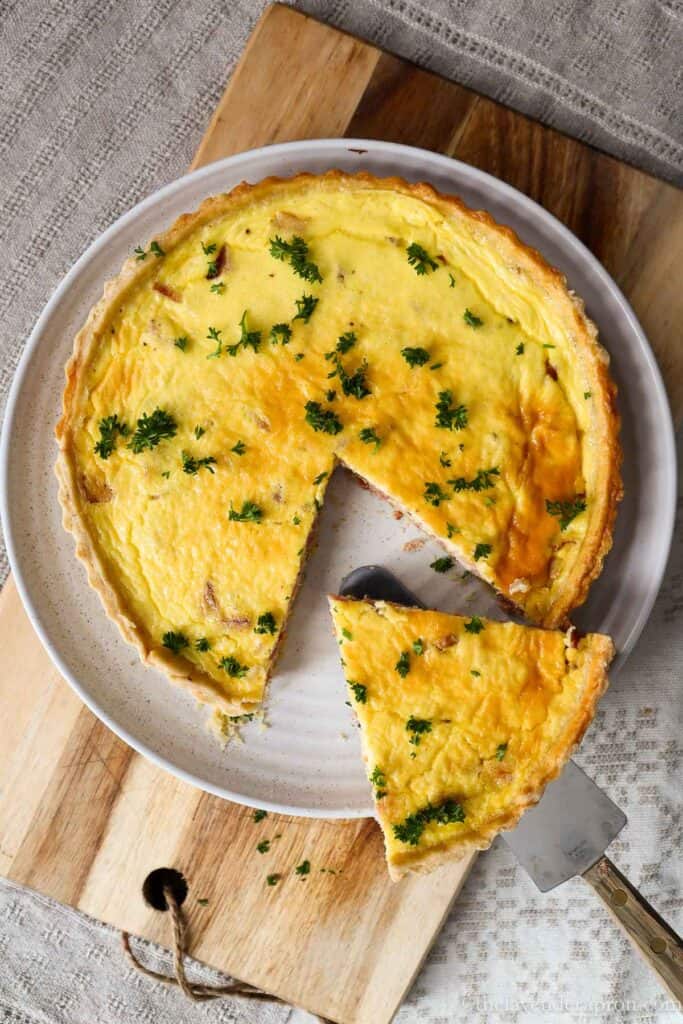
This authentic French quiche Lorraine recipe is exactly how they make it in France. Light, creamy, and with no cheese. Just eggs, crème fraîche, smoky bacon, and a flaky, buttery crust. It’s not fancy at all. Just simple, everyday French cooking that tastes amazing.
Would you like to save this recipe?
Think of it the way French people do: this is their spaghetti bolognese. A Wednesday night weeknight dinner. Eggs, lardons, crème fraîche, a roll of pâte brisée from the freezer. Done. If they don’t feel like making it, they pick one up at the “traiteur” (the local deli) on the way home. That’s the version you’ll find there too. No cheese, no caramelized onions.
This classic quiche Lorraine recipe is adapted from Les Recettes Faciles de Françoise Bernard, a 1960s French home cooking bible that half of France grew up with. My copy belonged to my mother-in-law. The cover is splattered, the pages are filled with her pencilled in notes and there are random pieces of paper with her handwritten recipes every few pages. She underlined “pinch of nutmeg.” You’ll see why when you taste it.
This post may contain Amazon affiliate links. As an Amazon Associate I earn from qualifying purchases, at no extra cost to you.

Is Quiche Lorraine French? Yes! This classic French quiche started in the Lorraine region of northeastern France. The traditional version uses eggs, crème fraîche, smoky bacon (they call them lardons), and nutmeg. That’s it. No cheese. No onions. Just creamy custard with bacon in a buttery crust.
Table of contents
- What Makes This Authentic French Quiche Lorraine Recipe Different?
- Authentic French Quiche Lorraine Ingredients
- How to Make this Traditional French Quiche Lorraine (Step-by-Step)
- Quiche Lorraine Baking Guide: Different Pan Sizes
- How to Minimize Sinking and Cracking (But Don’t Stress about It)
- How the French serve quiche at home
- Troubleshooting Your Traditional Quiche Lorraine
- Make Ahead and Storage
- FAQ: Your French Food Quiche Lorraine Questions
- Authentic French Quiche Lorraine Recipe Card
- The Inspiration for this recipe: Les Recettes Faciles de Françoise Bernard
What Makes This Authentic French Quiche Lorraine Recipe Different?
The first time I had quiche in France, in Strasbourg, where I lived for 5 years, it was just different. Not what I expected at all. Richer, creamier, almost like a savory flan. Nothing eggy about it, nothing heavy. The nutmeg was there in every bite, quiet but unmistakable. Once you’ve had it this way, the version loaded with Gruyère or any other cheese starts to feel like a completely different dish.
Here’s what makes this traditional French quiche different from what most of us grew up with:
No Gruyère cheese, no Swiss cheese. I know, it sounds wrong. Most recipes outside France call for nutty Gruyère cheese or Swiss cheese, and look, cheese makes everything better – except here. The richness comes entirely from the eggs and crème fraîche, and the custard stays light and silky in a way that cheese actually prevents. Try it once and you’ll get it.
No caramelized onions either. They’re wonderful, but they belong in a different quiche. Not this classic recipe.
It’s shallow. An authentic quiche Lorraine is about 1½ inches high, baked in a tart pan. Not a deep dish pie shell situation. The shallow depth is part of what gives it that delicate texture.
Crème fraîche instead of a cup of heavy cream. This is the ingredient that makes people say “what IS that flavor?” Tangy, silky, richer than regular cream. Worth tracking down. (But no worries if you can’t find any, there are substitutions that work great).
If you want to see how this classic French quiche fits into a full French menu, check out my Guide to Everyday French Home Cooking.
Authentic French Quiche Lorraine Ingredients
For one 9-inch tart pan (about 1½ inches high):

- 1 sheet pie dough (blind bake it first) or 9-inch fresh or frozen pie crust. If you can, make pate brisee (short crust pastry) from scratch. The buttery, flaky taste is totally worth it. And it’s not hard at all.
- Lardons fumees or chopped thick or streaky bacon – Thick-cut is better than thin here. You want pieces with some substance, not crispy little slivers that disappear into the custard. Proper smoky bacon lardons are ideal. Otherwise, just cut streaky bacon into chunky ½-inch pieces.
- 3 large eggs – Ours come from four very spoiled backyard chickens and the yolks are almost orange. They give this quiche a gorgeous golden color. But whatever eggs you have will work. Week-old supermarket eggs, fancy farmers market eggs — I’ve made this with all of them. Bring them to room temperature before using though, it helps the custard set more evenly.
- Crème fraîche – Look for it in the dairy aisle near the sour cream. Can’t find it at grocery stores? Mix 2/3 heavy cream with 1/3 full-fat Greek yogurt and you’re pretty much there. Full-fat sour cream thinned with a little milk works too.
- Whole milk
- Freshly ground black pepper
- Pinch of grated nutmeg
- No salt (the bacon’s got you covered)
How to Make this Traditional French Quiche Lorraine (Step-by-Step)
This easy quiche Lorraine looks fancy, but it’s way simpler than you’d think. Really. It’s one of those quick lunch or dinner recipes my mother-in-law made all the time in France.
Authentic French Quiche Lorraine Quick How-To: Blind bake your pastry crust, then brush it with beaten egg to seal. Fry bacon lardons until golden (not crispy). Gently whisk eggs with crème fraîche, milk, nutmeg, and pepper. Then, scatter bacon in the crust, pour custard over top, and bake at 180°C (350°F) for 35-40 minutes until the edges are set but the center still jiggles slightly. Let it cool for 10 minutes. Done.
1. Blind Bake Your Crust

Line your tart pan with your pie dough. Prick the bottom with a fork. Cover with parchment paper and fill with pie weights (or dried beans if you’re improvising).
Blind bake at 180°C (350°F) for 15 minutes. Let it cool a bit.
Pro Tip: Brush the baked crust with a tiny bit of beaten egg before you add the filling. Seals the pastry. No soggy bottoms. But don’t stress if you don’t do it.
2. Cook the Bacon

Fry the lardons or bacon on medium heat until they’re just golden. Not crispy. You want them tender with some fat rendered out. They should look lightly bronzed but still have some give when you poke them. Drain on paper towel if they look greasy.
3. Make the Classic Quiche Lorraine Custard

Grab a large bowl. Whisk together eggs, crème fraîche, milk, nutmeg, and pepper. Whisk gently. You don’t want too much air (that causes the puffing and sinking thing).
4. Assemble and Bake

Scatter the bacon evenly over the bottom of the baked crust. Pour in your custard mixture. Or do what I do sometimes, which is mix the bacon in the custard mixture before pouring it into the cooked crust. I find the bacon bits “float” a bit more in the final baked French quiche Lorraine. But either way is fine.

Bake at 180°C (350°F) for 35–40 minutes.
Do NOT overbake! If you overbake, the egg custard can become watery (counter intuitive I know, but true). Here is how you know when it’s “done”:
What “done” looks like: The top will be pale golden brown (not dark). When you gently shake the pan, the middle should wobble like Jello. Not liquid. Just a soft jiggle, a bit like jello. And if you tap it with your finger, it should feel set but springy. Not firm like a hard-boiled egg. If you pierce it with a knife, it should be set, and if liquid comes out, it is definitely not done.
Don’t freak out if the quiche puffs up! Totally normal. It settles as it cools. French home cooks expect this.
A scatter of fresh parsley or chives on top makes it look pretty and covers a multitude of sins.😉
Helpful tip: I keep a mini quiche pan with me when I am making a larger quiche or muffins. This way, if I have a bit of quiche filling left over, I just put it in the mini quiche mold, as many as I need and bake. I can then use these mini French quiche Lorraines during the week as a snack or freeze for later. Super handy way to deal with extra quiche filling.
Quiche Lorraine Baking Guide: Different Pan Sizes
Want to adapt this French quiche Lorraine recipe? You can make 9-inch tart size, mini muffin or muffin size classic quiche Lorraine with or without crust. Here’s what works:
| Pan size | Depth | Eggs | Creme/Milk | Cooking time | Notes |
| 9-inch tart pan | Shallow (1½”) | 3 | 400 ml | 35–40 min | Classic texture |
| 9-inch pie pan | Deep | 4-5 | 500-600ml | 45-50 min | American-style |
| 12 Muffins/Single quiches | Standard | 3 | 400ml | 25-30 min | Brunch muffin |
| Mini muffin pan | 1-inch | 1 egg = ~3 or 4 minis | 80ml | 12-15 min | Appetizer/Snack |
9-inch tart pan: You can use any 9-inch tart pan, but I highly recommend using a perforated tart pan . It helps crisp up the flaky pastry base.
I like to use silicone muffin and mini muffin pans as they are much easier to unmold. You can also use small single quiche tart pans. They are very popular in France and make serving and storing super easy.
Tips if making muffin-sized or mini quiches:
- It’s easy to overbake the muffin and mini muffin traditional quiche Lorraines and this can cause them to become watery. So keep a close eye on them to check when they are “done”.
- It’s best to cool these smaller quiches completely before taking them out of the muffin tins so they can firm up a bit. They are quite delicate if they don’t have a crust.


How to Minimize Sinking and Cracking (But Don’t Stress about It)
Some sinking and cracking is just going to happen. The quiche in my photos has both. It still disappeared within about 20 minutes, and everyone loved it.
If you want to keep it to a minimum:
- Whisk gently and stop as soon as everything is combined
- Let the custard rest 5 minutes before pouring
- Tap the pan on the counter to release air bubbles
- Take it out while the center still moves
- Turn the oven off and leave it inside with the door cracked for 10 minutes before moving it
- For even gentler cooking, bake at 160°C (325°F) and add a few extra minutes

How the French serve quiche at home
At my in-law’s house in France, lunch or dinner (never breakfast) went like this (and I think this is fairly typical in France):
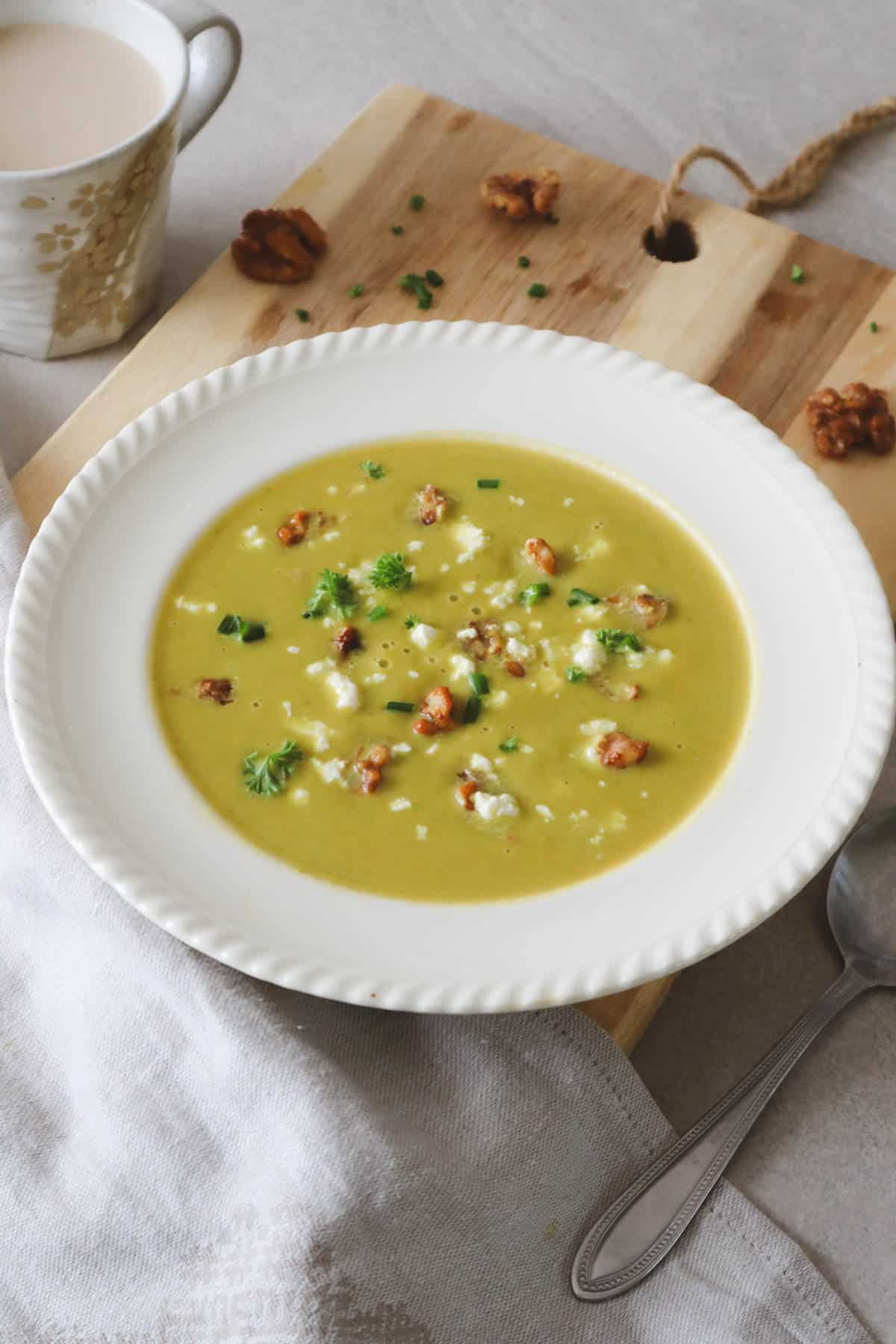
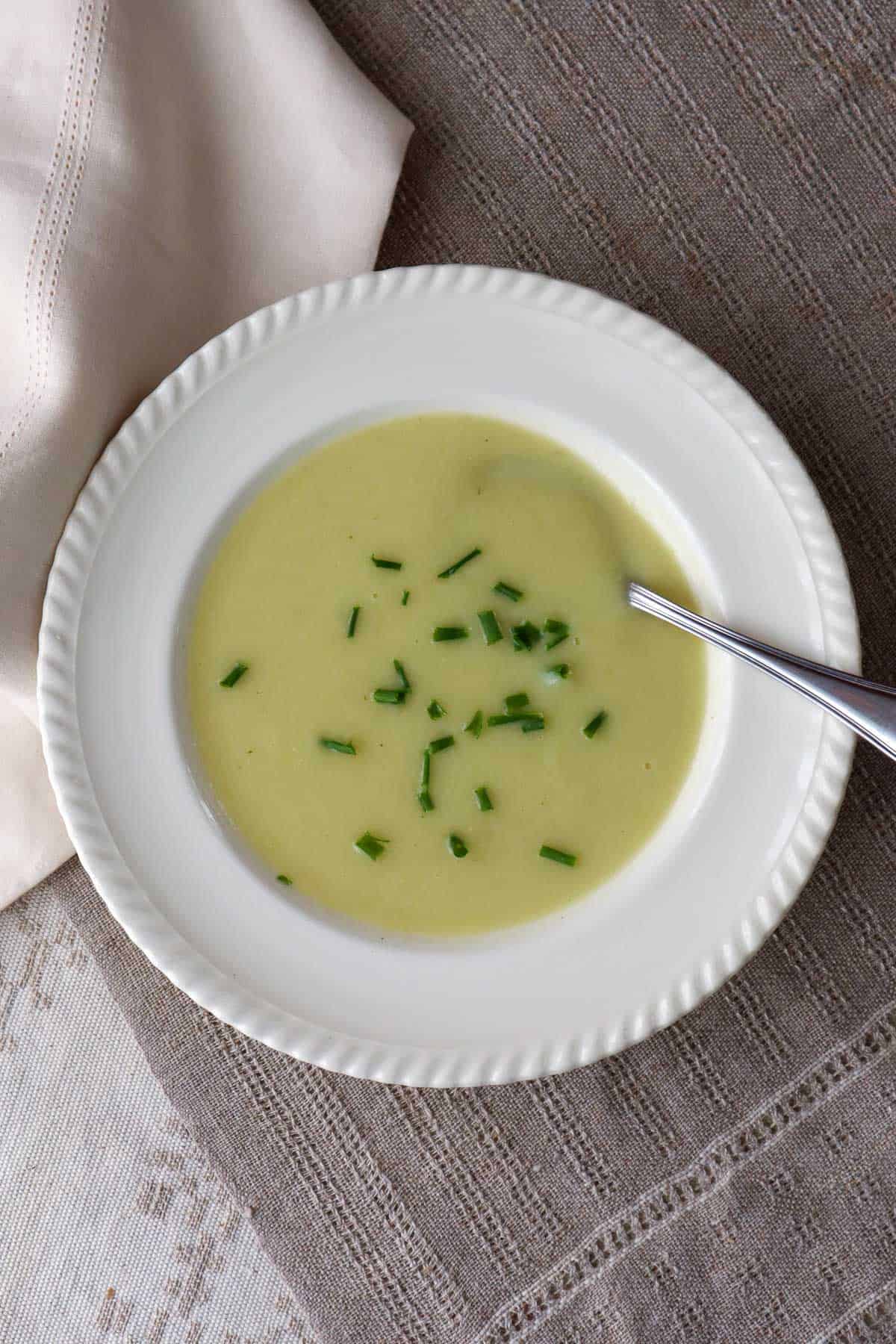
First came the entrée. This could be either a light soup, such as a creamy asparagus and broccoli soup, or more often, crudités, which literally means raw veggies and in France means some sort of raw veggies served salad style, such as grated carrots and cucumber salad, or French cucumber salad with crème fraîche.
Then the quiche (the main event). So there was nothing on your plate except the quiche. Except some baguette, because baguette is served with every meal and every course 🙂. (In French cafés, they usually serve the quiche with a fresh green salad. And some baguette).
Then a lettuce salad with a French vinaigrette dressing. Then cheese (and more baguette, obviously). Then maybe dessert, maybe not, depending on how the afternoon was going.
Nobody rushed. Plates came out when they were ready and everyone just waited and talked. That was the whole point really.
I love this way of eating because the quiche doesn’t have to be a complete meal all by itself. It just has to be good. Everything else fills in around it.
In French cafés they usually skip the courses and just serve it with a green salad alongside. That works really well too.

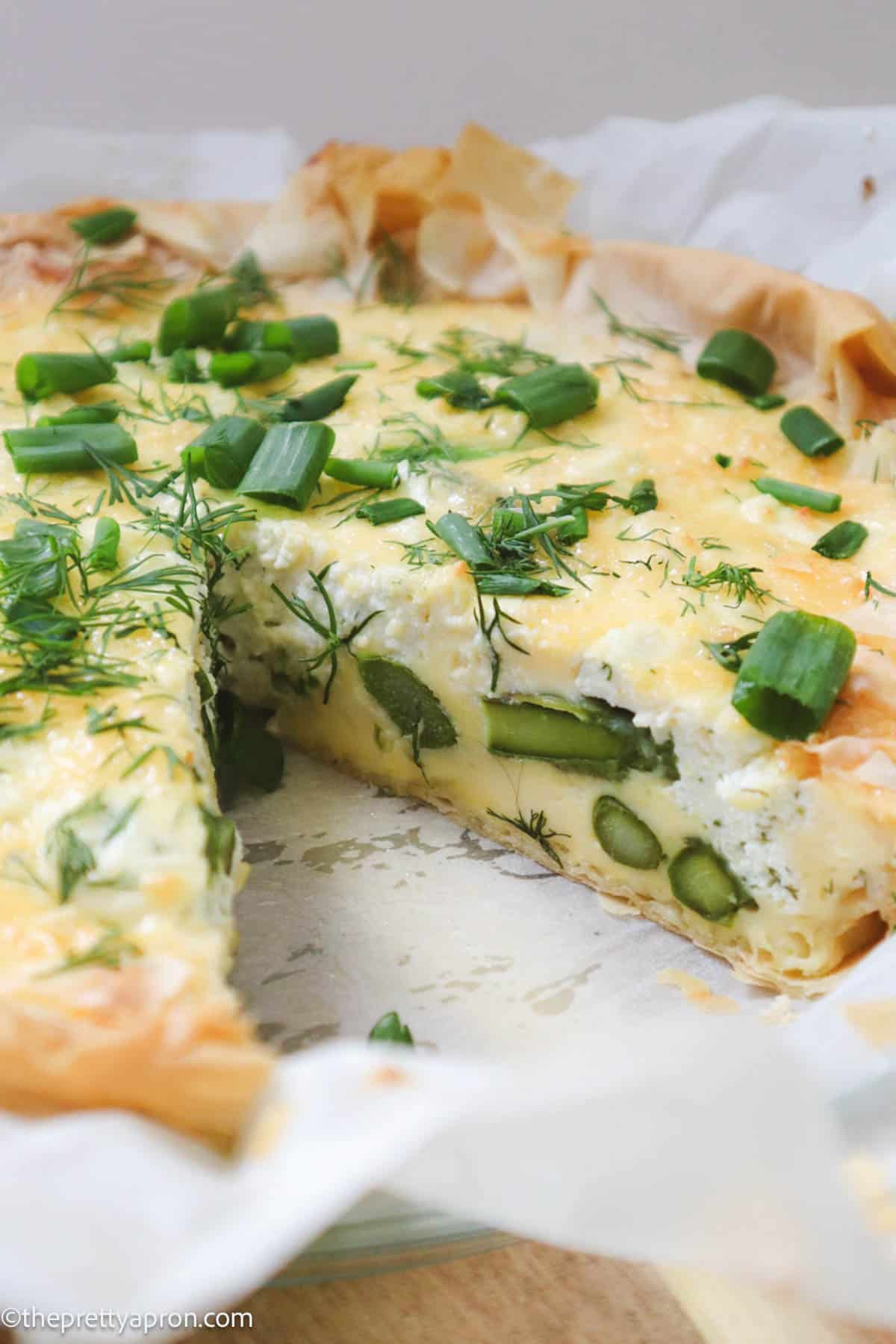
If you like this one, my bacon and mushroom quiche is made in a similar style (also French, also no-fuss). Or for some vegetarian options, there is my Phyllo dough asparagus and ricotta cheese quiche and quiche Provencale. And there’s a salmon and spinach quiche with herbs if you like fish.
Troubleshooting Your Traditional Quiche Lorraine
| Problem | What happened | How to fix it |
| Soggy crust | Did not blind bake long enough | Blind bake for 15 minutes and then brush with egg. |
| Custard collapsed | Overbaked or whisked too hard | Whisk gently. Bake until just set with a wobble. |
| Watery filling | Too much milk or added veggies | Measure creme fraiche and milk carefully and be mindful to use less milk if you add extra watery veggies (spinach for example). |
Make Ahead and Storage
Make ahead: Bake, cool completely, cover, and refrigerate. Bring to room temperature for about 30 minutes before serving, or warm it up in the oven.
Fridge: Keeps for 3 to 4 days wrapped in plastic wrap or aluminum foil.
Reheating: Oven at 160°C (325°F) for about 15 minutes is best. Air fryer works well too, about 5 minutes. Microwave is fine in a pinch — 30 to 45 seconds per slice on medium — but the crust goes a bit soft.
Freezing: Wrap tightly in plastic wrap then aluminum foil. Keeps well for up to 2 months. Thaw overnight in the fridge, then reheat at 160°C (325°F) for 20 to 25 minutes. From frozen, allow about 45 minutes covered in foil, then remove the foil for the last few minutes to crisp the top back up.
FAQ: Your French Food Quiche Lorraine Questions
Yes! Bake it. Cool completely. Cover and refrigerate. Serve at room temperature or reheat gently.
French versions are shallower but creamier. Fewer basic ingredients. No cheese. American quiches tend to be deeper. Loaded with extras like spinach, swiss cheese and Parmesan cheese. Less cream and no crème fraîche.
Quiche is the general category—any savory tart with egg custard filling in a pastry crust. You can put whatever you want in it: cheese, spinach, mushrooms, ham, veggies.
Quiche Lorraine is a specific type from the Lorraine region of France. The authentic French quiche Lorraine recipe has only eggs, crème fraîche, milk, bacon, nutmeg, and pepper. No cheese. No vegetables. It’s the classic that all other quiches spun off from.
Start with a blind-baked crust. Cook bacon until golden. Whisk eggs with crème fraîche, milk, nutmeg, and pepper. Pour over bacon. Bake at 180°C (350°F) for 35-40 minutes until just set with a slight wobble.
Yes! It comes from the Lorraine region in northeastern France. One of the most famous quiches in the world.
Nope. The authentic French quiche Lorraine recipe has no cheese. Just eggs, crème fraîche, milk, and bacon. Cheese got added later outside of France. (Although these days you can find all kinds of quiches in France).
Eggs, crème fraîche, milk, smoked bacon (lardons), nutmeg, and black pepper. That’s it. No cheese. No onions.
The pastry dough was too warm when you put it in the oven
You didn’t let it rest in the fridge before baking
You stretched it too much when fitting it into the pan
Next time: chill the dough, don’t stretch it, and use pie weights during blind baking. Or do what I do, which is to place the pie dough over the edge and give it a bit of a squish. This is probably not authentic French baking, but it seems to work 😉
Use the toothpick test. Stick a toothpick or knife right in the center. It should come out with maybe a few moist crumbs but no liquid egg mixture.
The center should jiggle slightly but not be liquidy.
When in doubt, an instant-read thermometer should read 165°F (74°C) in the center.
You can. Or you can replace the crème fraîche with a cup of heavy cream or mix cream with whole milk and a bit of Greek yogurt. The texture’s a bit lighter but still good.
Normal! Eggs expand while baking. They settle as things cool down. A slightly sunken quiche? Totally typical.
Absolutely. Cool completely. Wrap tight. Freeze for up to 2 months. Reheat at 160°C (325°F) until warm.
3-4 days wrapped well. The crust gets a bit softer after the first day, but it’s still delicious. It’s best heated up in the oven or air fryer.
Yes! This easy quiche Lorraine looks impressive, but it’s actually super simple. If you can whisk eggs and fry bacon, you can make this.
Remember, in France, this is a last minute, “what can I whip up real quick” or “what can I make in advance and just heat up” kind of meal 😂, not a fancy, time-consuming thing. Once you make it, you will see that it’s pretty easy and really delicious!

Authentic French Quiche Lorraine Recipe Card
Would you like to save this recipe?

Authentic French Quiche Lorraine Recipe (no Cheese)
Equipment
- 1 9-inch tart pan or muffin tin or multiple mini muffin tins
- 1 large bowl To mix quiche filling
- 1 Frying pan To cook the lardons or bacon
- 1 Whisk or spoon
Ingredients
- 1 Pie crust or short crust pastry (Pâte brisée in French) Blind bake it first. If you can, make the pâte brisée (shortcrust pastry) from scratch. The buttery, flaky taste is totally worth it. And it's not hard at all.
- 5 oz smoked bacon lardons or chopped streaky bacon 150 grams
- 3 large eggs
- 1 cup crème fraîche 250 ml (or sour cream or heavy cream mixed with a bit of Greek yogurt)
- 2/3 cup whole milk 150 ml
- Freshly ground black pepper
- Pinch of grated nutmeg
- No salt the bacon’s got you covered
Instructions
Blind Bake Your Crust
- Line your tart pan with your pâte brisée (short crust pastry). Prick the bottom with a fork. Cover with parchment paper and fill with pie weights (or dried beans if you're improvising).
- Blind bake at 180°C (350°F) for 15 minutes. Let it cool a bit.
- Pro Tip: Brush the baked crust with a tiny bit of beaten egg before you add the filling. Seals the pastry. No soggy bottoms.
Cook the Bacon
- Fry the lardons on medium heat until they’re just golden. Not crispy. You want them tender with some fat rendered out. They should look lightly bronzed but still have some give when you poke them. Drain on paper towel if they look greasy.
Make the Custard
- Grab a large bowl. Whisk together eggs, crème fraîche, milk, nutmeg, and pepper. Whisk gently. You don’t want too much air (that causes the puffing and sinking thing).
Assemble and Bake
- Scatter the bacon evenly over the bottom of the cooked crust. Pour in your custard mixture.
- Bake at 180°C (350°F) for 35–40 minutes. The edges should be set. The center should still have a little jiggle.
- Do NOT over bake! If you over bake, the egg custard can become watery (counter intuitive I know, but true).
- What “done” looks like: The top will be pale golden brown (not dark). When you gently shake the pan, the middle should wobble like Jello. Not liquid. Just a soft jiggle. If you tap it with your finger, it should feel set but springy. Not firm like a hard-boiled egg.
- Don’t panic if it puffs up! Totally normal. It settles as it cools. French home cooks expect this.
- Sprinkle some fresh parsley or chives on top (Optional, to make it look pretty and hide any imperfections)
Notes
Ingredients
- Crème fraîche: Can’t find it? Use heavy cream + 1 tbsp Greek yogurt, or sour cream thinned with milk.
- Lardons: Use thick-cut bacon or streaky bacon if you don’t have lardons. Cook until golden, not crispy. Drain excess fat.
To minimize sinking and cracks in your French Quiche Lorraine:
- Whisk eggs gently (don’t overbeat).
- Let custard rest 5 min after mixing.
- Tap pan on counter before baking to release air bubbles.
- Turn off heat when center jiggles slightly.
- Cool slowly in turned-off oven with door cracked (10 min).
- For gentler baking, use 160°C (325°F).
- Some sinking/cracking is normal and doesn’t affect flavor.
Doneness test:
- Center should jiggle slightly when gently shaken.
- Top will be pale golden brown.
Make Ahead and Storage:
Make-ahead instructions: You can absolutely make this the night before. Bake it. Let it cool completely. Cover and refrigerate. Bring to room temperature before serving (about 30 minutes on the counter) or warm it up in the oven. Fridge storage: Wrap cooled quiche in plastic wrap or aluminum foil. Keeps for 3-4 days in the fridge. Reheating: Oven is best. 160°C (325°F) for about 15 minutes until warmed through. Or use the air fryer for about 5 minutes. Microwave works in a pinch (30-45 seconds per slice on medium power), but the crust gets a bit soft. Freezing: Wrap cooled quiche tightly in plastic wrap, then aluminum foil. Freeze for up to 2 months. Thaw in the fridge overnight. Reheat at 160°C (325°F) for 20-25 minutes. Or reheat directly from frozen, but you may need longer (about 45 minutes). Cover your quiche with foil to prevent burning. And remove foil for the last few minutes to crisp up the topNutrition
A Note on Nutritional Information
The nutritional data on this page is calculated using an online nutritional calculator based on the actual ingredients listed. Different online calculators can give different results due to natural fluctuations in ingredient brands and sizes, so treat it as a guide rather than accurate nutritional information. For precise figures, use your actual ingredients.
The Inspiration for this recipe: Les Recettes Faciles de Françoise Bernard

Les Recettes Faciles de Françoise Bernard is one of those books you find in kitchens all over France, usually battered, usually stained, usually with someone’s notes in the margins. Françoise Bernard wrote it in the 1960s for home cooks who needed recipes that actually worked. Not dinner party showpieces, just real food for real life. It has been reprinted dozens of times.
My mother-in-law’s copy is held together mostly by habit at this point. Her notes are everywhere. And next to the nutmeg, just a simple underline. Probably a reminder to herself: don’t forget this. She was a really great cook, even though she worked full time and raised a family at the same time.
That’s the version of French cooking I learned.
This authentic French quiche Lorraine recipe is adapted from this book and my mother-in-law’s notes.



Great recipe and great instructions. Thank you!
Thanks Maggie for the nice feedback 🙂