Quiche Provençale
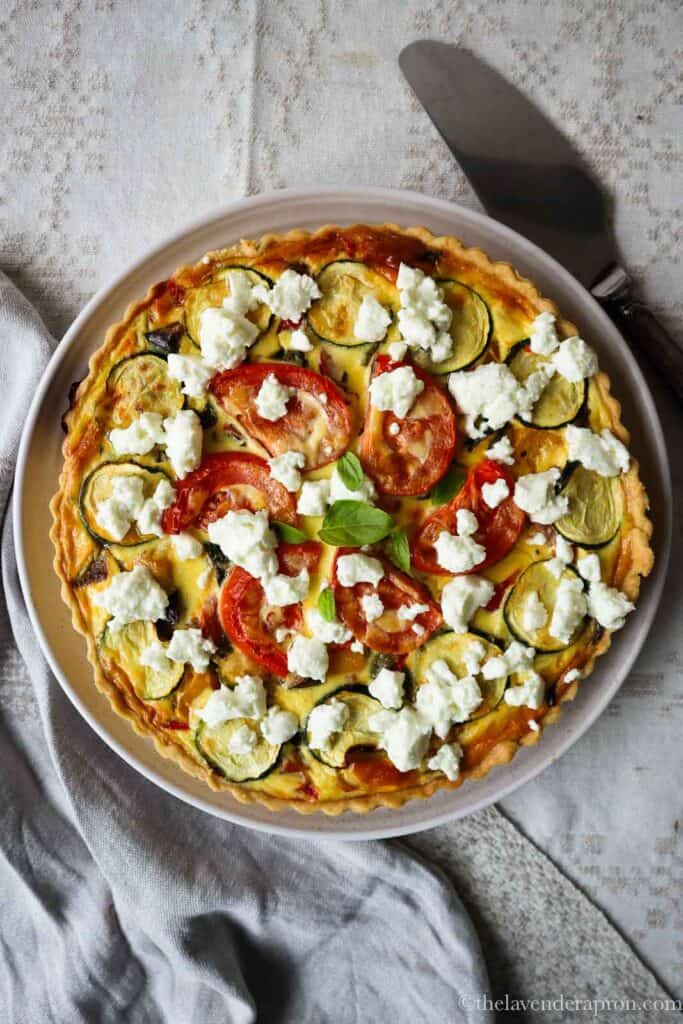
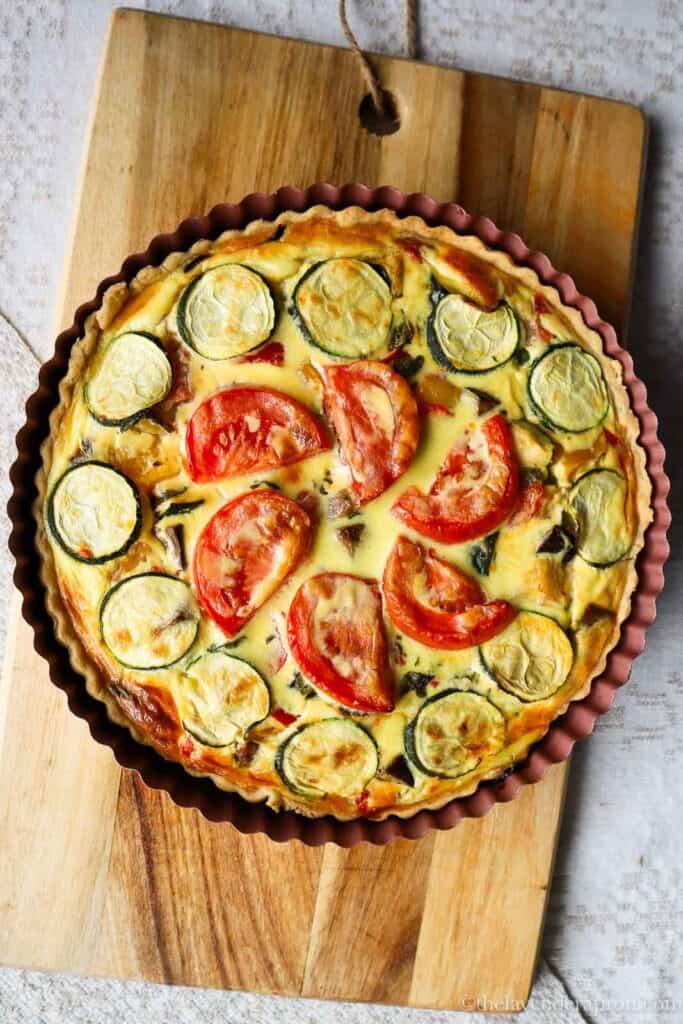
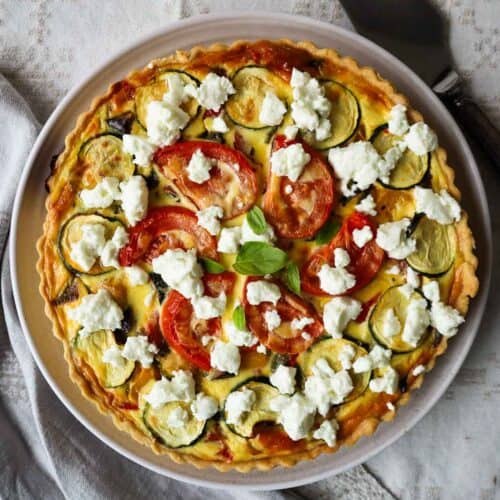
Quiche provençale is a savory French tart made with zucchini, aubergine, peppers and tomato, cooked down until tender, then set in a simple custard of eggs and crème fraîche (or sour cream) – and no cheese in the custard. Think of it as ratatouille baked into a pastry crust.
Would you like to save this recipe?
Serve as is, melt some gruyere or parmesan at the end, or serve with some crumbled goat cheese scattered on top (my favorite 🙂).
This French vegetable quiche is one of my favorite summer dinners because it makes the most of zucchini, eggplant, bell peppers and tomatoes. It’s delicious warm or cold and just as good for brunch as an easy dinner.
This post may contain Amazon affiliate links. As an Amazon Associate I earn from qualifying purchases, at no extra cost to you.
Quiche Provençale Recipe Quick Look
Prep 25 min, cook 25-30 min, plus resting, 9 inch (23 cm) pie dish, 6 servings.
- Make-ahead friendly
- Classic Provençal vegetable filling with zucchini, eggplant, tomatoes and bell peppers
- Easy vegetarian quiche for lunch, brunch or dinner
- Delicious plain, with melted Gruyère or topped with fresh goat cheese
- Key step: salt and drain the eggplant and tomato before cooking or the custard won’t set properly.
Table of contents
- Quiche Provençale Recipe Quick Look
- What is Quiche Provençale?
- Equipment
- Ingredients and Notes for Quiche Provençale
- Substitutions and Additions
- How to Make Quiche Provençale
- Tips for the Best Quiche Provençale
- What to Serve with Quiche Provençale
- How to Store, Freeze and Reheat Quiche Provençale
- Troubleshooting
- FAQ
- More Quiches to Explore
- Quiche Provencale Recipe Card
What is Quiche Provençale?
Quiche Provençale comes from Provence, the sunny region in the south of France known for its Mediterranean way of eating. Its filling is built around the same vegetables you’d find in a classic ratatouille: zucchini, eggplant, tomatoes, bell peppers, onion, garlic and herbes de Provence.

Some people call it a tarte Provençale, and they aren’t exactly wrong. In France, both quiches and savory tartes are baked in pastry, but a quiche always contains an egg custard. A savory tarte may include eggs, but it doesn’t have to. Think of quiche as a specific type of savory tart.
I make this summer vegetable quiche all the time with more or less of each of those ingredients. You can leave out the eggplant completely and use a bit more of zucchini or red pepper or vice versa. For me it depends on what’s growing in the garden or available at the market. It’s not a strict recipe, it’s more of a method, the kind I’ve come to know after years of cooking French food in my own kitchen.
Traditional French versions usually don’t mix cheese into the custard, and I find this means that each quiche actually tastes really different. Not just like another cheese quiche.
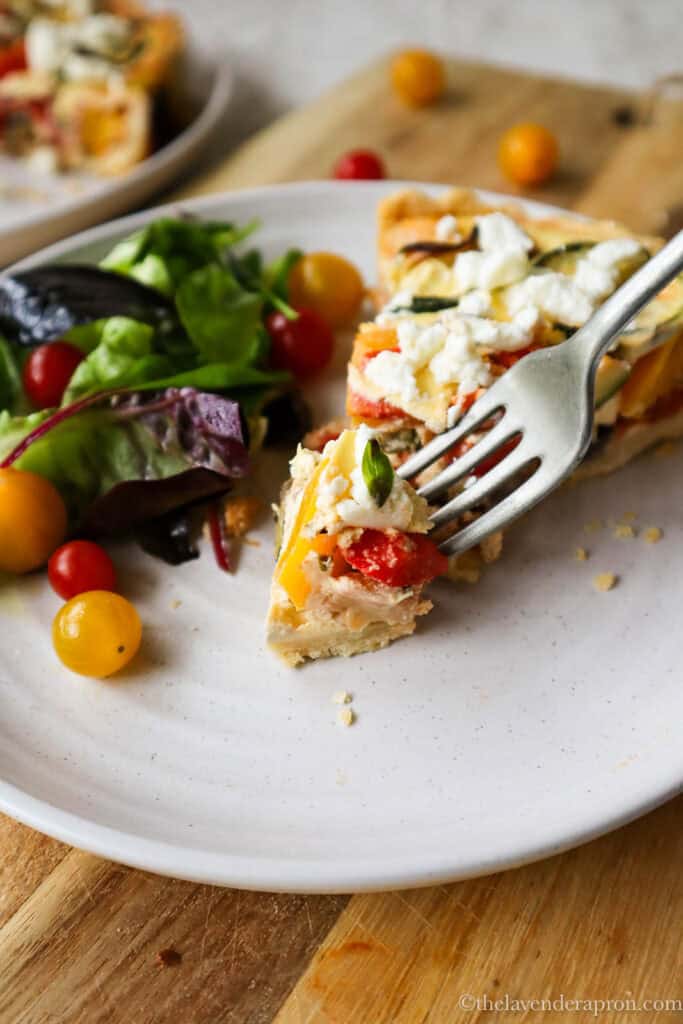
That said, if you love cheese, there’s nothing stopping you from adding grated Gruyère, Parmesan or mozzarella during the last few minutes of baking. My favorite way to serve it is to crumble a little fresh goat cheese or feta over the warm quiche just before serving 🙂.
Equipment
- A 9-inch (23 cm) pie dish or a 10-inch (25 cm) tart pan
- Pie weights, dried beans or rice, for blind baking
- Parchment paper
- Rolling Pin
- Large skillet
Ingredients and Notes for Quiche Provençale
Full quantities are in the recipe card below.
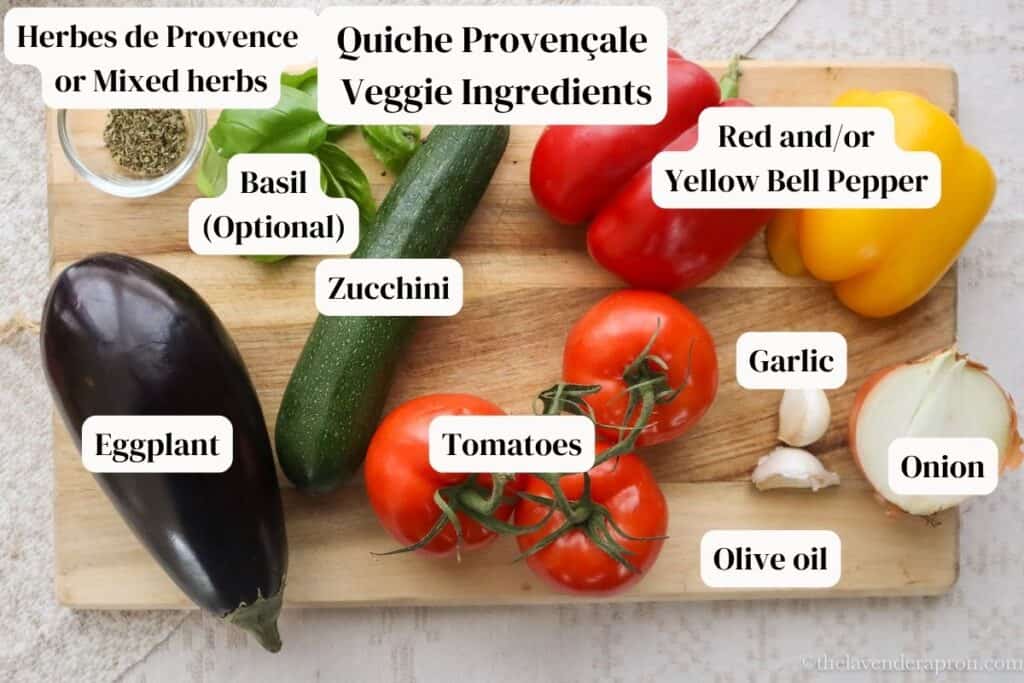
- Eggplant (Aubergine)- (Optional) Use a small one. Leave it out and add a bit more zucchini or pepper if you or your kids don’t like it.
- Bell Peppers – Half a red, half a yellow. Or one whole red or yellow. Green does not taste as sweet.
- Zucchini – A small one. If you have lots of zucchini growing in your garden you need to use up, try this full of zucchini creamy dill soup.
- Tomatoes – You’ll need three small ones, two diced into the filling, the third sliced thin for the top. You can also use cherry tomatoes.
- Olive oil – Use good olive oil if you have some, as it adds to the Provencale flavor.
- Herbes de Provence – You can buy them in the regular spice section in the USA. They are called mixed herbs here in Australia.
- Fresh basil – (Optional). Goes in right at the very end, off the heat, not cooked for long. You can also just stir it into the egg mixture instead. Don’t put it on top before baking though, it’ll burn.
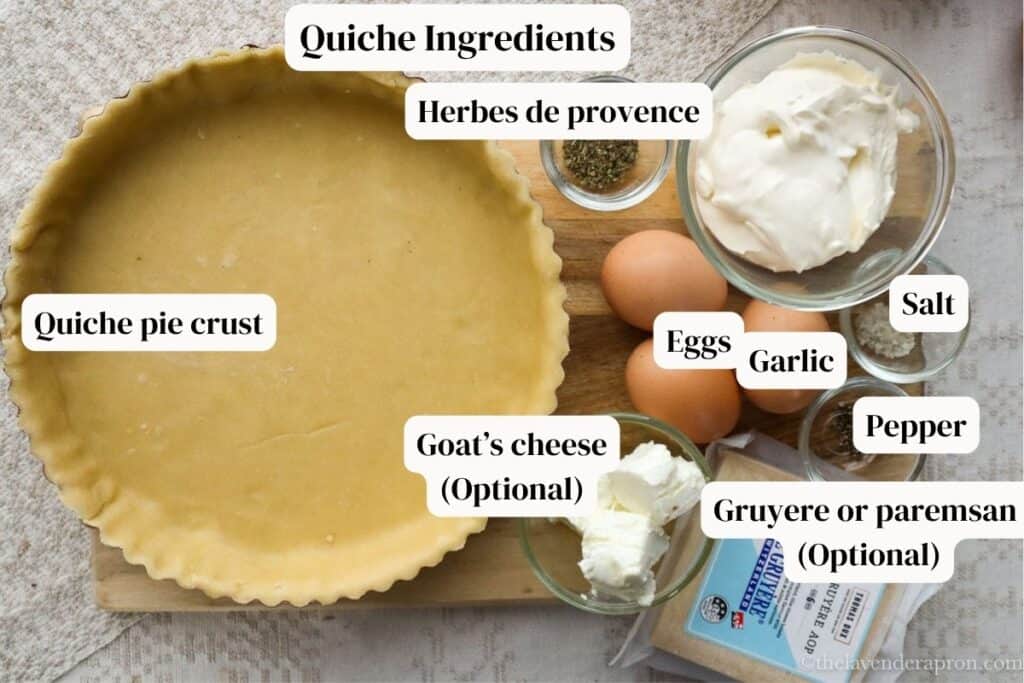
- Pie crust – I usually use pâte brisée (shortcrust pastry). I use my own hands-only pâte brisée, just leave out the optional sugar since this is savory. Pâte feuilletée works here too if that’s what you’ve got in the freezer. Or use any store-bought ready-made pie crust.
- Crème fraîche (or sour cream) – you can use heavy cream or Greek yogurt as well. Not milk. You want this to be creamy 🙂 – more of a custardy texture, which is the French way of doing quiche.
- Goat cheese (optional) – or feta, sprinkled on top just before serving for extra flavor and tang.
- Gruyère, parmesan or mozzarella (optional) – if you want a bit of melted cheese on top of your quiche.
Substitutions and Additions
- Frozen vegetables – You can use frozen veggies, but you really need to defrost and drain them very thoroughly first, then sauté them down as usual. Frozen vegetables release lots more water than fresh ones, which makes the salting and draining step even more important.
- Don’t like eggplant? More zucchini or bell pepper, easiest swap in the recipe.
- Herbes de Provence – Equal parts dried thyme, rosemary, oregano. It’s fine to leave one out.
- Olives – black or green. A small handful of halved olives, stirred in or scattered on top, is very French Provençal.
- Canned tuna – There are actually two classic versions of “quiche provençale”. This is the vegetable one. The other is more niçoise in character, built on tomato, bell pepper, onion and olives, with tuna instead of eggplant. To make that version, leave out the aubergine, keep everything else the same (except add a few olives), and scatter a drained tin of tuna over the prebaked crust before adding the rest of the filling and the custard.
How to Make Quiche Provençale
Quick version: Blind bake the crust, cook the vegetables until they’re tender and most of their moisture has evaporated, then pour over the egg and crème fraîche custard and bake. The steps below break it down, but that’s really all it is.
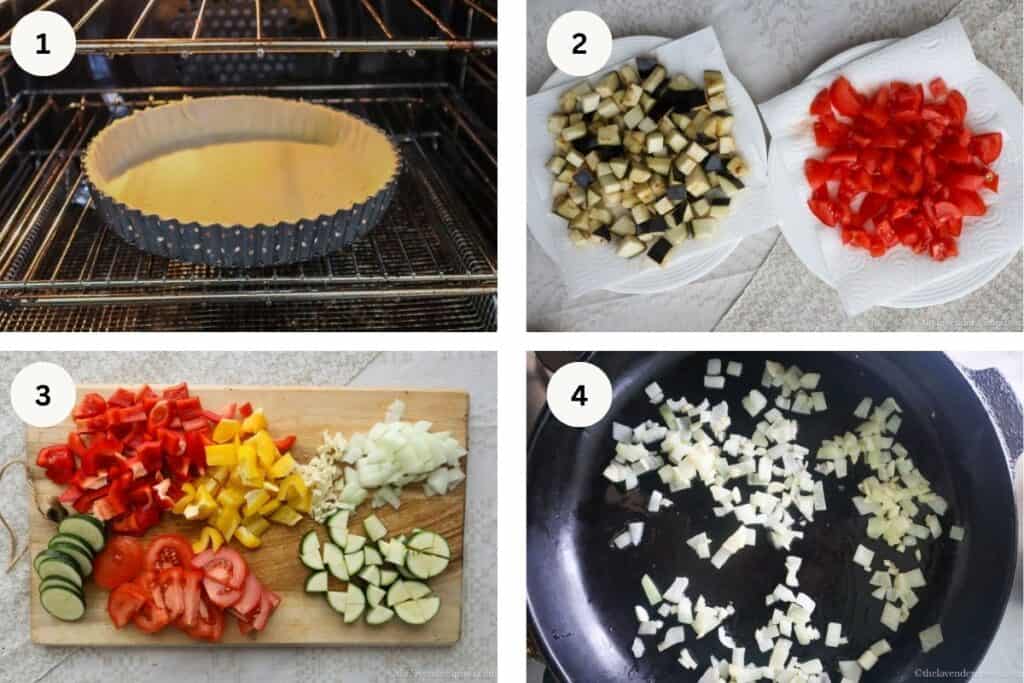
Step 1: Blind bake the crust. Roll out your pastry, fit it into the pie dish, trim the edges, and chill it for 15-20 minutes. Preheat the oven to 375°F (190°C), prick the base, line with parchment and pie weights, and blind bake 15 minutes. Pull the weights and parchment and bake another 5-8 minutes, until the base looks dry, not damp. Check the base, not just the edges. A dry-looking base is what actually prevents a soggy bottom.
Step 2: Salt the eggplant and tomato. Dice the aubergine and two of the tomatoes, spread on paper towels with a little salt, and let them sit 10-15 minutes. This isn’t really extra time, you’re chopping everything else and making the custard while it sits there.
Step 3: Dice the remaining veggies. Dice the bell peppers and most of the zucchini (save a little tomato and zucchini to slice thin for the top). Try to make the pieces the same size for even cooking.
Step 4: Sauté the onion and garlic in olive oil a few minutes
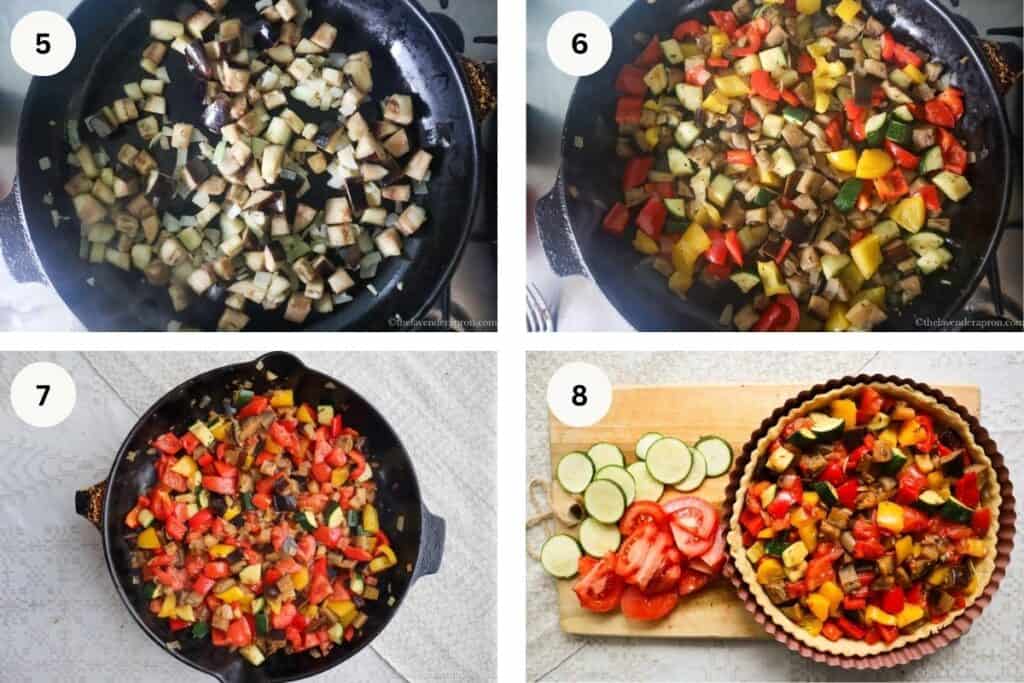
Step 5: Add the aubergine on its own and cook it about 4 minutes. It needs a head start, it takes longer than everything else.
Step 6: Add the bell peppers and zucchini, cook until soft.
Step 7: Add the tomato last, just a couple of minutes, it’s already drained so it doesn’t need long. Stir in the herbes de Provence, cook another minute or two, take it off the heat, and stir in the basil. The mixture should look fairly dry before it goes in the crust, not wet or glossy. Otherwise your quiche will have a hard time “setting”.
Step 8: Fill the pre-baked pie crust. Don’t overfill or the quiche won’t hold together, as there is not enough custard mixture to hold it together.
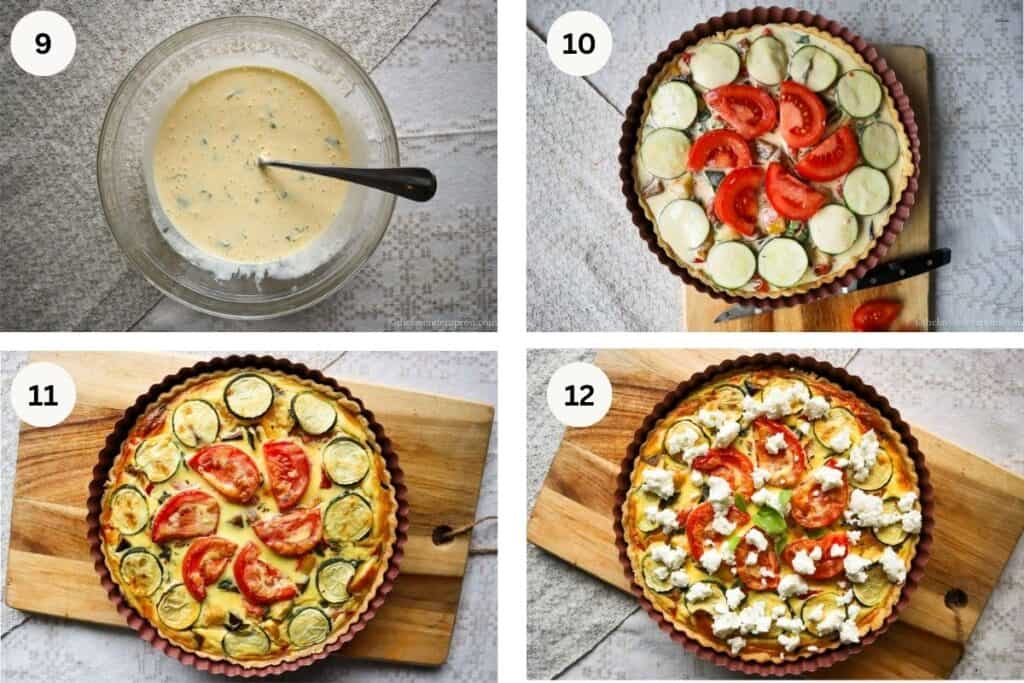
Step 9: Make the custard. Whisk the eggs and crème fraîche together with a pinch of salt and pepper.
Step 10: Assemble. Pour the custard over the top and use the extra zucchini rounds and tomato slices to decorate the top.
Step 11: Bake. 20 minutes at 375°F (190°C), then choose your finish from below.
Step 12: Three Ways to Finish It
- Plain. No cheese at all. The most traditionally French version.
- Baked-in cheese. Gruyère, parmesan, or mozzarella scattered on top for the last 5 minutes.
- Fresh goat cheese. Crumbled on top once it’s out of the oven. My favorite!
Tips for the Best Quiche Provençale
- Salt and drain the eggplant and tomato. You really need to do this so the custard sets properly and you don’t get a watery quiche.
- Dice everything roughly the same size so it cooks evenly.
- Give the eggplant a head start in the pan, it takes longer than the rest.
- Check the bottom of the crust, not just the edges, when you finish blind baking.
- Tent the whole quiche loosely with foil at any point if the top is browning faster than the center is setting.
- This quiche is firm when it’s done, not jiggly. If you’re used to checking for wobble, that’s not the test here.
- Eat it with a fork and knife. You can pick it up, but bits may fall off your plate.
What to Serve with Quiche Provençale
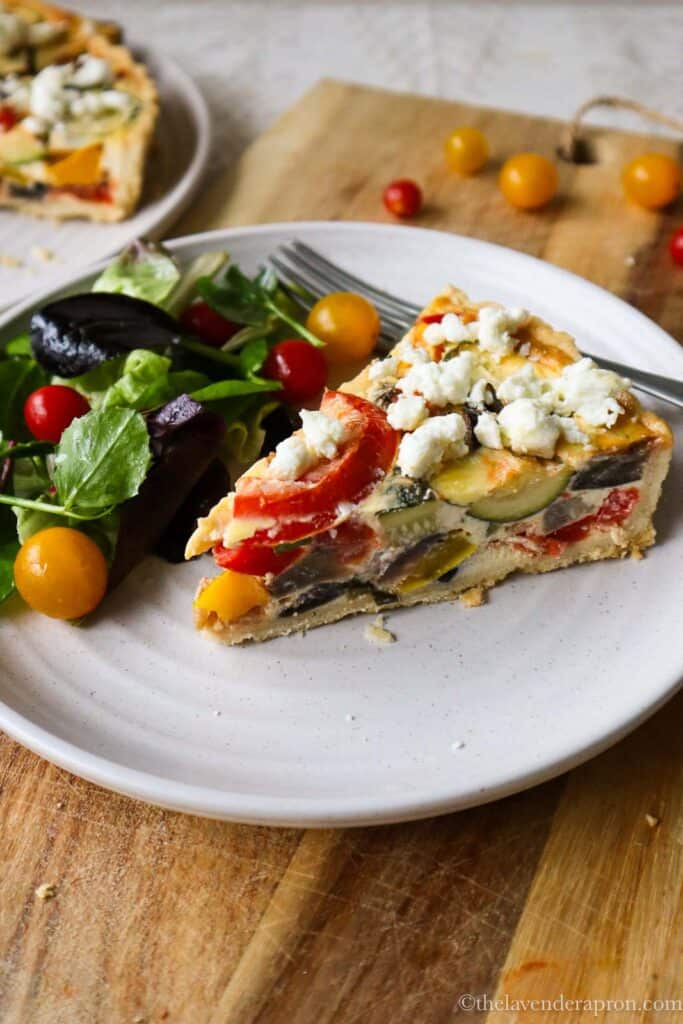
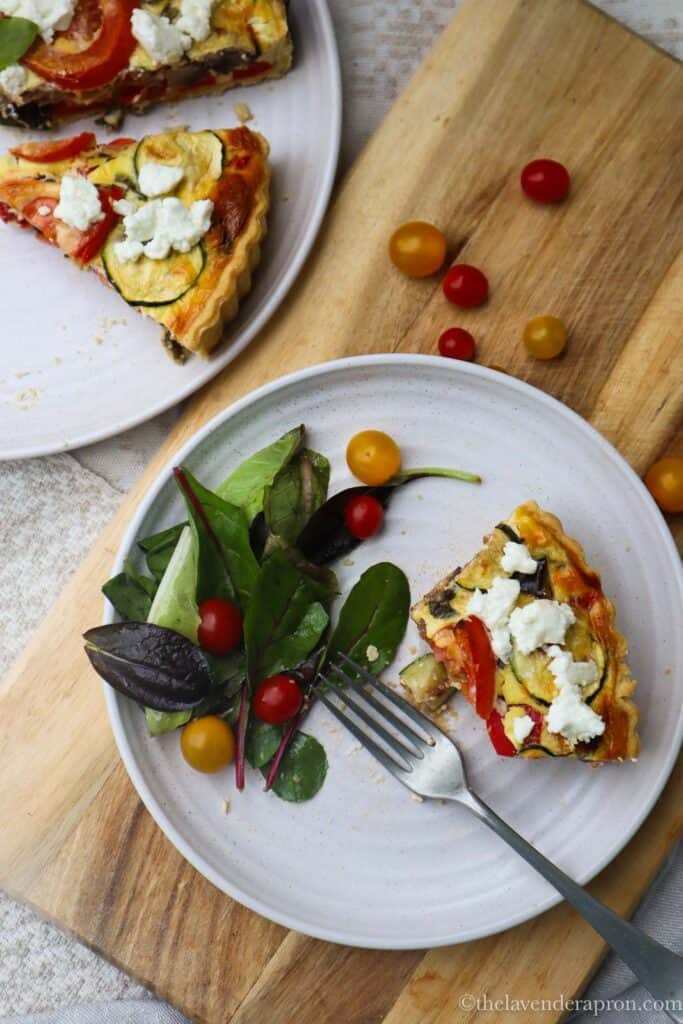
In France, they usually just serve it with a lettuce salad with a simple lemon shallot vinaigrette.
An assortment of salads, like my French carrot salad, red cabbage salad or French cucumber salad work well here too, something light and acidic alongside the rich vegetable filling.
Every year my garden grows these tiny cherry tomatoes I never planted, they just self-seed and come back. I scatter a few over the plate next to the quiche or on my salad. They’re sweet, they look pretty, and the tart tomato flavor is lovely 🙂. You could also just serve with a simple sliced tomato salad.
How to Store, Freeze and Reheat Quiche Provençale
- The vegetable filling can be cooked a day ahead and kept in the fridge. The crust can be blind baked the day before too. Then just assemble and bake when you’re ready. Or bake the whole thing the day before and reheat gently before serving.
- Covered in the fridge, up to 3 days.
- Reheat in a toaster oven, oven or air fryer for the crust to stay crisp. But you can microwave too.
- Add the goat cheese just before serving.
- Leftover cooked ratatouille filling? Don’t toss it, eat it on its own like a little ratatouille, or serve it as a side another night.
- Freezing – This quiche can be frozen once fully baked and cooled, up to 2 months. That said, the water-heavy vegetable filling makes it less ideal for freezing than a Lorraine or bacon quiche. Reheat from frozen in the oven at 375°F (190°C) for 30-40 minutes rather than the microwave, which will make the crust soft. For this recipe, making ahead and keeping in the fridge for up to 3 days gives better results.
Troubleshooting
- Watery in the middle – Most likely your eggplant and tomatoes weren’t drained enough. Salt and pat dry the eggplant and tomato properly, and don’t skip giving the eggplant a head start in the pan, as it holds a bit of water. Using thick crème fraîche or sour cream rather than liquid cream also helps the custard to firm up.
- Top browning too fast – Place a sheet of foil loosely over the top once you see it’s starting to brown. Tent the whole thing loosely with foil rather than pulling it out early.
- Crust shrank – Probably wasn’t chilled long enough, give it the full 15-20 minutes. This happens to me all the time.
- Slices don’t hold their shape – Needs more resting time, an hour at room temperature makes a real difference.
Made this Quiche Provençale recipe? Leave a rating below. It helps other home cooks find it. Every recipe on this blog is made and tested in my own kitchen. You can read more about how I develop and test recipes here. 🙂
FAQ
Yes, but defrost them fully and drain them very well before cooking. Frozen vegetables release more water than fresh ones, so the salting and draining step matters even more here. Sauté them down until the mixture looks completely dry before it goes into the crust.
For this recipe, yes. Four water-heavy vegetables in the filling means the crust needs a head start or the base will be soft. It adds about 20 minutes but it’s the step that keeps everything from going soggy.
Yes. Butter the dish well, pour the filling and custard straight in, and bake the same way. You lose the textural contrast but it’s a good option if you’re short on time or avoiding pastry. Without the crust, you need to make sure you don’t put too many veggies in and have enough custard to hold it all together. Otherwise it may be difficult to serve in clean slices.
Absolutely, this is one of the most flexible recipes on the site. Leeks instead of aubergine, mushrooms alongside the bell peppers, feta instead of goat cheese, mozzarella instead of gruyère, all of these work. My mother-in-law changed it every time she made it.
You can eat it hot or cold. I prefer it warm or barely warm, not hot. Warm from the oven with a green salad is the classic French way.
Yes! Just make sure you drain the veggies before adding them to the egg custard mixture. Use about 1 1/2 cups of well-drained ratatouille as your filling base.
More Quiches to Explore
- Quiche Lorraine is the classic, custard-forward version with bacon and no vegetables at all.
- Bacon and Mushroom Quiche leans savory and earthy if you want something heartier.
- Asparagus Ricotta Quiche uses a phyllo crust instead of pastry and is nice and crisp, perfect for summer.
- Salmon Spinach Quiche with herbs is a Baltic inspired quiche, light and herb-filled.
Quiche Provencale Recipe Card
Would you like to save this recipe?
Quiche Provençale
Equipment
- 1 9 inch pie with a removable bottom with little holes is handy but not necessary (23 cm) or or 10 inch pie dish (25 cm),
- 1 Pie weights or dried beans or rice, for blind baking
- 1 Parchment paper
Ingredients
Vegetables
- 1 small eggplant (aubergine), about 200g / 7 oz, diced
- ½ red bell pepper (capsicum), diced
- ½ yellow bell pepper (capsicum), diced
- 1 small zucchini (courgette), about 150g / 5 oz, diced, saving a few thin slices for the top
- 3 small tomatoes 2 diced for the filling, 1 thinly sliced for the top
- ½ small onion finely chopped
- 2 garlic cloves minced
- 2 tbsp olive oil
- 1 tsp herbes de Provence or mixed herbs or equal parts dried thyme, rosemary, oregano
- 2 tbsp fresh basil leaves torn
- ½ tsp salt plus more to taste
- ¼ tsp black pepper plus more to taste
Custard and Pastry
- 1 batch pâte brisée shortcrust pastry for a 9 inch / 23 cm dish, no sugar — or use store-bought pie crust or puff pastry
- 3 large eggs
- 1 cup / 240 ml crème fraîche or sour cream, or heavy cream and Greek Yogurt
To finish (optional, pick one)
- 1.5 oz goat cheese 35-50 grams (or feta), crumbled, added after baking
- ½ cup gruyère 50 grams or parmesan, or mozzarella, grated, scattered on top for the last 5 minutes of baking
Instructions
- Blind bake the crust. Roll out your pastry, fit it into the pie dish, trim the edges, and chill it for 15-20 minutes. Preheat the oven to 375°F (190°C), prick the base, line with parchment and pie weights, and blind bake 15 minutes. Pull the weights and parchment and bake another 5-8 minutes, until the base looks dry, not damp. Check the base, not just the edges. A dry-looking base is what actually prevents a soggy bottom.
- Salt the eggplant and tomato. Dice the aubergine and two of the tomatoes, spread on paper towels with a little salt, and let them sit 10-15 minutes. This isn’t really extra time, you’re chopping everything else and making the custard while it sits there.
- Dice the remaining veggies. Dice the bell peppers and most of the zucchini (save a little tomato and zucchini to slice thin for the top). Try to make the pieces the same size for even cooking.
- Sauté the onion and garlic in olive oil a few minutes
- Add the aubergine on its own and cook it about 4 minutes. It needs a head start, it takes longer than everything else.
- Add the pepper and zucchini, cook until soft.
- Add the tomato last, just a couple of minutes, it’s already drained so it doesn’t need long. Stir in the herbes de Provence, cook another minute or two, take it off the heat, and stir in the basil. The mixture should look fairly dry before it goes in the crust, not wet or glossy. Otherwise your quiche will have a hard time “setting”.
- Fill the pre-baked pie crust. Don’t overfill or the quiche won’t hold together, as there is not enough custard mixture to hold it together.
- Make the custard. Whisk the eggs and crème fraîche together with a pinch of salt and pepper.
- Assemble. Pour the custard over the top and use the extra zucchini rounds and tomato slices to decorate the top.
- Bake. 20 minutes at 375°F (190°C), then choose your finish from below.
- Three Ways to Finish It:
- Plain. The simplest version, no cheese at all. Just keep baking after the 20 minutes, another 5-10 minutes, until it’s firm to the touch, no wobble. This is the most traditionally French version, and it lets the vegetables speak for themselves.
- Baked-in cheese. Scatter gruyère, parmesan, or mozzarella over the top after the first 20 minutes, then bake another 5 minutes until melted and the custard is set. This is the easiest one for the week, it reheats and slices cleanly, good for lunches and meal prep.
- Fresh goat cheese for a café-style touch perfect for company. Bake plain for the full 25-30 minutes, then once it’s out of the oven, crumble goat cheese over the top while it’s still warm.
Notes
- Frozen vegetables – You can use frozen veggies, but you really need to defrost and drain them very thoroughly first, then sauté them down as usual. Frozen vegetables release lots more water than fresh ones, which makes the salting and draining step even more important.
- Don’t like eggplant? More zucchini or bell peppers, easiest swap in the recipe.
- Herbes de Provence – Equal parts dried thyme, rosemary, oregano. It’s fine to leave one out.
- Olives – black or green. A small handful of halved olives, stirred in or scattered on top, is very French Provençal.
- Canned tuna – There are actually two classic versions of “quiche provençale”. This is the vegetable, ratatouille-style one. The other is more niçoise in character, built on tomato, pepper, onion and olives, with tuna instead of eggplant. To make that version, leave out the aubergine, keep everything else the same (except add a few olives), and scatter a drained tin of tuna over the prebaked crust before adding the rest of the filling and the custard.
- Salt and drain the eggplant and tomato. You really need to do this so the custard sets properly and you don’t get a watery quiche.
- Dice everything roughly the same size so it cooks evenly.
- Give the eggplant a head start in the pan, it takes longer than the rest.
- Check the bottom of the crust, not just the edges, when you finish blind baking.
- Tent the whole quiche loosely with foil at any point if the top is browning faster than the center is setting.
- This quiche is firm when it’s done, not jiggly. If you’re used to checking for wobble, that’s not the test here.
- Eat it with a fork and knife. You can pick it up, but bits may fall off your plate.
- Watery in the middle – Most likely your eggplant and tomatoes weren’t drained enough. Salt and pat dry the eggplant and tomato properly, and don’t skip giving the eggplant a head start in the pan, as it holds a bit of water. Using thick crème fraîche or sour cream rather than liquid cream also helps, it gives the custard a firmer set with a wet filling like this one.
- Top browning too fast – Place a sheet of foil loosely over the top once you see it’s starting to brown. Tent the whole thing loosely with foil rather than pulling it out early.
- Crust shrank – Probably wasn’t chilled long enough, give it the full 15-20 minutes. This happens to me all the time.
- Slices don’t hold their shape – Needs more resting time, an hour at room temperature makes a real difference.